




Morphology Of Rodents
Rodents (order Rodentia) are the most diverse order of mammals, comprising over 2,200 species and representing nearly 42% of global mammalian biodiversity. They are highly adaptable. to both urban and rural environments, which makes them efficient vectors for transmitting diseases across diverse ecological landscapes.
Their morphology is highly adapted for gnawing, with specialized teeth and jaw muscles being the defining features. As of April of 2025, approximately 15,205 rodent-associated viruses have been identified across 32 viral families.
Key Takeaways: Rodent Morphology & Disease
- Defining Feature: Rodents are characterized by a single pair of continuously growing, self-sharpening incisors on both jaws, adapted perfectly for gnawing.
- Anatomical Gap: The absence of canine teeth creates a distinct gap called a diastema, allowing them to navigate food and debris while chewing.
- Classification by Jaw: They are categorized into three main groups—Sciuromorphous, Hystricomorphous, and Myomorphous—based on the arrangement of their jaw (masseter) muscles.
- Major Viral Reservoirs: Rodents are primary hosts for severe global pathogens, including the Andes virus, Lassa virus, and LCMV, which they shed continuously without showing symptoms.
What Are the Main Morphological Characteristics of Rodents?
| Feature | Description |
|---|---|
| Incisors | One pair upper and one pair lower, continuously growing (elodont), rootless, open-ended |
| Enamel | Hard enamel on front only; soft dentine on back |
| Chisel edge | Differential wear creates perpetually sharp edges shaped like a blade |
| No canines | The absence of canine teeth creates a diastema (gap) between incisors and cheek teeth. |
| Total teeth | 12 to 28 teeth total (usually less than 22): 4 incisors, 0 canines, 1 to 2 premolars, and 4 to 12 molars. |
| Molars | Can be rooted (brachydont) or rootless/continuously growing (elodont in hystricomorphs). |
The diastema allows rodents to suck in and block out indelible materials while chipping food with incisors.
How Does Rodent Skull and Jaw Structure Work?
Rodents are classified by masseter muscle arrangement, affecting feeding efficiency.
| Type | Species | Muscles Pattern | Function |
|---|---|---|---|
| Sciuromorphous | Eastern grey squirrel | Larger deep masseter | Efficient biting with incisors |
| Hystricomorphous | Guinea pig | Larger superficial masseter, smaller deep masseter, enlarged pterygoid | The jaw moves farther sideways when chewing |
| Myomorphous | Brown rat | Enlarged temporalis and masseter | Efficient at both gnawing and chewing |
Skull Features
- Well-developed pterygoid region for jaw movement.
- Elongate glenoid fossa with no postglenoid process (forward/backward jaw movement)
- Complete zygomatic arch spanned by jugal bone
- Large paroccipital processes.
- Alispenoid canal present (sometimes short/hard to see)
What Does a Rodent’s General Body Structure Look Like?
When observing the overall morphology of rodents, the general body shape is typically stout and fusiform (spindle-shaped) with short limbs to support their varied ecological niches.
General Body
| Feature | Description |
|---|---|
| Body shape | Stout, fusiform (spindle-shaped) with short limbs |
| Size range | Most <100 g (3.5 oz); largest (capybara) reaches 66 kg (146 lb) |
| Fur | It covers nearly entire body |
| Eyes | Usually well-developed; reduced or absent in some fossorial species |
| Ears | Small to large depending on species (e.g., springhare has large mobile ears) |
| Tail | Generally shorter than head + body (exception: kangaroo rat, some squirrels) |
What Is Unique About Rodent Limbs and Feet?
| Limb | Digit count |
|---|---|
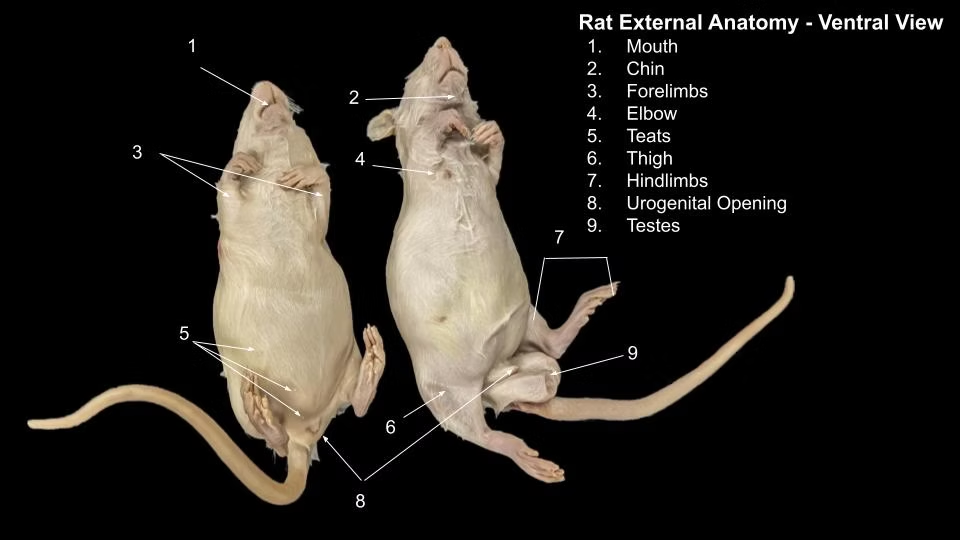
| Forefeet | Usually 5 digits, including opp thumb |
| Hind feet | 3 to 5 digits. |
Some rodents dig with incisors rather than forefeet.
What Is the Link Between the Andes Virus and Rodents?
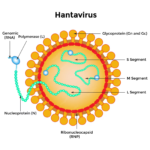
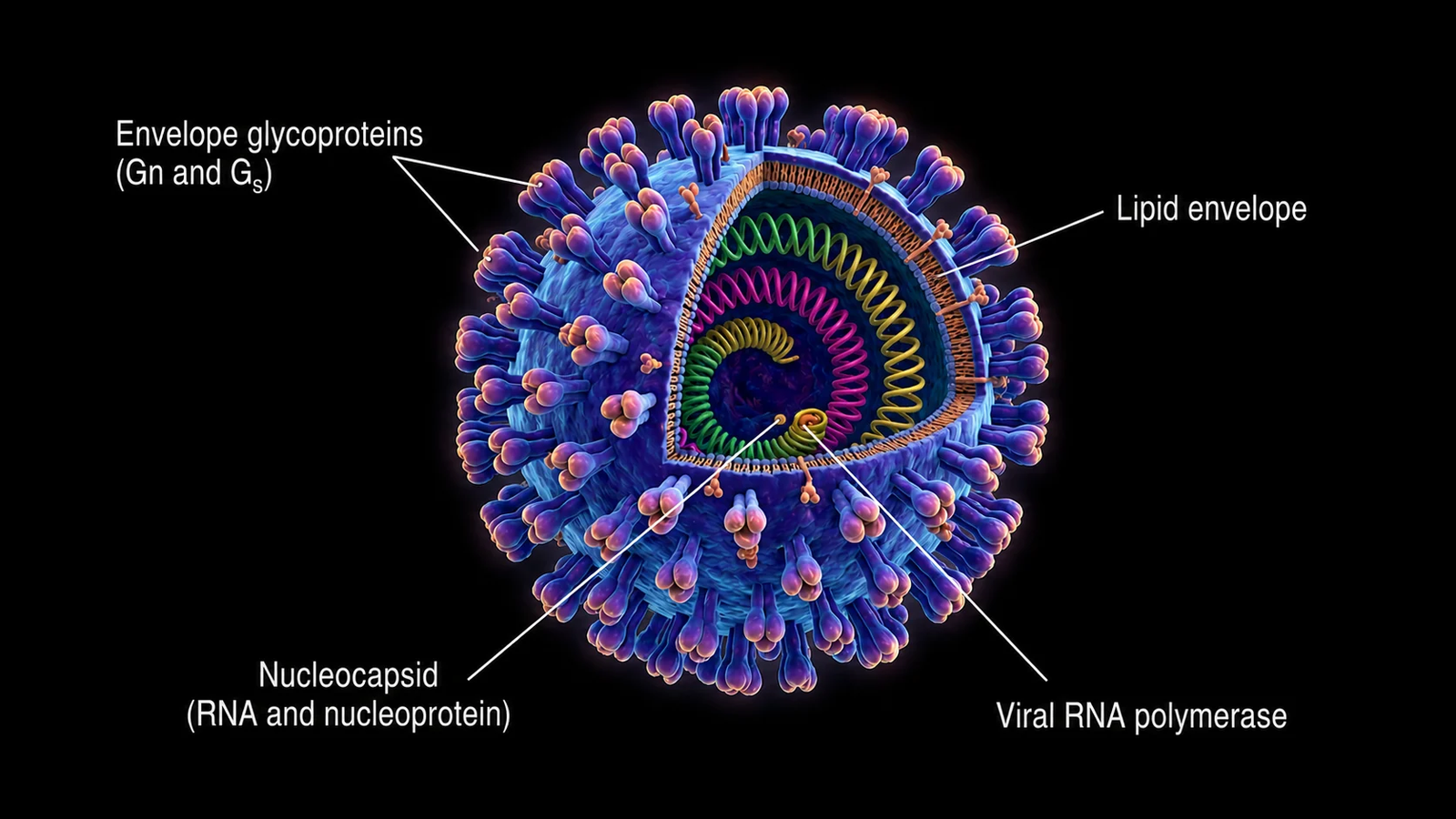
The unique environmental adaptability and morphology of rodents make certain species perfect vectors for pathogens; specifically, the rodent O. longicaudatus serves as the main reservoir for the Andes virus…
Key Facts About Andes Virus
| Aspect | Details |
|---|---|
| Disease caused | Hantavirus pulmonary syndrome (HPS)—severe respiratory disease |
| Primary reservoir | Olingoryzomys longicaudatus (long-tailed pygmy rice rat) |
| Geographic range | South America (Chile and Argentina) |
| Incubation period | 4 to 42 days after exposure |
| Unique feature | Only hantavirus known to spread person to person |
| Treatment | No specific antiviral or vaccine; supportive care only |
| Case fatality | HPS is severe and potentially deadly |
Ecological Relationship
The rodent O. longicaudatus is the main reservoir, but several other Sigmodontinae rodent species also host the Andes virus, including Loxodontomys micropus, Abrothrix olivaceus, and Abrothrix longipilis.
Rodent species distributions serve as a risk factor for human HPS at coarse scales.
Hantaviruses maintain persistent infections in rodent hosts without causing apparent disease symptoms.
Which Major Viruses Are Transmitted by Rodents?
| Virus | Primary Rodent Reservoir | Disease | Region | Family |
|---|---|---|---|---|
| Sin Nombre virus | Deer mouse (Peromycus maniculatus) | Hantavirus Pulmonary Syndrome (HPS) | North America (USA) | Hantaviridae |
| Seoul virus | Brown rat (Rattus rattus) | Hemorrhagic fever with Renal syndrome (HFRS) | Worldwide, including USA | Hantaviridae |
| Hantaan virus | Asian field mouse (Apodemus agrarius) | Severe HFRS | Asia (Europe) | Hantaviridae |
| Dobrava-Belgrade virus | Yellow-necked mouse (Apodemus flavicollis) | Severe HFRS | Europe | Hantaviridae |
| Puumala virus | Bank vole (Myodes glareolus) | Moderate HFRS (nephropathia epidemica) | Europe | Hantaviridae |
| Lassa virus | Multimammate rat (Mastomys natalensis) | Lassa fever (viral hemorrhagic fever) | West Africa | Arenaviridae |
| Junin virus | Grass mouse (Akodon serrens) | Argentine hemorrhagic fever | Argentina | Arenaviridae |
| Machupo virus | Wood rat (Calomys callosus) | Bolivian hemorrhagic fever | Bolivia | Arenaviridae |
| Lymphocytic choriomeningitis virus (LCMV) | House mouse (Mus musculus) | LCMV (neurologic disease, meningitis) | Worldwide | Arenaviridae |
Lassa Virus
- Lassa virus transmitted via contact with food or household items contaminated with rodent urine or feces.
- Person-to-person transmission also occurs, especially in healthcare settings.
- 80% of infections are asymptomatic or mild; 1 in 5 develop severe disease.
- Case fatality rate: 1% overall, 15%+ among hospitalized severe cases.
LCMV
- Viruses are continually shed in mouse urine, saliva, and milk.
- In utero or perinatal infection produces persistent, subclinical infection in mice.
- Important cause of neurologic disease in humans.
Diversity of Rodent-Borne Viral Families
Key Viral Families Containing Rodent-Borne Pathogens
- Hantaviridae (orthohantaviruses)
- Arenaviridae (Lassa, Junin, Machupo, LCMV)
- Picornaviridae
- Coronaviridae
- Poxviridae
In conclusion, studying the biological morphology of rodents is essential for public health tracking, as their physical traits and widespread distribution directly correlate to the global spread of these critical viral families.