






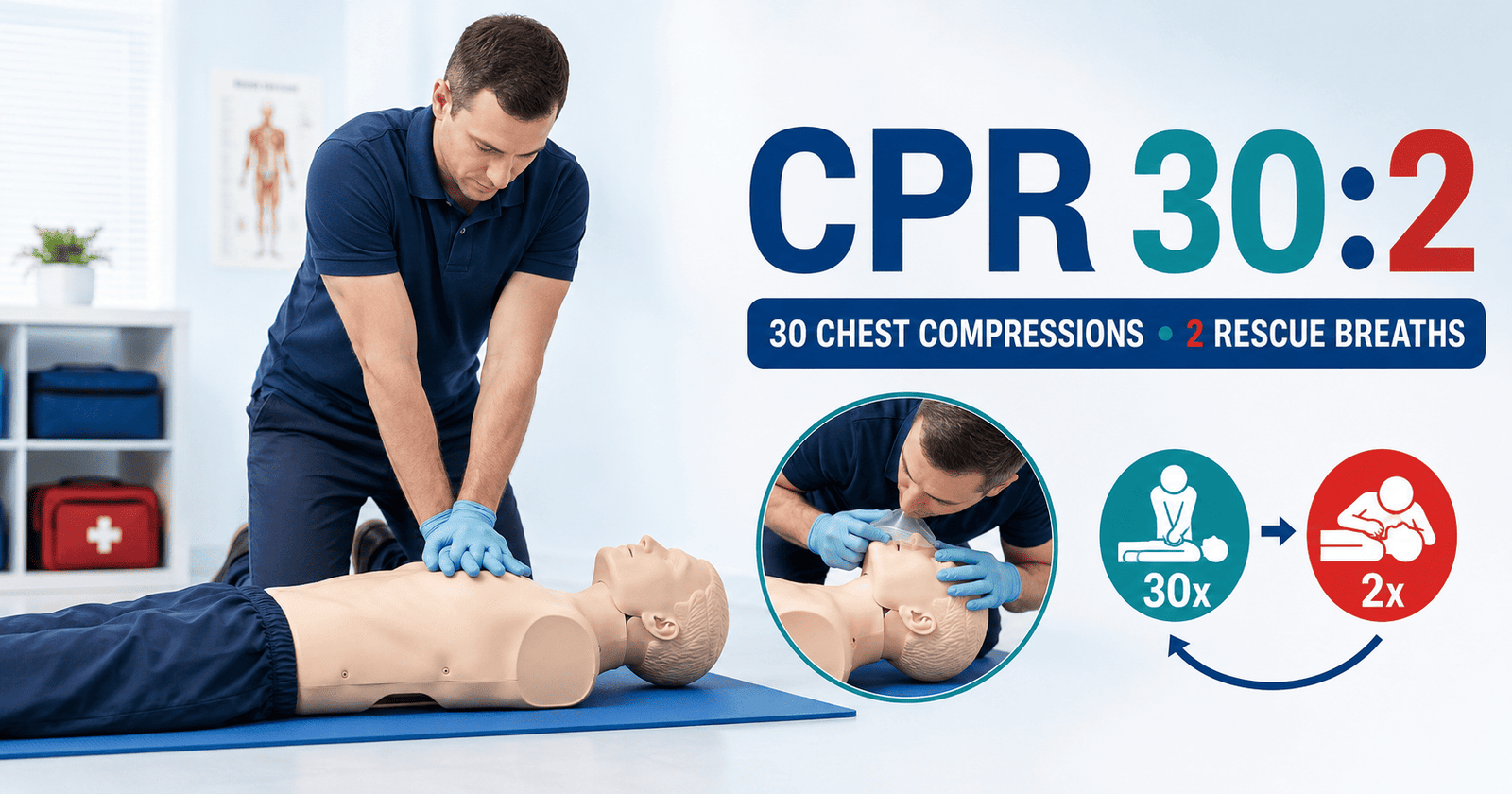
Cardiopulmonary resuscitation (CPR) means cardiopulmonary resuscitation. It is an emergency life-saving method used when a person’s breathing or heartbeat stops, and it combines chest compressions with rescue breathing to keep blood and oxygen moving until help arrives.
Definition of CPR
CPR is an emergency procedure done to support the heart and lungs when they stop working properly. It aims to restore circulation and breathing and reduce the risk of brain damage or death.
Hand-only CPR: chest compressions without rescue breaths, recommended for untrained bystanders on adolescents and adults in sudden cardiac arrest.
Need of CPR
CPR is needed because brain damage can begin within minutes if blood flow stops. Its importance is that it can keep a person alive until emergency medical help takes over.
When a person has stopped breathing or has no detectable pulse, immediate CPR preserves circulation and oxygen delivery to the brain and heart and reduces the risk of permanent brain damage or death.
Because brain injury can begin within minutes of stopped circulation, CPR is needed to “buy time” until advanced care (EMS or an AED) arrives.
Importance of CPR
Early bystander CPR doubles or substantially increases the chance of survival from out-of-hospital cardiac arrest. Performing CPR immediately keeps oxygenated blood flowing to vital organs until definitive treatment is available.
Benefits of CPR
- Maintains circulation and oxygenation of organs.
- Increases the chance someone will survive long enough to receive advanced care or defibrillation.
- Can prevent or reduce brain damage by delivering at least partial blood flow to the brain during cardiac arrest.
General Procedure and CPR Techniques for Adults, Children, and Infants
General Procedure: Before Starting
Ensure scene safety, then check the person for responsiveness, help, and call your local emergency number (or instruct someone else to call). If available, have someone bring an AED immediately.
CPR for Adults (Recommended Basic Sequence)
Check Responsiveness and Breathing
Check responsiveness and breathing. If unresponsive and not breathing normally, call for emergency help and an AED.
Start Chest Compressions
Start chest compressions: place the heel of one hand on the center of the chest (lower half of the sternum), place the other hand on top, interlock fingers, keep arms straight, and push hard and fast—compress at least 2 inches (5 cm) deep, at a rate of about 100-120 compressions per minute. Allow full chest recoil between compressions.
Compression-to-Breath Ratio
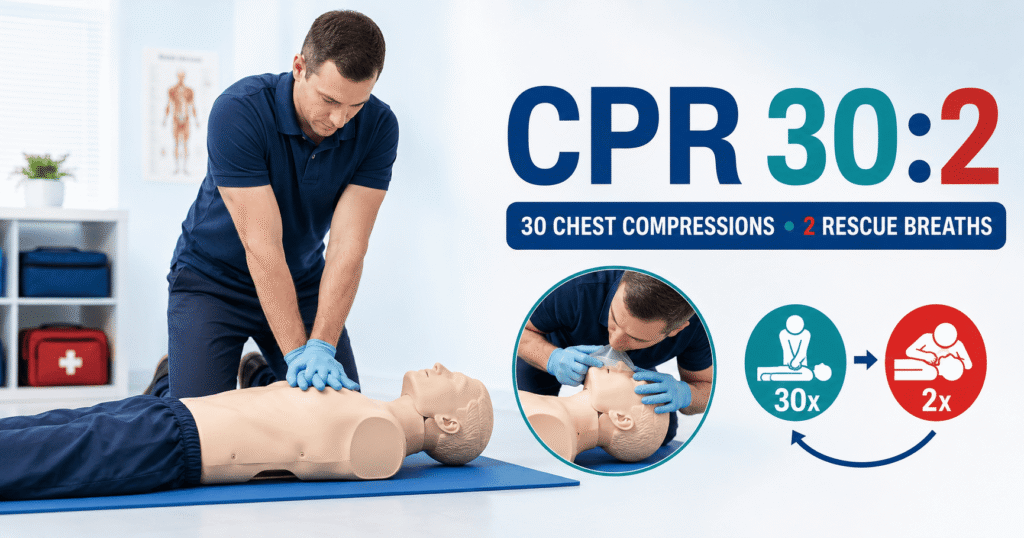
Compression-to-breath ratio (if trained and performing rescue breaths): 30 compressions to 2 breaths. If untrained or uncomfortable giving breaths, continue hands-only compressions until help arrives.
Use an Automated External Defibrillator (AED)
Use an AED as soon as it’s available and follow its voice prompts.
CPR for Children (One Year to Puberty)
Assessment
Check responsiveness and breathing; call for help. If alone and a collapse is witnessed, call emergency services immediately. If unwitnessed, give about 2 minutes of CPR, then call emergency services if you must leave to call.
Chest Compressions
Compressions: use one or two hands (depending on child size) at the center of the chest about ⅓ the chest depth (about 2 inches or 5 cm); rate 100-120 compressions/minute.
Compression-to-Breath Ratio
Compression-to-breath ratio: 30:2 for a single rescuer; 15:2 if two trained rescuers are available.
CPR for Infants (Under One Year)
Assessment
Assessment: tap/ask, check breathing. If unresponsive and not breathing normally, call for help; if alone, give about 2 minutes of CPR before leaving to call emergency services if needed.
Chest Compressions
Compressions: use two fingers (or the encircling hands technique for larger infants) placed on the lower half of the sternum; compress about ⅓ of the anterior-posterior chest depth (roughly 1.5 inches/4 cm) at 100–120 compressions per minute.
Compression-to-Breath Ratio
Compression-to-breath ratio: 30:2 for single rescuer; 15:2 for two rescuers.
Rescue Breaths
For rescue breaths, cover the infant’s mouth and nose with your mouth and give gentle puffs (just enough to see the chest rise).
Stages of CPR, Artificial Breathing, Methods of Compression and Ventilation
Stages of CPR in Adults (Summary)
1) Recognize and Call for Help
Recognize and call for help (activate emergency response / AED).
2) Start High-Quality Chest Compressions
Start high-quality chest compressions immediately (hard, fast, full recoil).
3) Provide Rescue Breaths and Use an AED
Provide rescue breaths if trained (30:2) and use an AED as soon as possible.
4) Continue CPR Until Help Arrives
Continue cycles of CPR and follow AED prompts until advanced care takes over or the person shows signs of life.
Artificial Breathing (Rescue Breaths)—Importance
Rescue breathing provides oxygen to the lungs when the person is not breathing and helps deliver oxygenated blood to tissues when combined with compressions. However, for sudden adult cardiac arrest of presumed cardiac origin, immediate high-quality chest compressions maintain circulation.
Methods of Compression and Ventilation (Brief)
Hands-Only Compressions
Hands-only compressions: continuous chest compression without breaths, recommended for untrained rescues on adults.
Conventional CPR (Compressions + Breaths)
Conventional CPR (compressions + breaths): 30 compressions: 2 breaths for single-rescuer adults; 15:2 for two rescuers on children/infants.
Two-Thumb Encircling Technique
Two-thumb encircling technique: used for two-rescuer CPR on infants for more effective compressions while allowing better ventilation.
If Two People Are Present, the Recommended Roles and Procedure Are
One rescuer performs chest compressions while the second rescuer gives rescue breaths and prepares the AED. For adults, a single rescuer may perform 30:2; with two trained rescuers on children/infants, use 15:2.
Switch compressors every 2 minutes (or sooner if fatigued) to maintain compression quality, minimizing interruptions during the switch (under 10 seconds).
One person should call emergency services (or confirm it’s been called) and retrieve an AED while the other continues compressions.
Simple Stepwise Instructions (Quick Checklist)
- Ensure scene safety and responsiveness. If irrespective, shout for help.
- Call emergency services and get an AED.
- For adults: start chest compressions hard and fast in the center of the chest (rate 100-120/min, depth ~5 cm), 30 compressions, then 2 breaths if trained or continuous compressions if untrained.
- For children/infants: follow age-specific compression depth and hand/finger technique and use 30:2 for single rescuer or 15:2 for two rescuers.
- Use AED when available and follow prompts. Continue until advanced help arrives or the person recovers.
A Short Illustration/Example
Example: An adult collapses in a shop. Bystander A checks responsiveness and breathing, tells Bystander B to call emergency services and bring an AED, then begins chest compressions at ~100 to 120/min. Bystander B returns with the AED and attaches it while A continues compressions; the AED instructs when to pause for a shock. CPR continues until EMS arrives.
Notes and Final Reminders
CPR techniques and exact recommendations are periodically updated: formal training and certification (for example, from the American Heart Association or local health authority) are strongly recommended to maintain correct skills and confidence.
If you’re untrained, performing hands-only CPR (hard, fast compressions at ~100 to 120/min) on an adult is better than doing nothing.

1 Comment
CPR for Adults Children and Infants: 5 Critical Differences
July 21, 2026[…] is a simple CPR checklist for adults, children, and infants. It is written as a quick study guide, not a substitute […]