
Blog

Public Health & Epidemics

Human Immunodeficiency Virus (HIV)

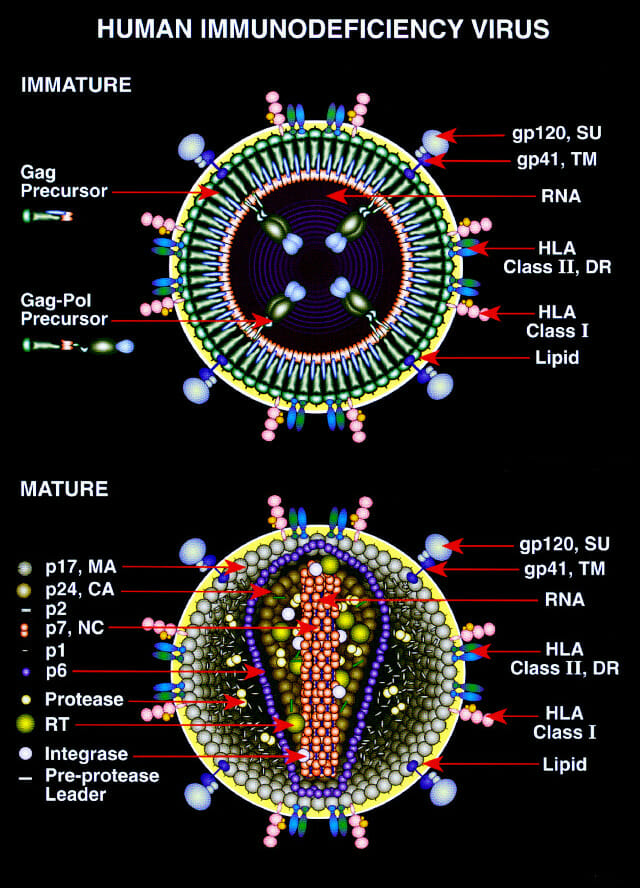
Human Immunodeficiency Virus (HIV) is a retrovirus that attacks the immune system, specifically targeting CD4 cells, which weakens the body’s ability to fight infections. Definition Human Immunodeficiency Virus (HIV) causes progressive immune deficiency, potentially leading to Acquired Immunodeficiency Syndrome (AIDS) if untreated. AIDS represents the advanced stage where opportunistic infections and cancers thrive due to […]

Public Health & Epidemics

Challenges in HIV Treatment Adherence in India

Challenges to HIV treatment adherence in India stem from socioeconomic, behavioral, and systemic factors, despite free ART availability through NACO programs. Adherence rates hover around 70%, below the 95% needed for optimal viral suppression. Socioeconomic Barriers Financial issues like travel costs, unemployment, debt, and economic dependency often lead to missed doses or clinic visits, even […]

Communicable Diseases

Key Structures of Hepatitis B Virus

The hepatitis B virus (HBV) has a relatively simple but highly organized structure centered around a small DNA-containing core wrapped in an envelope. Overall Particle Forms Dane Particle (42 nm) Dane particle (42 nm): The complete, infectious virion is about 42 nm in diameter, with an outer lipid envelope and an inner icosahedral nucleocapsid. Subviral […]

Communicable Diseases

Life Cycle and Morphology of Hepatitis B

The hepatitis B virus (HBV) has a complex life cycle that mainly takes place inside liver cells (hepatocytes). It involves attachment and entry into the cell, formation of a stable “template” DNA, RNA-mediated replication using reverse transcription, assembly of new virus particles, and release from the cell. Life Cycle of Hepatitis B Virus Attachment and […]

Communicable Diseases

Vaccination for Hepatitis B

WHO’s latest hepatitis B vaccination guidelines emphasize universal infant immunization to prevent transmission. The most recent position paper, updated in 2024, prioritizes timely birth dosing and catch-up vaccination. All infants receive the first monovalent HBV vaccine dose within 24 hours of birth, even if they are premature or low birth weight. This is followed by […]

Communicable Diseases

Understanding the Types of Hepatitis: A, B, C, D, & E

Hepatitis is an inflammation of the liver. The condition can be self-limiting or can progress to fibrosis (scarring), cirrhosis, or liver cancer. Hepatitis viruses are the most common cause of hepatitis in the world, but other infections, toxic substances (e.g., alcohol, certain drugs), and autoimmune diseases can also cause hepatitis. There are mainly five types […]

Public Health & Epidemics

Structure and Life Cycle Of Human Papillomavirus (HPV)

Structure and Life Cycle Of Human Papillomavirus (HPV) Human papillomavirus (HPV) has a small, non-enveloped, icosahedral DNA structure from the Papillomaviridae family. It measures 52-55 nm in diameter and consists of a protein capsid surrounding a circular, double-stranded DNA genome of about 7500 to 8000 base pairs. It primarily infects epithelial cells in skin and […]

Public Health & Epidemics

HPV Vaccination: 7 Essential Facts

HPV Vaccination. HPV Vaccination Types and Recommended Ages Main HPV Vaccine Types Globally, three main HPV vaccines are used; all are non-live, recombinant vaccines given as injections (usually in the arm). Bivalent (2-valent) HPV Vaccine Protects against HPV 16 and 18 (high-risk types causing most cervical cancers). Quadrivalent HPV Vaccine (Gardasil-type) Protects against HPV 6, […]

Public Health & Epidemics

10 Proven Facts About Human Papillomavirus (HPV)

Human papillomavirus (HPV) is a group of more than 100 related DNA viruses that infect the skin and mucous membranes, primarily causing warts and some types of cancers. It is the most common sexually transmitted infection worldwide. HPV is classified into low-risk (non-cancerous) and high-risk (oncogenic) types based on their potential to cause cancer. It […]

Public Health & Epidemics

Life Cycle of Herpes Simplex Virus (HSV)

The life cycle of herpes simplex virus (HSV) is generally divided into four main phases: attachment and entry, lytic (productive) replication, establishment of latency, and reactivation. Attachment and Entry HSV first binds to receptors on the surface of host epithelial cells, e.g., oral or genital mucosa, using glycoproteins such as gB, gC, and gD; it […]

Health Care Guruji is an educational health information website that explains medical and public-health topics

Email Us: healthcareguruji@gmail.com

Health Care Guruji  @2026. All Rights Reserved.