



7 Important Structural Differences Between HIV-1 and HIV-2
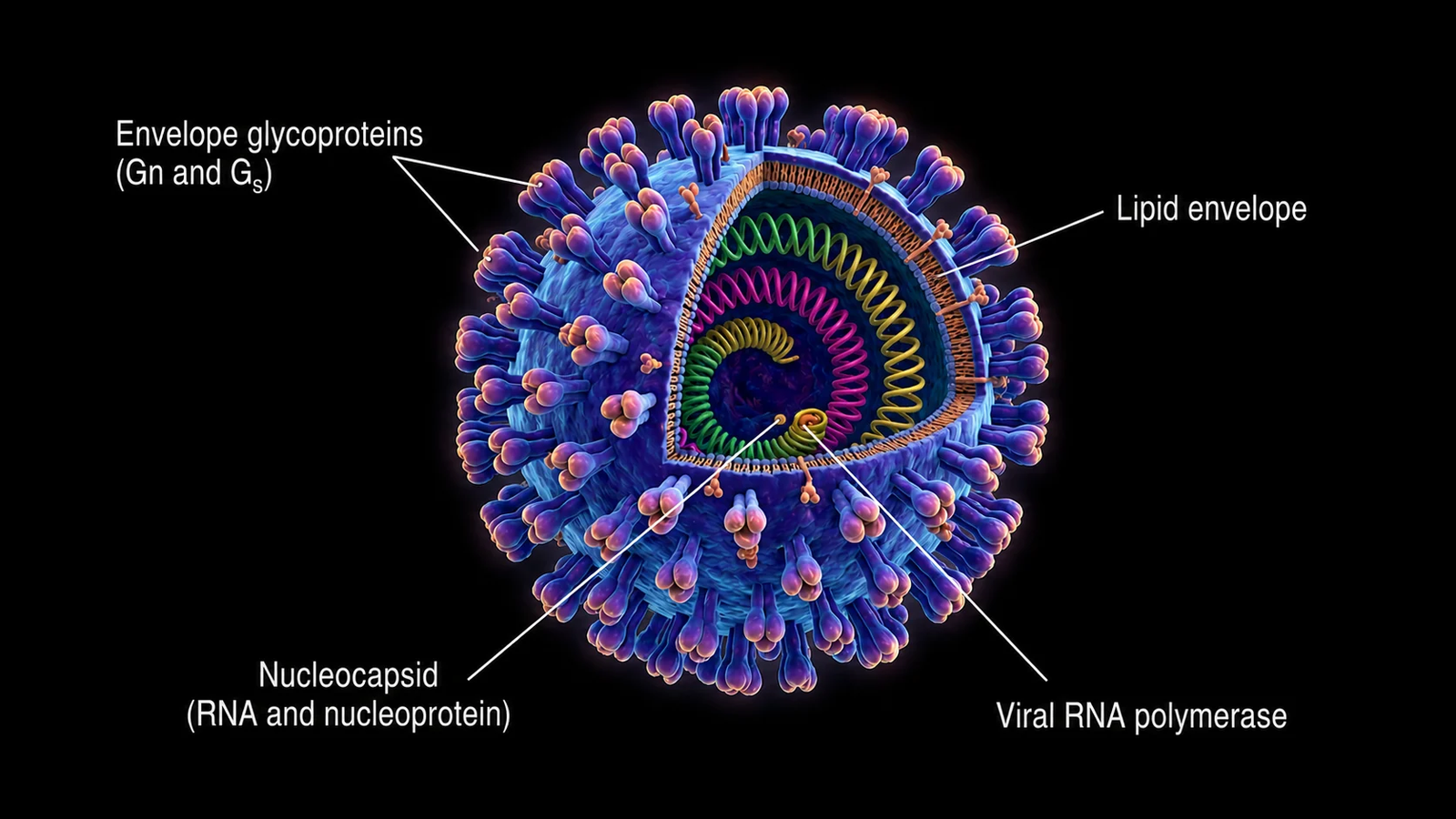
HIV-1 and HIV-2 are both retroviruses from the lentivirus genus, sharing a similar overall architecture as enveloped, single-stranded RNA viruses but exhibiting key structural differences at genetic, protein, and particle levels; in pathogenicity; transmissibility; and clinical outcomes. HIV-1 is more virulent and globally dominant, while HIV-2 is less transmissible and progresses more slowly.
Genetic Differences
HIV-1 contains the vpu gene, which aids in virus release and counteracts host restriction factors like tethering, while HIV-2 replaces this with the vpx gene that degrades SAMHD1 to promote infection in myeloid cells.
Protease enzymes in both are aspartic acid proteases essential for maturation, but they share only about 50% sequence identity, with specific changes like Val32Ile in HIV-2 affecting inhibitor binding and substrate affinity.
Protein Structure Variations
Capsid (CA) proteins differ notably: HIV-2 CA has a unique helix 12 in its C-terminal domain (CTD), stabilized by helix 10 interactions, contributing to more stable immature Gag lattices compared to HIV-1’s.
HIV-2 CA NTD and CTD show structural instability differences versus HIV-1, influencing assembly, disassembly, and biological properties like particle morphology.
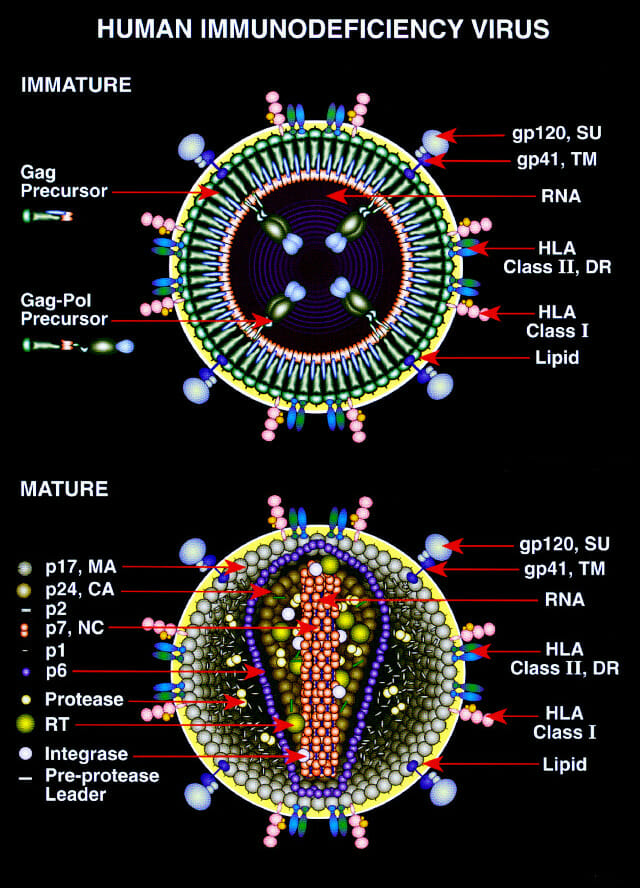
Immature and Mature HIV Virion Structures
This diagram contrasts immature (left) and mature (right) HIV virion structures, highlighting Gag arrangements relevant to HIV-1 / HIV-2 lattice differences.
Virion Morphology
HIV-2 immature particles feature a more complete, continuously curved hexagonal Gag lattice, unlike HIV-1’s incomplete one, with cryo-EM revealing stable wineglass-shaped hexamers at 5.5 Å resolution.
The mature capsid in HIV-1 forms fullerene cones with ~250 CA hexamers and 12 pentamers, while HIV-2 shows distinct CTD interfaces aiding lattice stability.
Difference Between HIV-2 and HIV-1 Gag Lattices
HIV-1 and HIV-2 Gag lattices differ primarily due to variations in the capsid (CA) protein structure and interactions, leading to greater lattice stability and coverage in HIV-2.
Key Structural Basis
HIV-2’s CA C-terminal domain (CTD) features a unique, extended 3-helix 12 (H12), stabilized by interactions with helix 10 (H10), even without the SP1 region present in immature Gag.
This H12 configuration enables stronger dimeric interfaces and a more complete hexagonal lattice in immature HIV-2 particles, achieving up to 90% membrane coverage versus HIV-1’s 60% with frequent gaps.
Functional Impacts
Amino acid differences (~70% CA sequence identity) at three-fold interfaces alter hexamer stability: HIV-2 residues enhance continuous curvature and wineglass-shaped hexamers are resolved at 5.5 Å by cryo-EM.
These traits contribute to HIV-2’s narrower particle diameter range and distinct assembly, contrasting with HIV-1’s pleomorphic, incomplete lattice.
Main HIV Genes and Their Functions
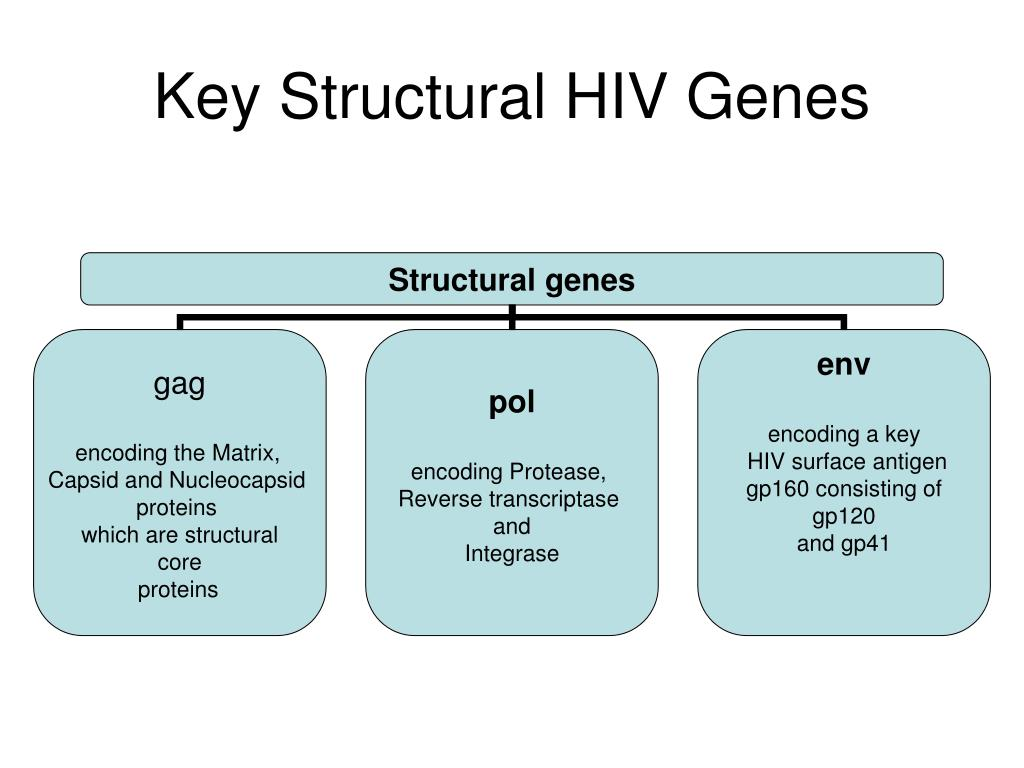
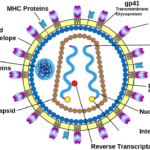
HIV’s genome encodes nine main genes in HIV-1, divided into structural, enzymatic, regulatory, and accessory categories.
Structural Genes
Gag
Encodes core proteins like matrix (p17/MA), capsid (p24/CA), spacer peptides (p2/p1), and nucleocapsid (p7/NC); forms the viral core and matrix.
Pol
Produces enzymes via gag-pol fusion protease (PR) for maturation, reverse transcriptase (RT) for RNA-to-DNA conversion, and integrase (IN) for genome integration.
Env
Cleaved into gp120 (surface attachment protein) and gp41 (fusion protein) for host cell binding and entry.
Regulatory Genes
tat
Trans-activator: binds TAR to boost viral transcription up to 1000-fold.
rev
Shuttles unspliced / full-length viral mRNA from the nucleus to the cytoplasm via RRE; enables structural protein production.
1 Comment
HIV Virus Life Cycle: 5 Critical Facts on ART & Resistance
May 12, 2026[…] Public Health & Epidemics […]