


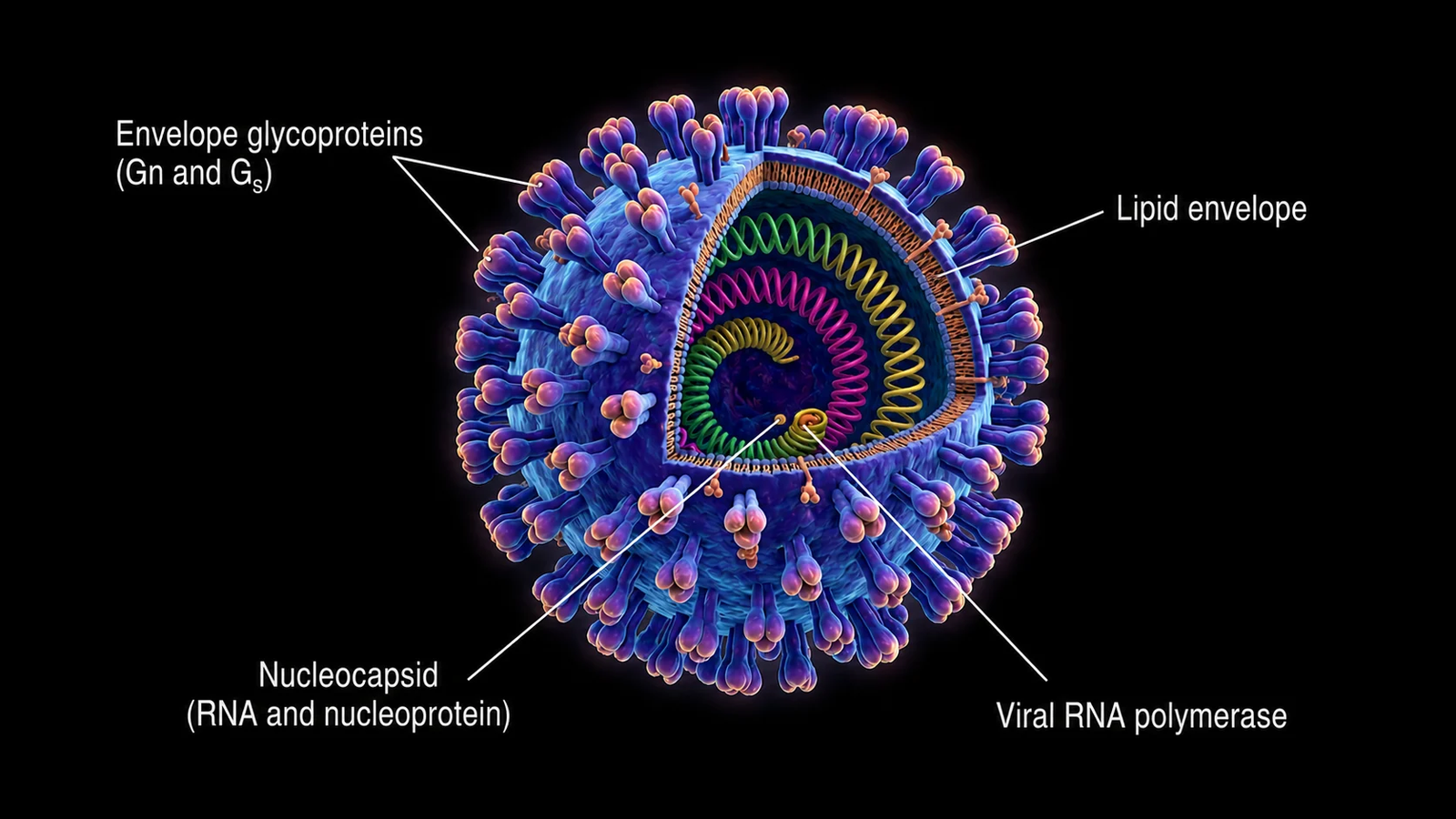



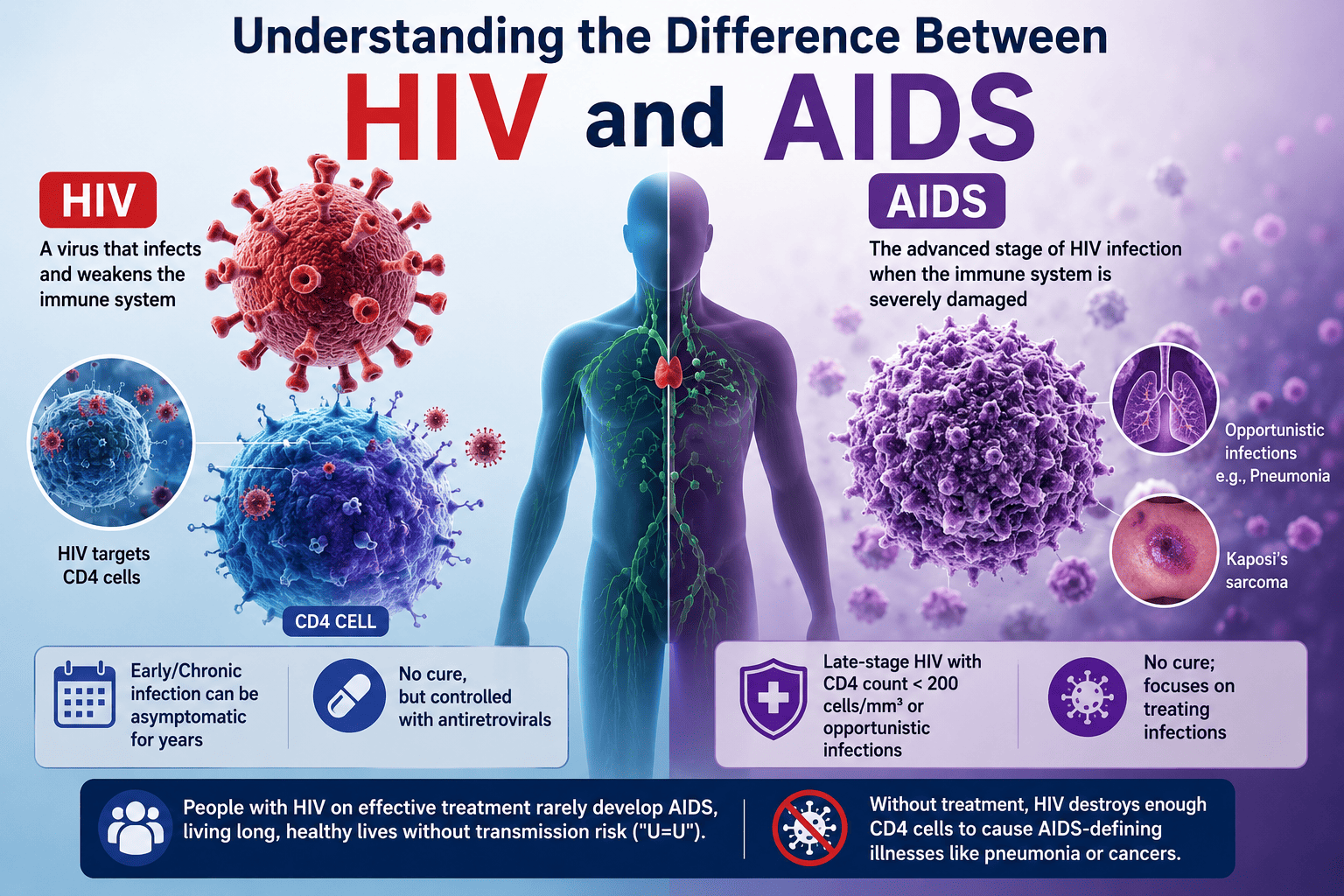
HIV is a virus that infects and progressively weakens the immune system by targeting CD4 cells, while AIDS is the advanced stage of HIV infection when the immune system is severely damaged.
Differences Between HIV and AIDS
| Aspect | HIV | AIDS |
|---|---|---|
| Nature | Virus (human immunodeficiency virus) that spreads via bodily fluids | Syndrome (Acquired Immunodeficiency Syndrome), a clinical condition |
| Stage | Early/chronic infection can be asymptomatic for years | Late-stage HIV with CD4 count < 200 cells/mm³ or opportunistic infections |
| Progression | Untreated HIV leads to AIDS in 8 to 10 years | Not inevitable with ART, manageable to prevent |
| Curability | No cure, but controlled with antiretrovirals | No cure; focuses on treating infections |
Overview
People with HIV on effective treatment rarely develop AIDS, living long, healthy lives without transmission risk (“U=U”). Without treatment, HIV destroys enough CD4 cells to cause AIDS-defining illnesses like pneumonia or cancers.
CD4 Cell Count Criteria for Defining AIDS
A CD4 count below 200 cells per cubic millimeter (cells/mm³) of blood is a key criterion for diagnosing AIDS in people living with HIV, per CDC and WHO guidelines.
Diagnostic Criteria
AIDS is diagnosed when an HIV-positive individual has either
- CD4 count < 200 cells/mm³ (indicating severe immune suppression).
- Presence of an AIDS-defining opportunistic illness (e.g., Pneumocystis pneumonia, Kaposi’s sarcoma), regardless of CD4 count.
CD4 Count Ranges
| Range (cells/mm³) | Status | Risk Level |
|---|---|---|
| > 500 | Normal/healthy | Low risk of infection |
| 200 to 499 | Moderate suppression | Increased infection risk |
| < 200 | Severe AIDS-defining | High risk of opportunistic diseases |
Normal CD4 Range
Normal CD4 range in uninfected adults: 500 to 1500 cells/mm³; counts are monitored via blood tests to guide ART and prophylaxis. With treatment, counts can recover above 200, preventing AIDS progression.
Most Common AIDS-Defining Opportunistic Illness
AIDS-defining illnesses are opportunistic infections, cancers, or conditions that signal advanced HIV infection (CD4 count typically less than 200 cells/mm³), confirming an AIDS diagnosis per CDC/WHO criteria.
Most Common Illnesses
Pneumocystis Pneumonia (PCP)
Fungal lung infection causing cough, fever, and breathing difficulty; formerly the leading AIDS killer.
Kaposi’s Sarcoma
Cancer-causing purple skin lesions, often in the mouth/throat; linked to the HHV-8 virus.
Esophageal Candidiasis
Severe yeast infection in the esophagus leading to painful swallowing.
Tuberculosis (TB)
Pulmonary or extrapulmonary; highly prevalent in high-burden areas like India.
Mycobacterium Avium Complex (MAC)
Bacterial infection is spreading beyond the lungs, causing fever and weight loss.
Categories Overview
| Category | Examples |
|---|---|
| Fungal | PCP, cryptococcosis, histoplasmosis |
| Bacterial | MAC, recurrent pneumonia, Salmonella |
| Viral | CMV retinitis, progressive multifocal leukoencephalopathy (PML) |
| Protozoal | Toxoplasmosis (brain abscess), cryptosporidiosis |
| Cancers | Non-Hodgkin lymphoma, invasive cervical cancer |
| Other | HIV wasting syndrome and HIV encephalopathy |
ART prevents most of these; prophylaxis, e.g., Bactrim for PCP, is standard for low CD4 counts.
Measurement of CD4 Count in HIV-Infected Patients
CD4 count in HIV patients is measured as part of routine immune monitoring using a specialized blood test that quantifies CD4 lymphocytes, a key arm of the adaptive immune system.
How the Test is Done
A venous blood sample is collected (usually in EDTA-containing tubes) and sent to the laboratory.
The number of CD4 cells is most commonly measured using flow cytometry: CD4-specific monoclonal antibodies are tagged with fluorescent dyes and bind to the CD4 receptor on T cells; the flow cytometer then counts these labeled cells and reports the results as cells per cubic millimeter.
In adults, a normal CD4 count usually ranges from about 500 to 1,500 cells/mm³; below 500 is considered low and indicates increasing immune compromise in HIV-positive individuals.
A CD4 count of less than 200 cells/mm³ is one of the laboratory criteria used to define progression to AIDS, regardless of clinical symptoms.
Frequency of Testing
At HIV diagnosis, a baseline CD4 count is done to assess immune status and guide treatment decisions.
Guidelines typically recommend repeat CD4 counts every 3 to 6 months early in treatment or until the count rises above about 300-500 cells/mm³, and then every 12 months in stable, well-controlled patients.
1 Comment
Sexual Literacy for a Healthy Society: 5 Pillars of Consent & Education
May 7, 2026[…] found that only about one-fifth of women and one-third of men have comprehensive knowledge about HIV prevention, indicating widespread gaps in sexual health […]