
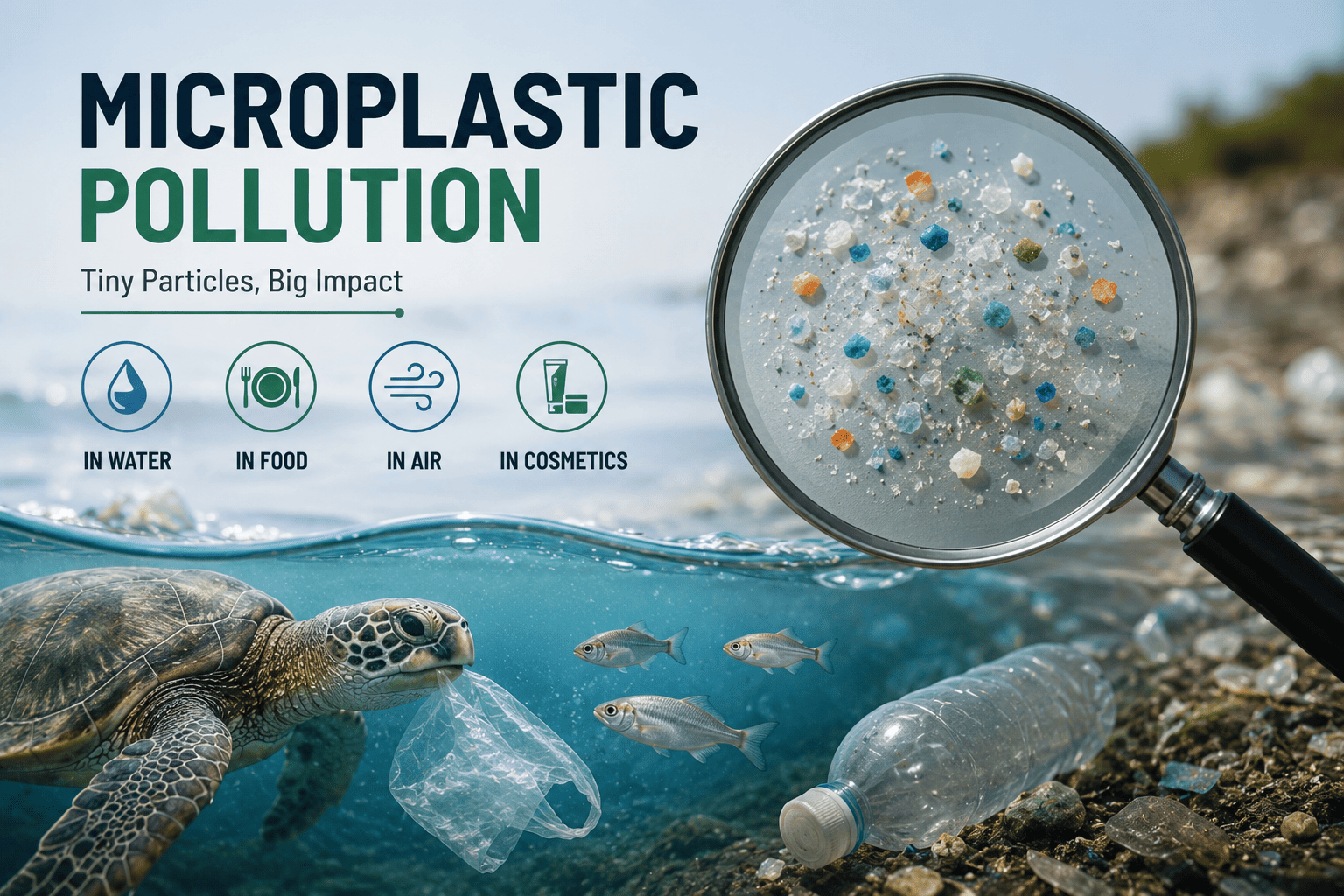
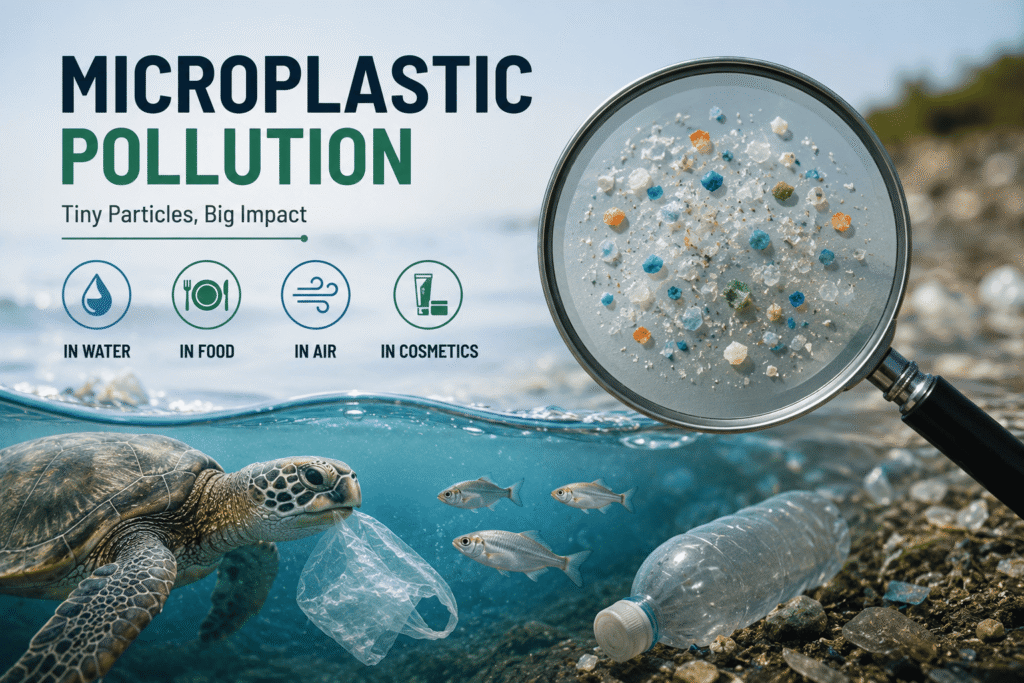
Plastic pollution means plastic waste is everywhere, and some of it breaks into very tiny pieces called microplastics. These tiny pieces can come from broken bottles, bags, food wrappers, clothes, cosmetics, and other things people use every day. Plastic and microplastic pollution can affect daily life in many ways, especially through food, water, air, cosmetics, and the breakdown of everyday plastic items. Microplastics are tiny plastic particles smaller than 5 nm, and they can enter the body mainly by eating, drinking, and breathing them in.
📌 Key Takeaways: Microplastic Exposure & Public Health
- Sources & Exposure: Microplastics originate from degrading macro-plastics and intentionally added microbeads. Primary human exposure occurs via ingestion (seafood, bottled water) and inhalation (synthetic dust).
- Biological Uptake: Microscopic particles (<5 nm) can cross biological barriers, having been detected in human blood, saliva, liver, kidney, and placental tissue.
- Health Concerns: Animal and lab studies associate exposure with systemic inflammation, oxidative stress, cellular damage, and potential endocrine disruption.
- Public Health Mandate: Environmental risk reduction requires local surveillance, municipal waste coordination, and community-level risk communication.
What Microplastics Are
Microplastics are very small plastic pieces that are hard to see. They are not made to disappear in water like sugar or salt. Instead, they break into smaller and smaller bits and stay in the environment for a long time.
Where They Come From
Microplastics come from two main sources: primary microplastics that are made small on purpose and secondary microplastics that form when larger plastic items break down over time. Common daily sources include synthetic clothes, tire wear, food packaging, plastic containers, cleaning products, and some cosmetics or toothpaste. A review on cosmetics also notes that microplastics have been used in personal care products such as scrubs, cleansers, and toothpaste.
How They Move Into Food and Water
Microplastics do not truly “dissolve” in water like salt. Instead, they break into smaller pieces and spread through rivers, lakes, oceans, soil, and air, where they can be taken up by aquatic organisms and move through the food chain.
Fish, shellfish, and other aquatic animals can ingest these particles, and humans may then consume them through seafood and contaminated water. They have also been found in seafoods such as salt and produce and in materials that contact food.
Aquatic plants can also be affected when polluted water carries tiny plastic particles around them. This is one reason plastic pollution in water is dangerous for both animals and people.
Daily Human Exposure
People are exposed in ordinary life through many routes: eating food stored or heated in plastic containers, drinking from plastic bottles, breathing indoor dust, wearing synthetic fabrics, and using some personal care products.
Harvard Medicine notes that microplastics have been detected in the blood, saliva, liver, kidney, and placenta, showing that exposure is not just external. The science is still developing, but the concern is that these particles may carry plastic additives, chemicals, metals, or microbes with them.
People can get microplastics in several everyday things; more examples are given below:
- Eating seafood.
- Drinking water that contains tiny plastic particles.
- Using cosmetics or personal care products that may contain microplastics.
- Breathing dust from plastic and synthetic clothes.
- Eating food that touched plastic containers or packaging.
Possible Health Concerns
Research has linked microplastics in laboratory and animal studies to inflammation, oxidative stress, DNA damage, hormone disruption, and effects on the gut, lungs, liver, heart disease, gut and stomach problems, hormone problems, inflammation in the body, the reproductive system, and the immune system.
They may also irritate tissues or affect organs over time.
Human evidence is growing but still incomplete: a Nature review says the long-term health effects are not yet fully understood, even though microplastics are now found throughout the environment and human tissues.
So the strongest statement today is that exposure is widespread and potentially risky, but exact health effects in people are still being studied.
Why Aquatic Plants and Fish Matter
Aquatic plants can absorb or trap small particles in polluted water, and fish can ingest them directly or through their prey, so contamination can move upward through the food web.
This is why plastic waste in rivers and oceans can eventually become a human food issue, not just a marine pollution issue.
The problem is especially serious in places with poor waste management, where plastic fragments continue to enter water systems and food chains.
Most at Risk
Ocean animals/plants most at risk are usually animals that eat tiny food or live close to polluted water and seafloor areas.
- Sea turtles, because they can eat plastic by mistake and are often hurt by fishing gear and plastic pollution.
- Whales and dolphins, because they can swallow plastic or get caught in nets and lines.
- Seabirds, because they pick up floating plastic pieces from the water surface.
- Shellfish and other small sea animals, because they filter water and can take in tiny plastic pieces easily.
- Corals and sea urchins, because pollution and changing water conditions can damage their habitats.
Why These Animals Are More Vulnerable
Animals that feed on filtering water, eat small prey, or live near polluted coasts are more likely to contact microplastics.
Bigger animals can be harmed because they eat smaller animals that already contain plastic, so the problem moves up the food chain.
Why Helps Reduce Exposure
We can reduce exposure by avoiding unnecessary single-use plastics, not heating food in plastic containers, choosing glass or steel for hot food and drinks, using fewer synthetic personal care products with microbeads, and washing synthetic clothes less aggressively to reduce fiber release.
Community actions matter too; better waste collection, recycling, and restrictions on intentionally added microplastics can lower pollution at the source.
Throw the plastic waste in the proper bin.
Microplastic Becomes Dangerous for Aquatic Living Beings
Microplastics are dangerous for ocean living beings because they are very small and animals can eat them by mistake. Fish, mussels, whales, and other sea animals may think microplastics are food, so the plastic goes into their stomachs.
These tiny plastics can block digestion, make animals feel full without eating real food, and give them less energy to grow. They can also release harmful chemicals into the water and carry pollutants on their surface. Microplastics may also cause problems with growth, reproduction, and disease resistance in sea animals.
When small animals eat them, bigger animals eat those animals, so the plastics move up the food chain.
In simple words: microplastics are dangerous because sea animals cannot tell them apart from food. This can harm ocean life and also affect people who eat seafood.
Role of Public Health Department
- Lead local risk communication on likely exposure routes such as drinking water, food, air, and household sources like synthetic fibers.
- Coordinate with municipal bodies, sanitation, water supply, and waste management teams to reduce plastic leakage into the environment.
- Support surveillance and monitoring by linking public health with environmental sampling, outbreak-style reporting, and exposure assessment.
- Translate scientific findings into simple, actionable guidance for residents, schools, and frontline workers.
Magnitude of the Problem
Microplastics are a widespread concern across oceans, rivers, lakes, drinking water, food, and even bodies, and the problem is not confined to a single location.
One global estimate cited in recent reporting found more than 170 trillion plastic particles, weighing about 2 million metric tons, floating in the oceans, with levels projected to rise sharply without intervention.
Recent research also emphasizes that microplastic pollution is difficult to manage because particles are diverse, hard to identify, and affected by many sources and pathways.
Public Awareness and Engagement
Community engagement works best when messages are short, positive, and tied to familiar local concerns rather than only abstract environmental messaging.
The Great Lakes community project found that awareness increased when outreach used multiple channels, local partnerships, classroom activities, cleanups, social media, and visible action opportunities.
It also found that many people initially linked the topic to ordinary litter rather than microplastics, showing why simple explanatory messaging matters.
IEC Materials
Useful IEC materials should include the following:
- A one-page fact sheet on what microplastics are, where they come from, and how people can reduce them.
- Posters and social media graphics with simple visuals and universal symbols.
- School lesson plans and activity sheets for children and adolescents.
- Community pledge cards, cleanup toolkits, and take-home action checklists.
- Frequently asked questions that address health concerns, sources, and local actions.
Conclusion
Thus, the public health department should act as the communication and coordination hub for microplastic pollution: assess risk, build awareness, mobilize community action, and distribute clear IEC materials that turn a complex problem into a practical one.