

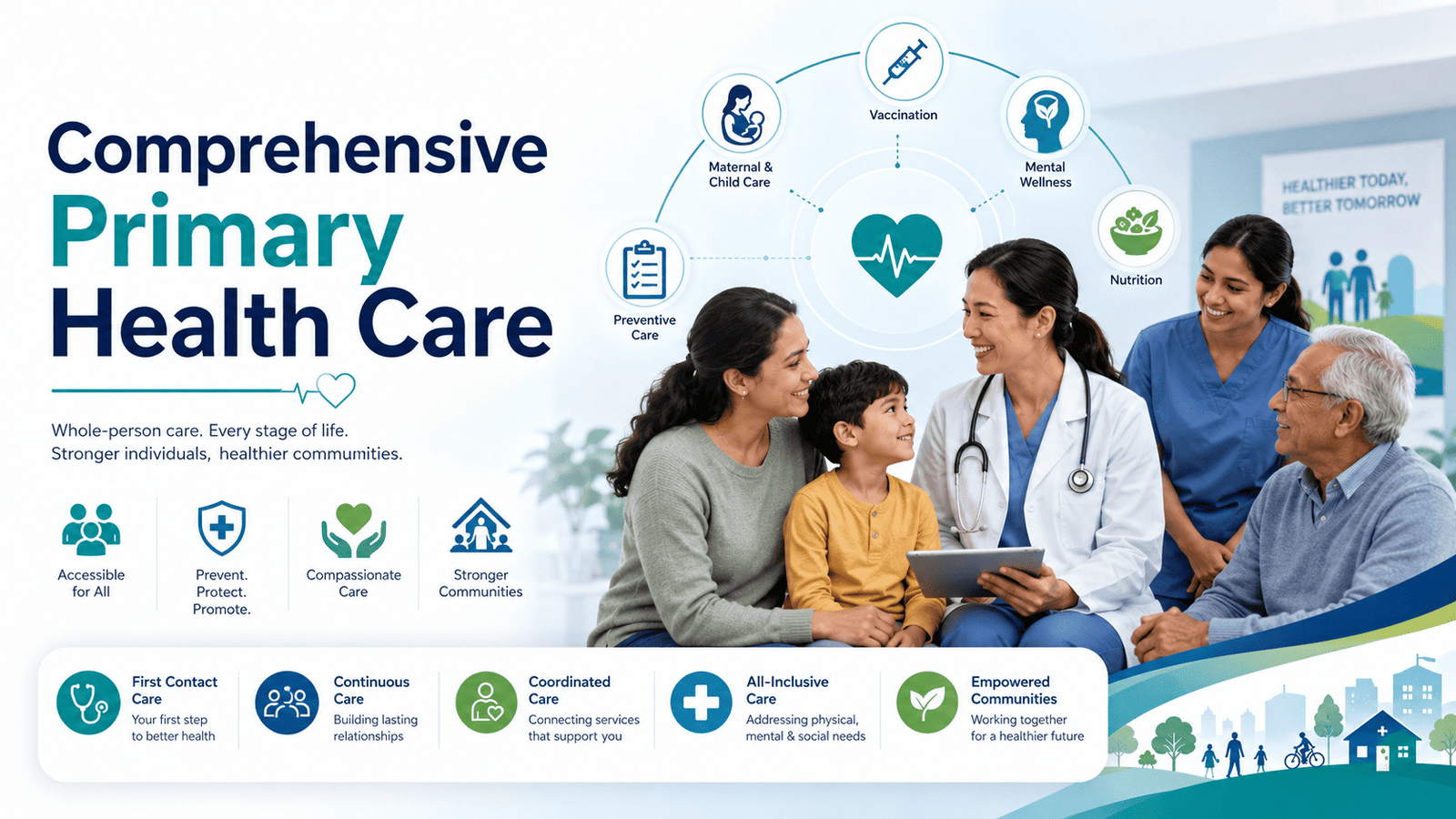
CPHC most commonly stands for Comprehensive Primary Health Care in public health and health-system contexts (especially in India and many LMICs). In other settings, the same acronym is used for different organizations (e.g., computing or palliative-care bodies), but the definitions and goals below refer to the public-health meaning, which matches your background.
Meaning of Comprehensive Primary Health Care
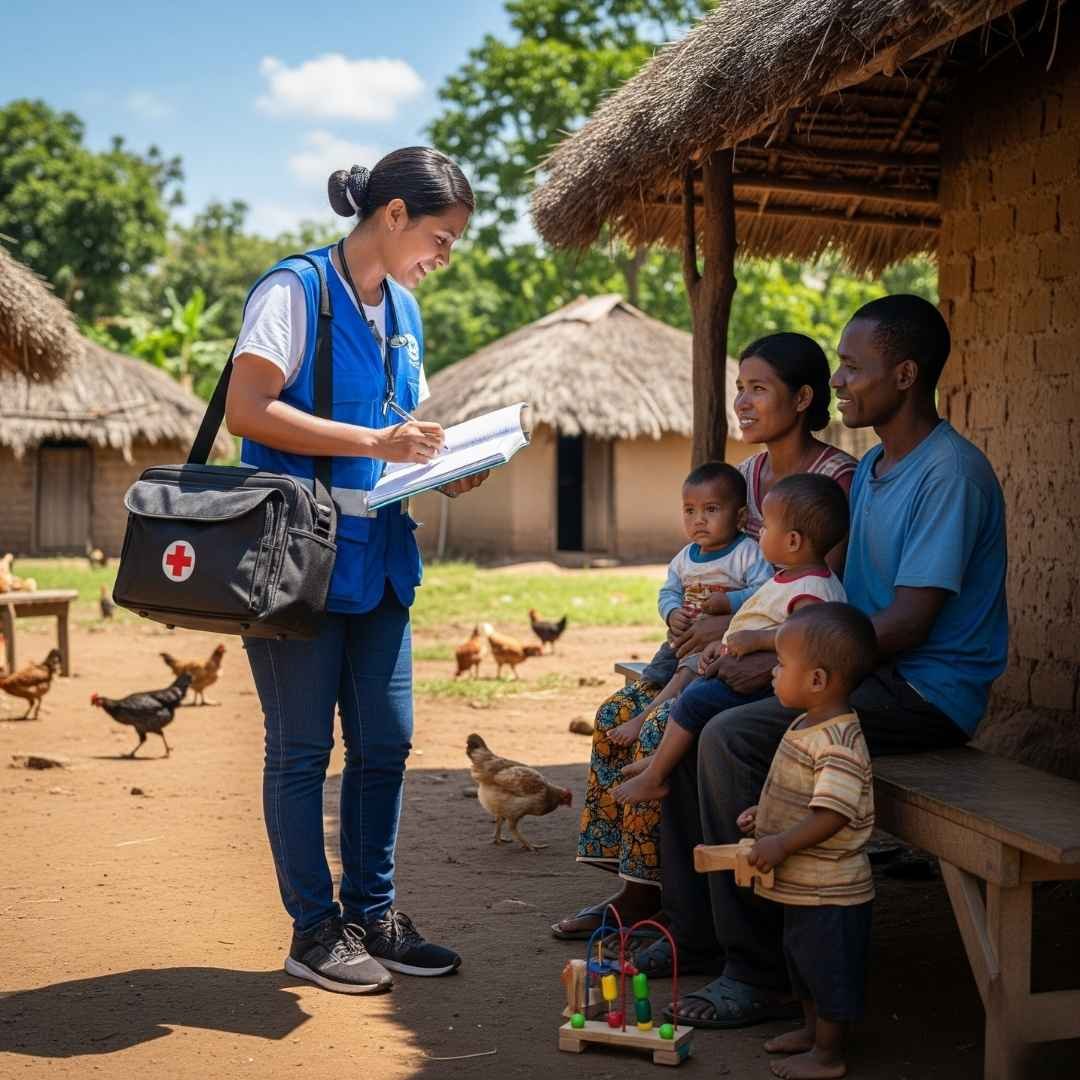
Comprehensive Primary Health Care (CPHC) is a holistic, people-centered approach to primary health care that aims to meet the majority of an individual’s health needs across the life course—from birth to old age—through promotive, preventive, curative, rehabilitative, and palliative services delivered close to where people live.
It goes beyond “basic” or “selective” primary care by:
- Addressing both communicable and non-communicable diseases, maternal and child health, and common NCD risk factors.
- Systematically considering broader determinants of health (e.g., water, sanitation, nutrition, education, livelihoods).
- Emphasizing community participation, intersectoral action, and appropriate technology.
- In India, CPHC is the core model being rolled out through Ayushman Bharat-Health and Wellness Centres (now Ayushman Arogya Mandir), which transform existing sub-centers and primary health centers into facilities delivering a defined package of comprehensive services.
Definition of Comprehensive Primary Health Care
Different sources phrase it slightly differently, but the core elements are consistent:
- Holistic, community-based definition: “Comprehensive primary health care is a holistic, community-based approach to health care that provides promotive, preventive, curative, rehabilitative, and palliative services and addresses broader determinants of health and ensures equitable, accessible, and affordable care for all.”
- Life-course, needs-based definition: “CPHC is a holistic approach to healthcare that addresses the majority of an individual’s health needs throughout their life, encompassing prevention, promotion, treatment, rehabilitation, and palliative care, delivered in a manner that is accessible, acceptable, affordable, and of high quality.”
- Program/operational definition (India context): Under Ayushman Bharat, CPHC means delivering 12 service packages, e.g., care in pregnancy and childbirth; child and adolescent health; family planning; management of communicable and non-communicable diseases; basic mental health, oral, and eye/ENT care; elderly and palliative care; and emergency services through upgraded Health & Wellness Centers with strong community linkage and IT support.
Goals of Comprehensive Primary Health Care
The overarching goal is to achieve universal health coverage (UHC) through strong, equitable, and efficient primary health care that improves population health outcomes at the lowest sustainable cost.
More specifically, CPHC aims to
- Increase access to essential, comprehensive primary care services for all, especially underserved and vulnerable groups.
- Improve quality and efficiency of primary care so that most health needs are met at the first level, reducing unnecessary hospital use.
- Address the full spectrum of health needs across the life course, including NCDs, maternal-child health, mental health, and palliative care.
- Tackle social and environmental determinants of health through intersectorial convergence and community participation.
- Empower individuals and communities through health education, behavior-change communication, and involvement in planning and monitoring services.
What CPHC means here:
As we already saw,
CPHC = Comprehensive Primary Health Care: promotive, preventive, curative, rehabilitative, and palliative care across the life course, with community participation and attention to social determinants.
Under Ayushman Bharat, this is operationalized as 12 service packages, including
- Care in pregnancy and childbirth
- Neonatal, infant, child, and adolescent health
- Family planning and reproductive health
- Management of communicable diseases ( national programmes)
- Common outpatient illness
- Screening and management of NCDs (hypertension, diabetes, cancers, etc.)
- Basic eye, ENT, and oral health
- Elderly and palliative care
- Emergency medical services
- Basic mental health screening and management.
Policy Rationale
- Cost-effectiveness: managing NCDs and common conditions early at the primary level should reduce expensive hospitalization.
- Equity: bringing a wider set of essential services to rural/underserved areas.
- System design: Creating a gatekeeping/referal function so HWCs feed into higher levels in a planned way.
Healthcare Administration Guidelines
Healthcare administration guidelines cover a wide range of areas—from regulatory compliance and patient safety to staff management and quality improvement.
Core Guideline Areas in Healthcare Administration:
Regulatory and Legal Compliance
- Follow national and local regulations, e.g., in India: Clinical Establishments Act, Biomedical Waste Management Rules, and NQAS standards.
- Maintain documentation for accreditation, e.g., NABH, ISO 9001
- Ensure adherence to labor laws, infection control mandates, and data privacy, e.g., India’s Digital Personal Data Protection act 2023
Patient Safety and Quality of Care
- Implement protocols aligned with WHO patient safety initiatives and national guidelines, e.g., DGHS Hospital Manual, April 2025
- Use a standardized checklist for high-risk procedures and medication safety.
- Track and report adverse events through internal quality assurance systems.
Infection Prevention and Control (IPC)
- Follow CDC and NIOSH-recommended practices for healthcare worker safety, including PPE use, hand hygiene, and exposure management.
- Establish hospital infection control committees and conduct regular audits.
Human Resources and Staff Competency
- Ensure staff are trained per competency-based frameworks, e.g., MD in Health Administration curricula in India
- Maintain up-to-date licensure, continuing education records, and role-specific SOPs.
Operational and Financial Management
- Adhere to billing transparency, insurance claim protocols, and financial auditing standards.
- Use evidence-based resource allocation models for staffing, equipment, and supplies.
Emergency and Disaster Preparedness
- Develop and regularly update hospital disaster management plans, as emphasized in recent Indian healthcare planning guides.
- Conduct drills for mass casualty, outbreak, and infrastructure failure scenarios.