






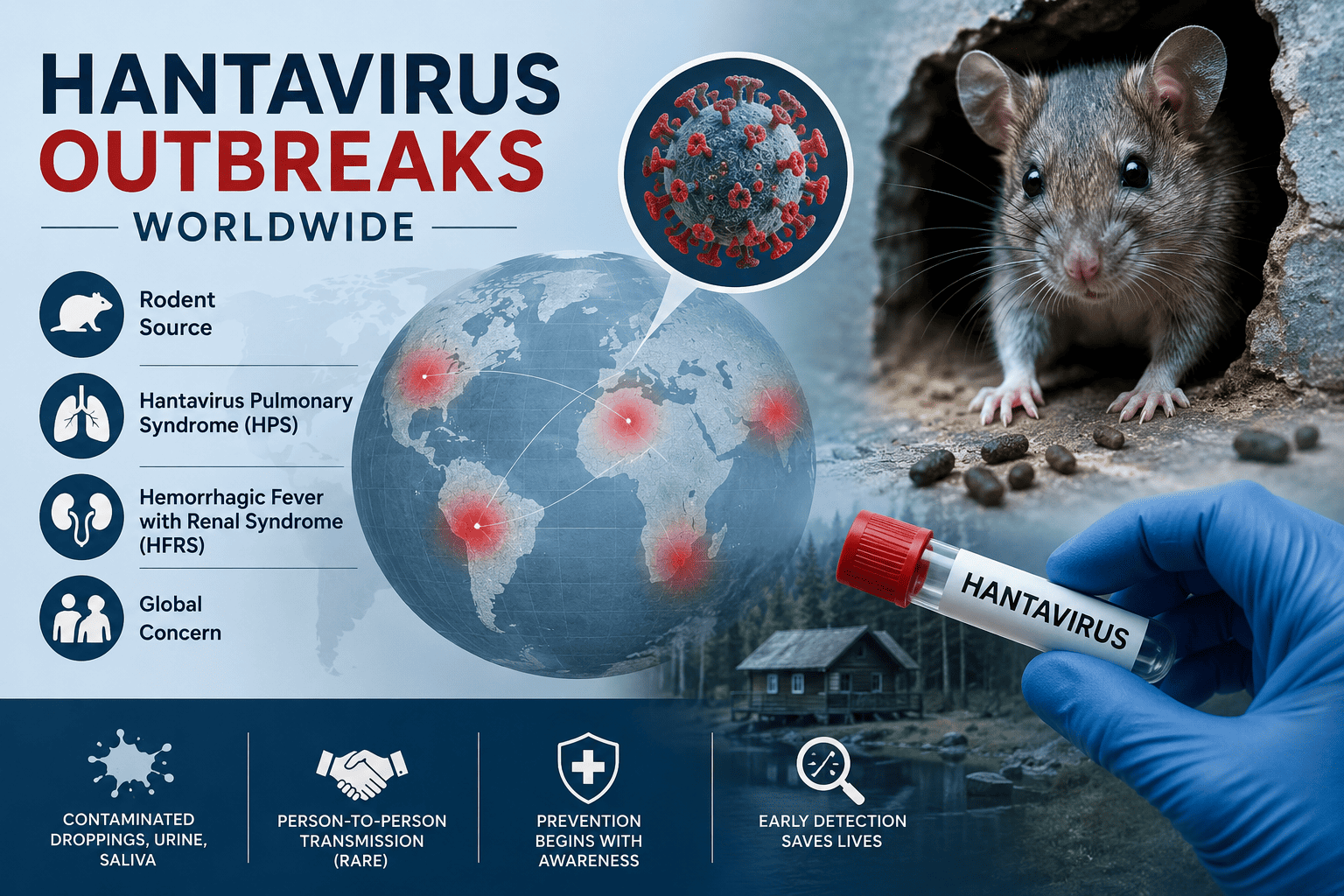
Between 2023 and 2026, notable Hantavirus outbreaks occurred across the Americas, Europe, Asia, and India. The most significant event was a rare person-to-person transmission of the Andes virus on the MV Hondius cruise ship in May 2026, alongside climbing regional cases in Argentina and Chile
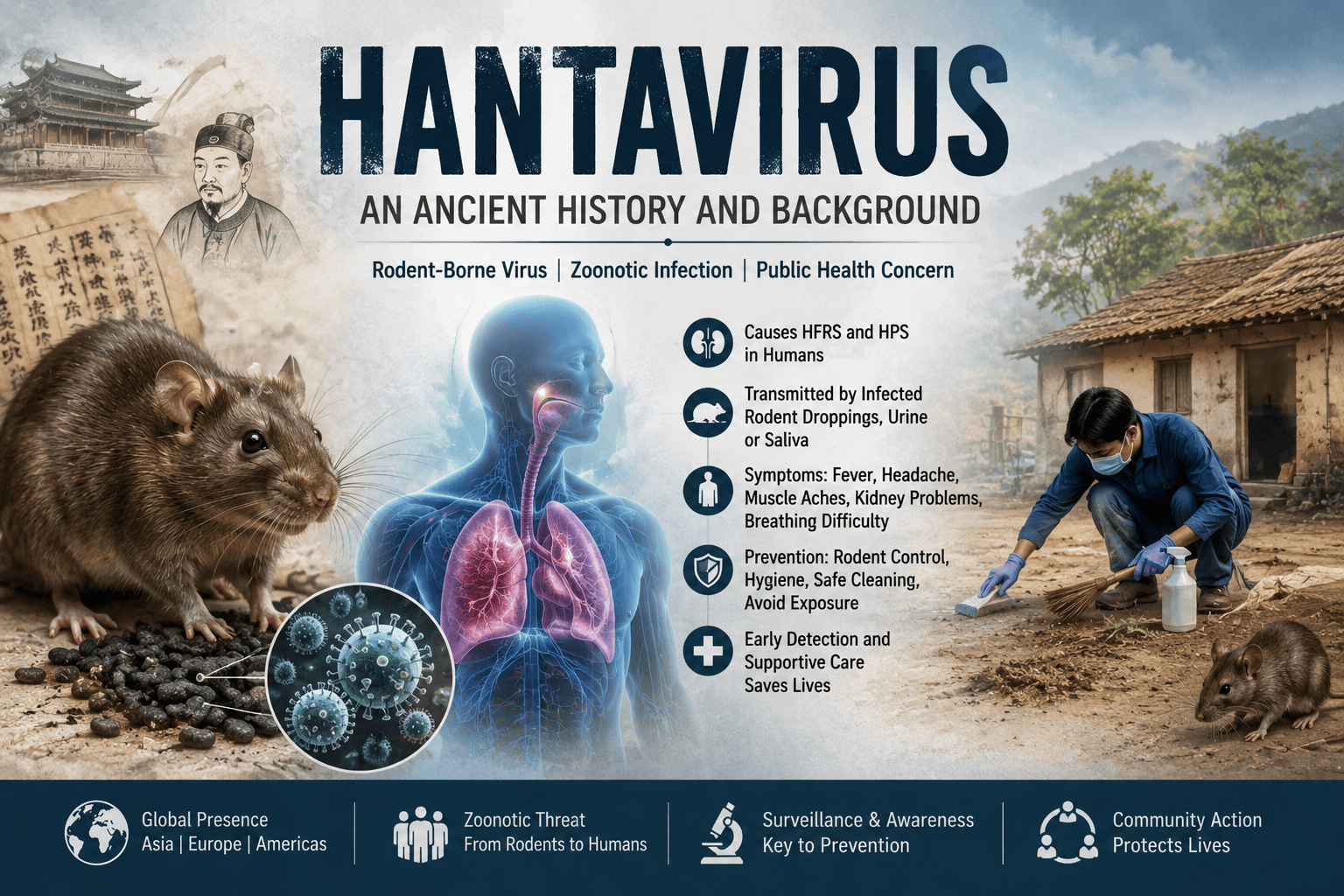
Hantavirus outbreaks remain a public health concern globally, primarily transmitted through contact with infected rodents or their droppings, urine, or saliva. These viruses cause hantavirus pulmonary syndrome (HPS) in the Americas or hemorrhagic fever with renal syndrome (HFRS) in Asia and Europe, with mortality rates of 1 to 15% for HPS and up to 5% for HFRS.
A summary of notable recent outbreaks from 2023 to 2026, based on reports from WHO, CDC, ECDC, and national health agencies:
Where did Hantavirus outbreaks occur ?
What is the current Hantavirus situation in the United States?
The CDC reported 35 to 40 cases annually, mostly in the Southwest, e.g., 28 cases in 2023, including clusters in California and Arizona. A 2024 outbreak in Yosemite National Park linked to rodent-infested cabins sickened several visitors.
Which areas in Argentina and Chile are facing Hantavirus spikes?
Andes virus drove ~50 cases yearly in Patagonia. Argentina saw 62 cases in 2023 (20% fatality), with peaks in Chubut Province; Chile reported 40+ cases in 2024.
What caused the Hantavirus outbreaks in China?
HFRS outbreaks in Hubei and Henan provinces affected hundreds, with 1200+ cases reported by mid-2025, tied to seasonal rodent population surges.
Where are Hantavirus clusters rising in Europe?
Puumala virus caused mild HFRS clusters in France (200+ cases in 2024), Germany, and Sweden. ECDC noted increased cases due to wet weather boosting rodent numbers.
Have there been Hantavirus cases reported in India?
Rare cases emerged in Jammu & Kashmir and Kerala, with 5 confirmed infections linked to field rodents: surveillance heightened amid monsoon risks.
What is the status of the Choclo virus in Panama?
Choclo virus outbreak in rural areas reported 15 cases, per PAHO.
Major Recent Outbreaks: MV Hondius Cruise Ship (May 2026)
| Aspect | Details |
|---|---|
| Location | Atlantic Ocean (ship departed from Argentina, near Cabo Verde) |
| Virus Strain | Andes virus (ANDV), the only hantavirus known to transmit person to person |
| Cases | 11 confirmed cases among passengers/crew; 7 to 8 suspected cases |
| Deaths | 3 Fatalities (Dutch couple + German man) |
| Case Fatality Rate | ~27 to 32% (3 deaths among 10 to 11 cases) |
| Status | CDC and WHO responding; global risk assessed as low |
| Source | Under investigation; likely exposure to South American rodents before departure. |
Hantavirus in the Americas
| Country | 2025 Cases | 2025 Deaths | CFR | 2026 (through Week 15) |
|---|---|---|---|---|
| Argentina | 66 | 21 | 32% | 32 cases |
| Chile | – | – | – | 38 cases, 13 deaths |
| Bolivia | – | – | – | 11 cases |
| Brazil | – | – | – | 3 cases, 1 death (2026) |
| Panama | – | – | – | 8 cases |
| Paraguay | – | – | – | 2 cases |
| Tot. (Americas, 2025) | 229 cases | 59 deaths | ~26% | 94 cases, 13 deaths (2026) |
What is the current global Hantavirus situation?
Argentina reported double the cases compared to the same period last year. PAHO issued an epidemiological alert in December 2025 due to increased cases and lethality.
The MV Hondius cruise ship outbreak in May 2026 is the most significant recent hantavirus event, involving the rare person-to-person transmission of the Andes virus.
Meanwhile, Argentina and Chile are experiencing elevated HPS cases in 2025-2026, with Argentina’s cases doubling.
Despite global attention, the WHO and CDC assess the overall pandemic risk as low since the Andes virus has no natural hosts outside South America.
Environmental Factors Contributing to Outbreaks
No massive global pandemics, but climate change and urbanization are driving localized spikes. For real-time data, check WHO Diseases—Outbreak News or the CDC Hantavirus page.
Prevention focuses on rodent control and hygiene.
Environmental and anthropogenic factors like climate change, urbanization, and deforestation are increasingly linked to rising outbreaks of rodent-borne diseases.
Rodents serve as efficient vectors across diverse ecological landscapes due to their adaptability.
How can you prevent Hantavirus transmission?
1. Exclusion of Rodents
- Seal holes and gaps in homes to keep rodents out.
2. Rodent Population Control
- Place traps to decrease rodent infestation.
3. Food Source Management
- Remove food sources that attract rodents.
- Store food in rodent-proof containers.
4. Environmental Sanitation
- Maintain clean households with proper garbage disposal.
5. Avoid Direct Exposure
- Avoid contact with rodent urine, feces, and saliva.
6. Public Health Measures
- Early detection, effective surveillance, and integrated control strategies are critical for mitigating the growing threat of rodent-borne zoonoses to global health.
Conclusion
Early detection, effective surveillance, and integrated control strategies are critical for mitigating the growing threat of rodent-borne zoonoses to global health. Prevention measures focused on rodent control, environmental sanitation, and reducing human exposure remain essential for limiting hantavirus transmission and outbreaks worldwide.
Q: Can Hantavirus spread from person to person?
Generally no. However, the Andes virus strain—notably involved in the May 2026 MV Hondius cruise ship outbreak—is the only hantavirus strain known to be capable of rare person-to-person transmission.
Q: What is the mortality rate of Hantavirus?
A: The mortality rate ranges from 1% to 15% for Hemorrhagic Fever with Renal Syndrome (HFRS) in Asia and Europe, and can be as high as 26% to 32% for Hantavirus Pulmonary Syndrome (HPS) in the Americas.

2 Comments
Ebola Virus Disease: 7 Vital Facts on Symptoms & Treatment
June 2, 2026[…] the Bundibugyo strain, but the government has intensified preparedness and surveillance because of recent outbreaks in […]
7 Best Insights into the Life Cycle and Morphology of Hantavirus
June 2, 2026[…] Hantavirus Pulmonary Syndrome (HPS) in the Americas. […]