



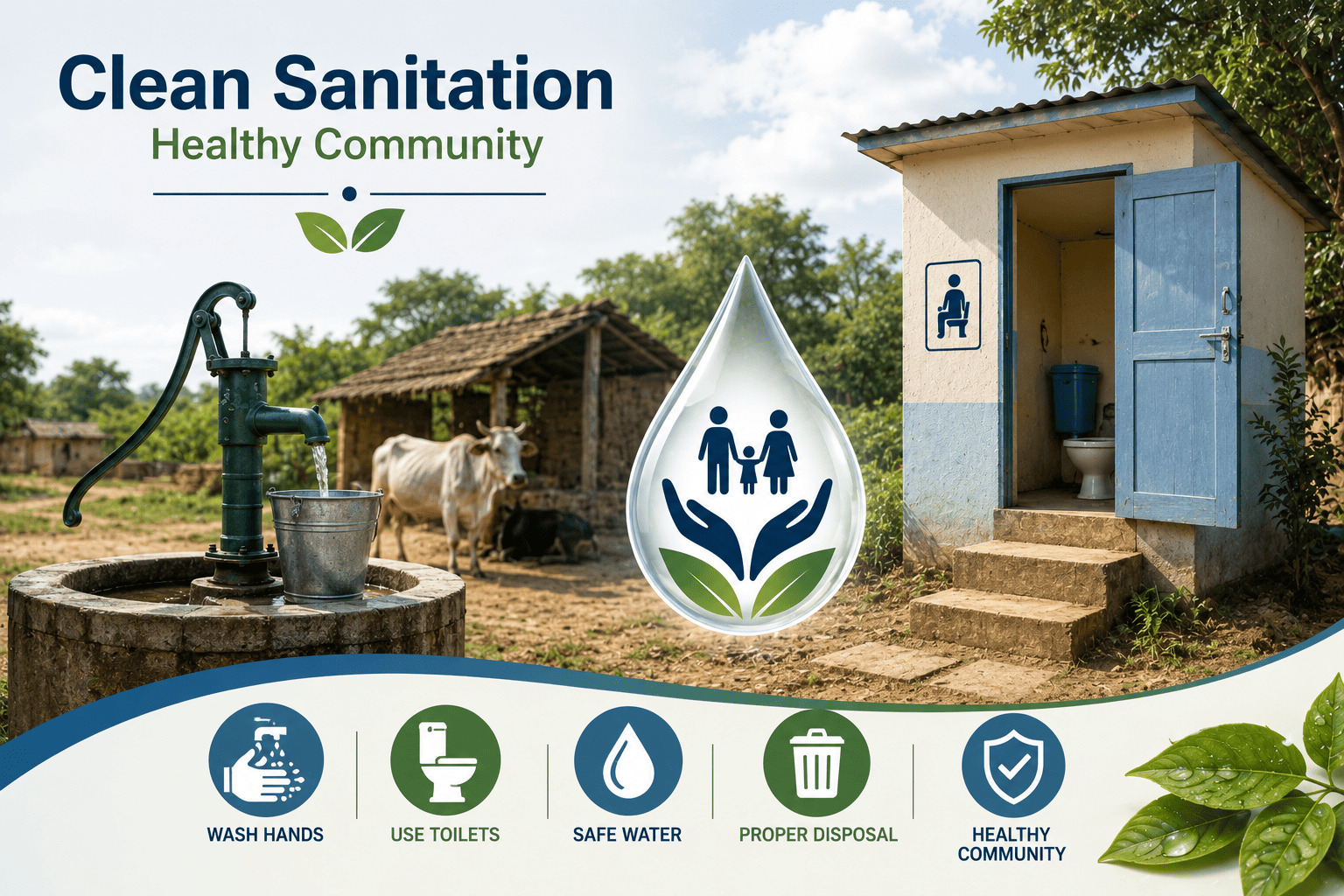
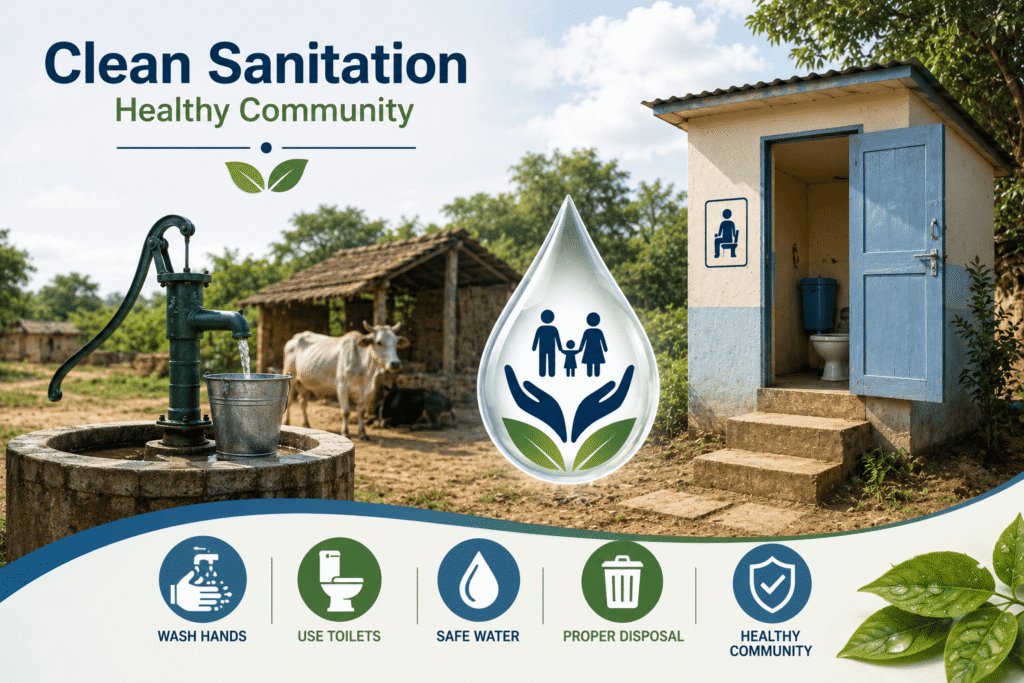
Human waste sanitation refers to urine and feces produced by the human body. In public health, it is considered dangerous when it is not safely collected, treated, and disposed of because it can spread infection and contaminate the environment. Proper disposal of human excreta is one of the most important measures for preventing disease and maintaining a healthy community. Human excreta disposal is important because feces may contain many disease-causing organisms. If waste is left in the open, germs can enter water, food, soil, and hands. Flies, cockroaches, and other insects may also carry these germs from excreta to food and household surfaces. Thus, unsafe disposal becomes a major cause of illness in families and in the whole community.
What is Human Waste?
Human waste, or human excreta, refers to the waste products of the human digestive system and metabolism, specifically urine and feces (with or without water mixed in). In sanitation, it also includes sewage or wastewater that carries these excreta. It matters because these wastes can carry pathogens and contaminate water, food, soil, and hands, leading to disease.
Why Human Waste Sanitation Matters
Proper disposal of human excreta is essential to break the fecal-oral route of infection; reduce flies, insects, odor, environmental pollution, and animal breeding; and keep drinking water sources clean. Even basic toilet systems that safely contain excreta can greatly reduce common illnesses linked to poor sanitation.
Diseases Spread by Human Waste
Human waste can spread the following:
- Cholera
- Typhoid
- Dysentery (Shigella), Salmonella, Campylobacter
- Diarrheal diseases, amoebiasis, cryptosporidiosis
- Hepatitis A, Hepatitis E, Polio, Norovirus
- Gastroenteritis and other intestinal infections
- Some parasite diseases such as Schistosomiasis, giardiasis
- Pinworms, Tapeworms, hookworms, guinea worms
These illnesses spread when people ingest contaminated water or food, or when they touch contaminated surfaces and then touch their mouths.
Healthy Sanitation Criteria
A healthy human waste sanitation system should:
- Safely contain excreta.
- Prevent direct human contact with feces and sewage.
- Stop contamination of drinking water and food.
- Control flies, insects, pigs, and animals.
- Allow safe collection, transport, treatment, and final disposal or reuse.
House Drains and Sewers
House drains collect wastewater from toilets, bathrooms, and kitchens and move it away from the home, reducing exposure and nuisance. The sewerage system then carries this wastewater to treatment or safe disposal, which is important because untreated sewage can contain bacteria, parasites, and viruses that cause illness. They reduce contact with dirty water and help keep the house and surroundings cleaner. Proper sewerage prevents sewage from entering streets, houses, and water bodies.
Human Excreta and Disease Burden
The disease burden from human excreta is high because feces can carry many pathogens, and poor containment increases transmission in households and communities. Sewage exposure can cause gastrointestinal illness and skin infection, especially when there is direct contact or contaminated water use.
Rural Disposal Methods
In rural areas, safe options include:
- Pit latrines.
- Twin-pit pour-flush toilets.
- Septic tanks where feasible.
- Composting or other well-managed non-sewered sanitation systems.
- Safe emptying, transport, and treatment of sludge where services exist.
The key point is that any system must keep excreta isolated from people, water, crops, and animals.
Community Engagement
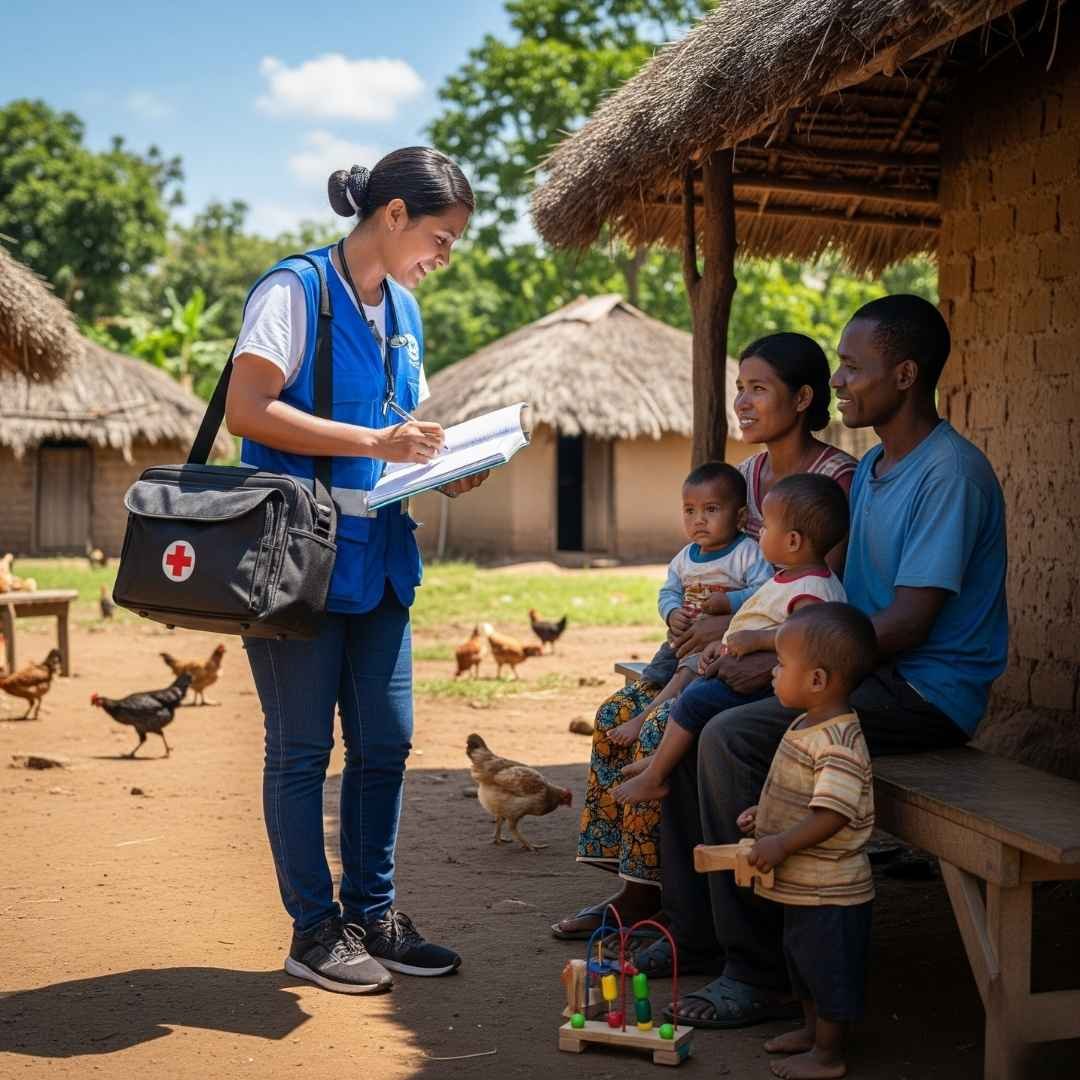
Community engagement: people must be taught why open defecation is harmful. Community participation helps increase toilet use and hygiene behavior.
Community Action and IEC
Community engagement is important because human waste sanitation works best when households understand how disease spreads and why toilet use matters. IEC materials should be simple and visual and should explain the following:
- Handwashing with soap.
- Safe toilet use.
- Not defecating in the open.
- Protecting water sources.
- Keeping children’s feces safely disposed.
Public Health Role
The public health department should:
- Promote human waste sanitation and hygiene education.
- Monitor outbreaks and high-risk areas.
- Support toilet construction and safe waste management.
- Train workers and communities.
- Enforce human waste sanitation rules and prevent open defecation.
- Coordinate water, human waste sanitation, and disease-control programs.
Control and Prevention
The main prevention measures are:
- Use toilets consistently.
- Wash hands after defecation and before eating.
- Protect drinking water from contamination.
- Treat sewage and sludge safely.
- Keep flies away from feces.
- Educate communities continuously.
- Rapidly responds to leaks, flooding, and sewage spills.
- Avoid open defecation.
- Clean toilets and surroundings regularly.
- Promote community awareness continuously.
Ideal Wells
An ideal well is a properly located, properly constructed well that gives a safe, adequate, and continuous supply of groundwater with minimum contamination and maintenance problems.
Important Points of Ideal Wells
- It should be located in an area with abundant groundwater and good aquifer condition.
- It should be 50 feet away from sources of contamination such as latrines, septic tanks, drains, garbage pits, and animal sheds.
- The side should preferably be on slightly elevated, stable ground, not in a flood-prone or waterlogged area.
- The well should be properly lined or cased to prevent collapse and seepage of polluted surface water.
- A sanitary seal and protected wellhead should be provided to stop entry of dust, insects, surface runoff, and other contaminants.
- The well should have a proper cover and safe drawing arrangement, such as a hand pump or covered bucket system, to avoid direct contamination.
- The water should be safe, palatable, and adequate in quantity for the community’s needs.
- The well should allow easy access for maintenance, cleaning, disinfection, and periodic inspection.
- The well should be located at a safe distance from other wells to avoid interference between them.
- The construction should ensure durability, good yield, and long life with minimum chances of bacterial contamination.
Conclusion
Thus, an ideal well is one that is safely located, properly constructed, protected from contamination, and capable of supplying enough wholesome water throughout the year.

1 Comment
Ascariasis (Roundworm): 5 Critical Symptoms and Treatments
July 20, 2026[…] disposal of human waste: sewage treatment and proper management of fecal […]