



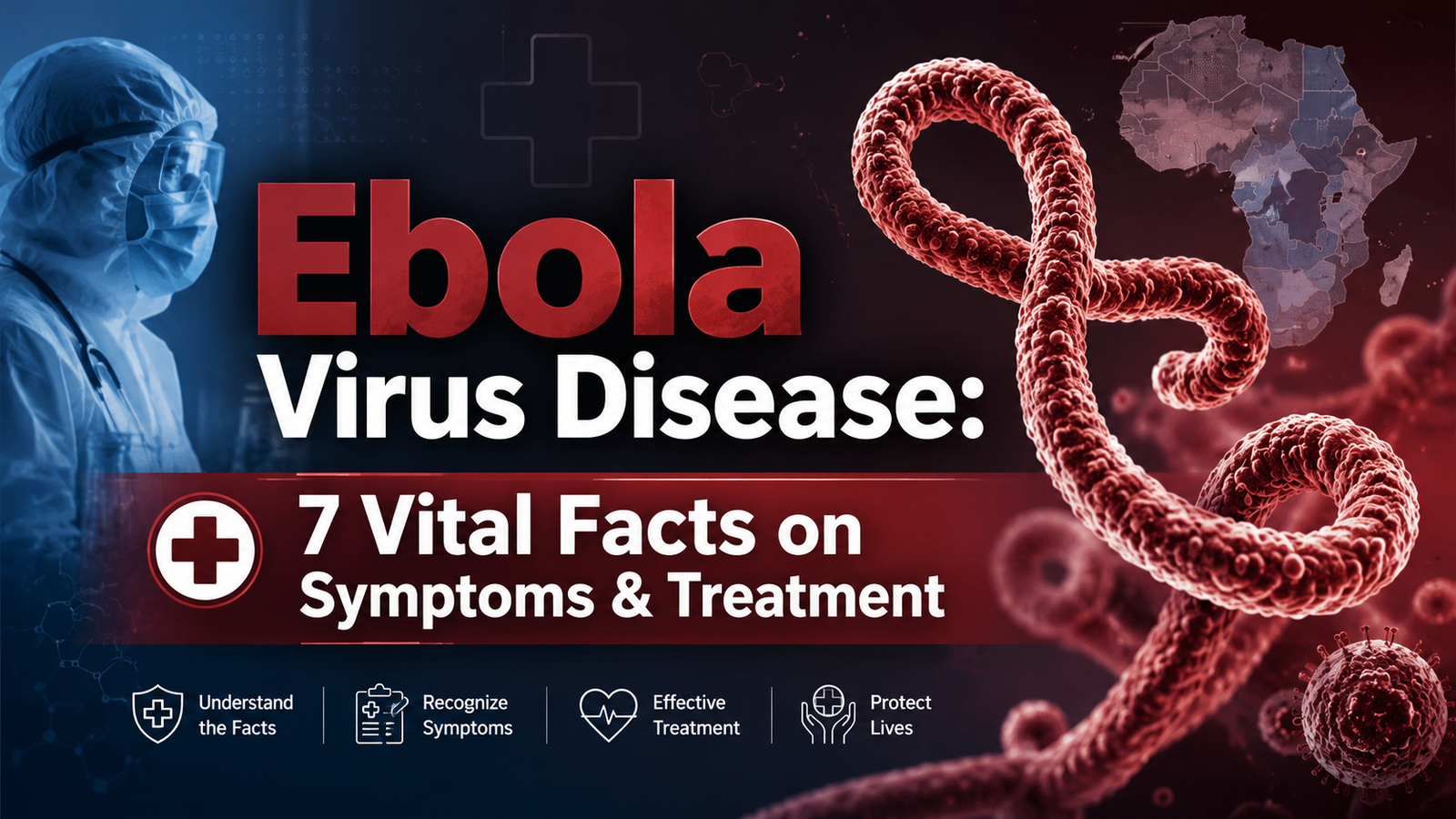
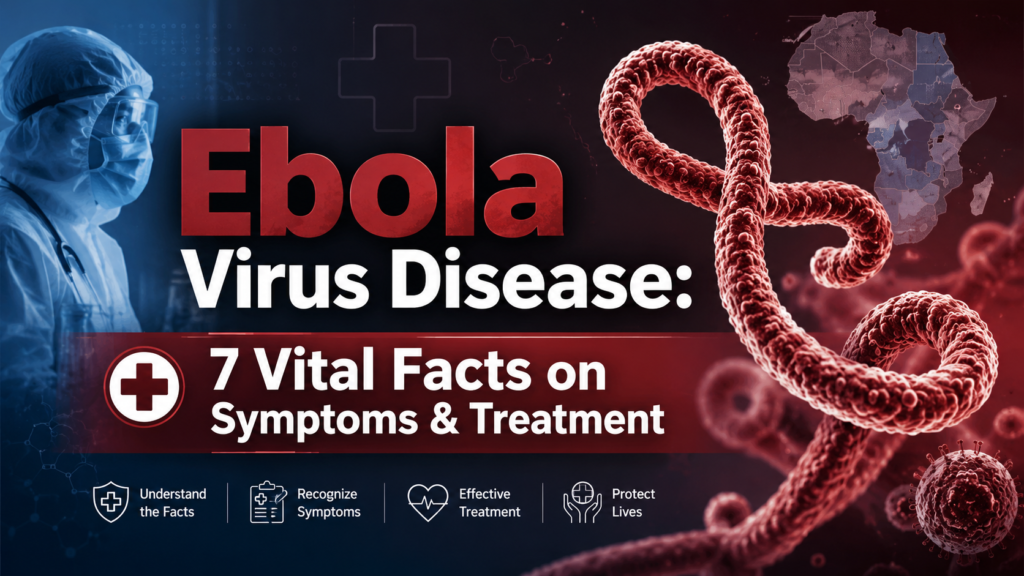
Ebola Virus Disease (EVD) is a severe, often fatal illness in humans and non-human primates caused by infection with an orthobolavirus. Characterized by sudden fever, profound weakness, and severe viral hemorrhagic manifestations, prompt clinical diagnosis and strict vector isolation are critical to managing its high mortality rate.
Ancient History
Researchers suggest filoviruses, the family that includes Ebola, are very ancient and may have existed 16 to 23 million years ago or longer. Ebola was first identified in 1976 during outbreaks in what is now the Democratic Republic of the Congo and South Sudan. The name comes from the Ebola River near one of the early outbreaks. That means the virus family is ancient, but the disease was only recognized medically in the 20th century.
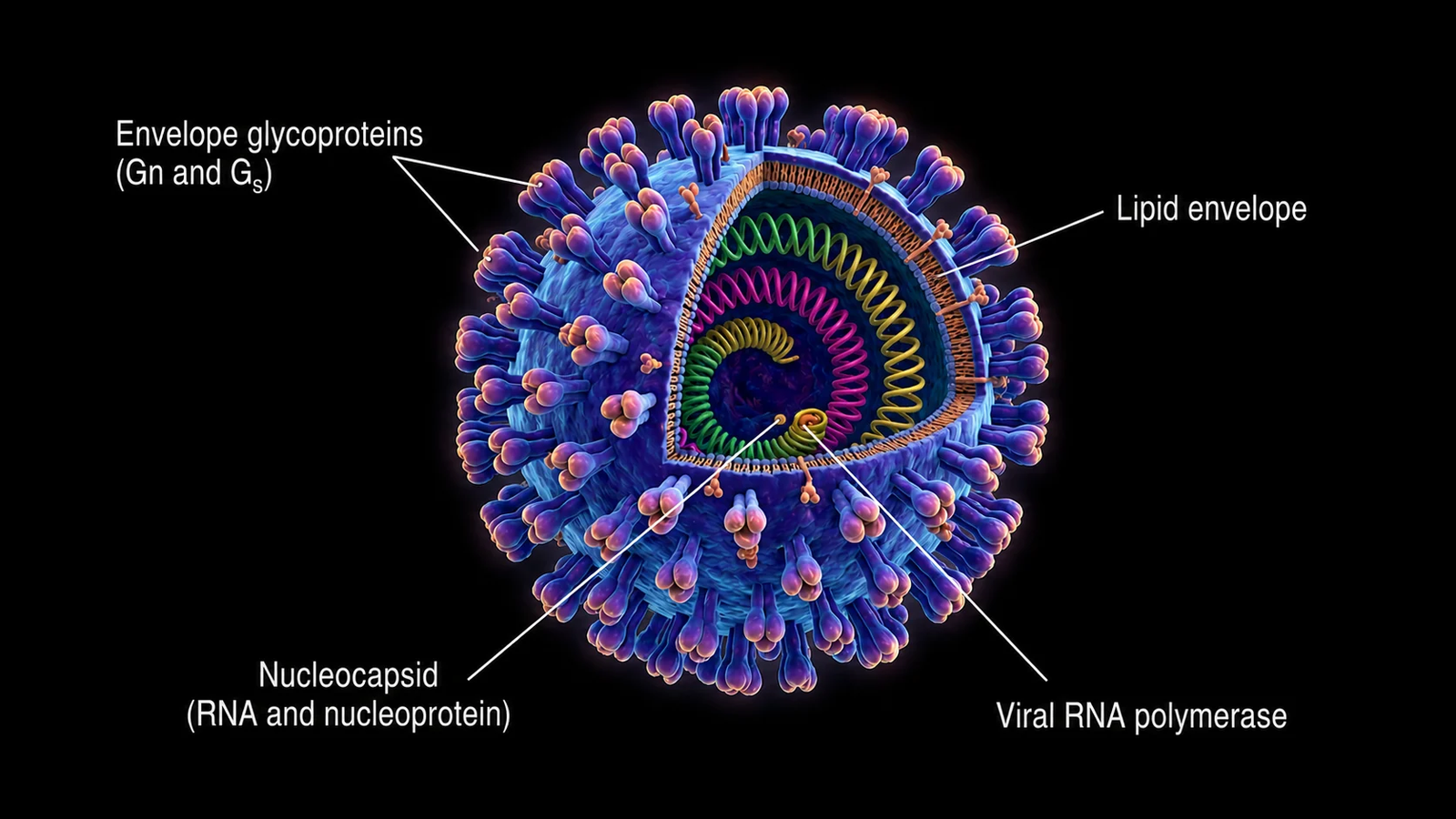
The Ebola virus is a filamentous, enveloped RNA virus that causes Ebola virus disease, a severe viral illness in humans and other primates that can damage multiple organs, cause bleeding problems, and become fatal without prompt care. Its history, spread, diagnosis, prevention, and control are best understood together because they all shape outbreak response.
Ebola virus belongs to the family Filoviridae and is known for causing outbreaks of viral hemorrhagic fever. For many years, Ebola was seen mainly as a disease of remote parts of Central Africa, with repeated outbreaks in that region. The largest and most complex outbreak happened in West Africa from 2014 to 2016, beginning in Guinea and spreading to Sierra Leone and Liberia. Scientists later learned that the virus family is much older than the 1976 discovery and that fruit bats are thought to be natural hosts. Today, Ebola is studied as a recurring public health threat because it can cause severe outbreaks with high fatality rates.
Ebola is an old virus family, but the disease was only discovered in 1976, and since then it has remained a recurring public health threat in Africa.
Factors Affecting the Outbreaks
Several factors made the 2014-2016 West Africa Ebola outbreaks much larger than earlier outbreaks.
Key Factors
Late recognition of outbreak
The outbreak began in late 2013 but was confirmed months later in 2014, which gave the virus time to spread widely.
Weak preparedness
Gaps in surveillance, isolation, transport, communication, training, and protective equipment made control harder.
Poor health-system capacity
Many affected areas had too few treatment facilities and too little staffing to manage cases quickly.
Community mistrust and low awareness
Public fear, misinformation, and limited risk communication reduced cooperation with control measures.
Social and cultural practices
Traditional caregiving and burial practices increased contact with infected body fluids.
Morbidity and cross-border spread
Movement of people between Guinea, Liberia, and Sierra Leone helped the outbreak expand regionally.
Environmental change
Deforestation and land-use change may have increased human contact with infected wildlife at the start of the epidemic.
In simple terms, the outbreak became so large because the virus spread before it was recognized, and the response systems were not enough to stop it early.
What Is Ebola Virus Disease?
Ebola virus disease (EVD), also called Ebola hemorrhagic fever, is a severe illness caused by orthoebolaviruses in the Filoviridae family. The virus is transmitted to humans from animals and then spreads person to person through direct contact with blood, secretions, or other bodily fluids, and illness can be fatal.
What Causes Ebola Virus Infections?
Human infection usually begins with spillover from infected wildlife, especially fruit bats, and can involve intermediate hosts such as non-human primates or other animals such as porcupines and then spread through direct contact with blood, secretions, organs, or other body fluids of infected people. Contaminated objects such as bedding, clothing, and needles can also transmit the virus.
Main Types
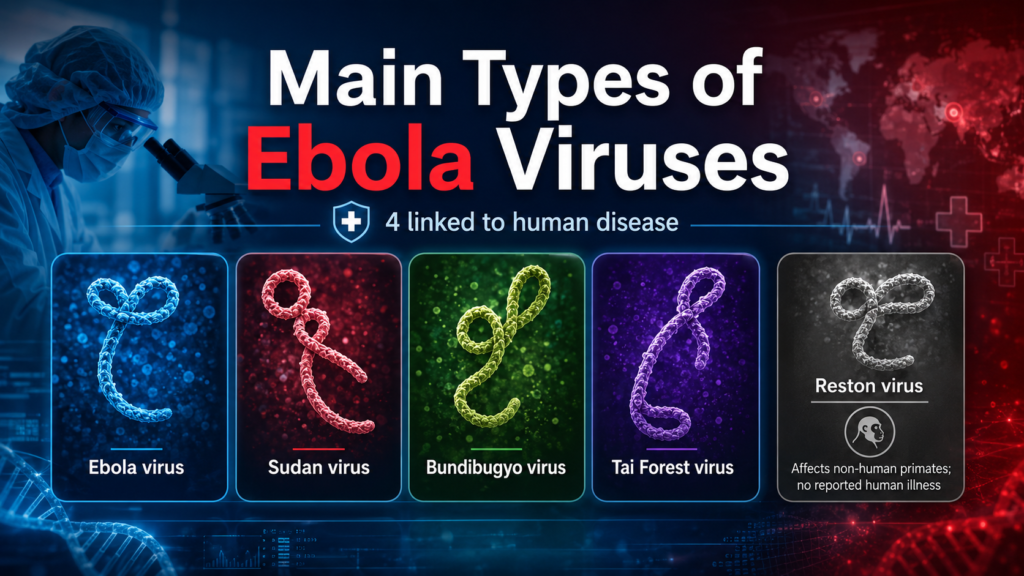
The main Ebola viruses known to cause disease in humans are Ebola viruses. There are four orthobunyaviruses known to cause disease in people:
Ebola virus
Sudan virus
Bundibugyo virus
Tai Forest virus
The Reston virus has infected non-human primates but has not been reported to cause illness in people to date.
What Are the Key Symptoms of Ebola Virus Disease?
Symptoms usually start 2 to 21 days after exposure. Early symptoms include fever, weakness, muscle pain, headache, sore throat, vomiting, diarrhea, and sometimes rash or bleeding.
Diagnosis and Diagnostic Methods
Diagnosis is based on clinical suspicion plus laboratory testing because early symptoms can look like malaria, typhoid, or other infections.
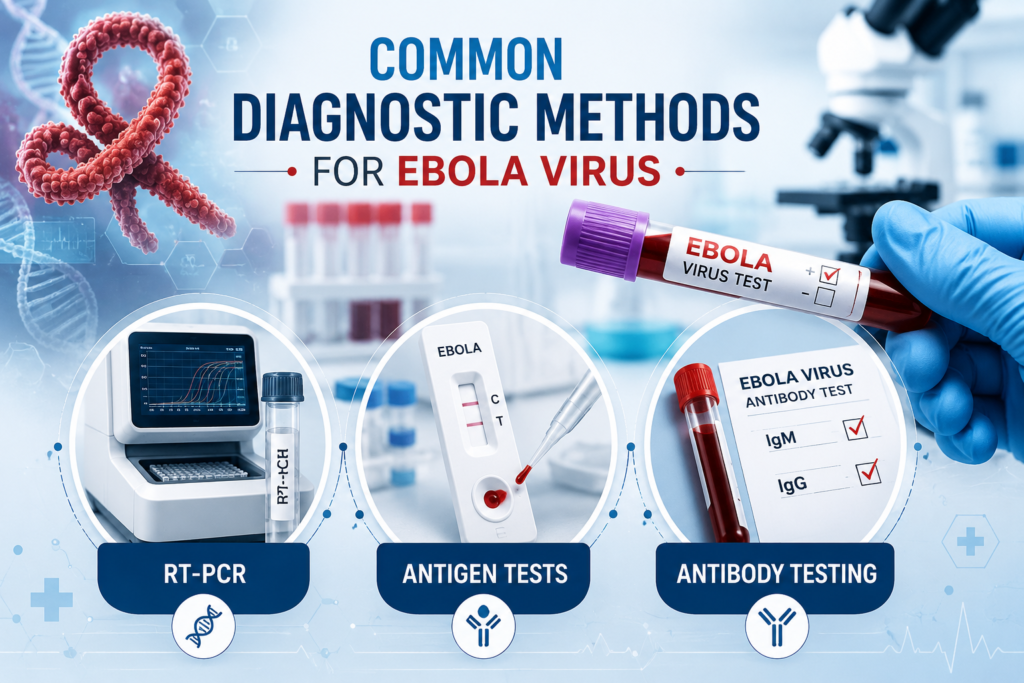
Common Diagnostic Methods
RT-PCR
Antigen tests
Antibody testing
Samples are handled under strict biosafety precautions.
Prevention and Control
Prevention focuses on avoiding contact with infected people, animals, or contaminated objects and on strict hand hygiene and infection control practices.
Control Measures
Rapid isolation of cases
Contact tracing
Safe burial practices
Monitoring of exposed contacts
Safe handling of contaminated materials
Community education is essential because outbreaks are harder to control when people do not trust or understand the response measures.
Treatment
There is no simple cure for Ebola, but supportive care such as fluids, oxygen, electrolyte correction, and treatment of complications improves survival. Some Ebola species also have approved vaccines and treatments in certain settings, but availability depends on the strain and outbreak context.
Public Awareness
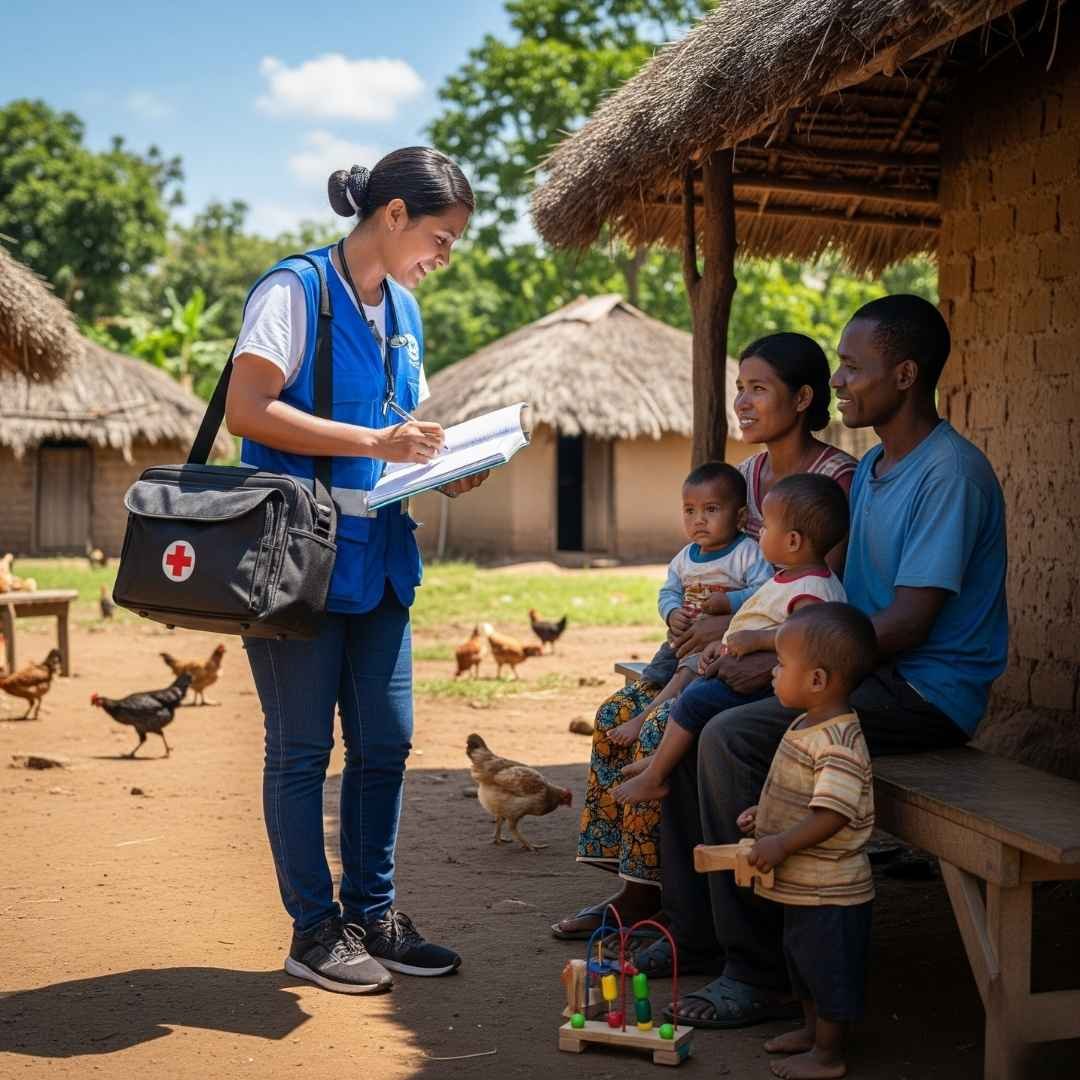
Public awareness means teaching people how Ebola spreads, its symptoms, and when to seek care. Clear messages help reduce fear, misinformation, and risky behavior.
Community Engagement
Community engagement involves working with local leaders, survivors, families, and religious groups so people trust and follow health advice. It is important because outbreaks are harder to control when communities are not involved.
IEC Materials
IEC materials are information, education, and communication resources such as posters, leaflets, radio messages, and community talks. They should use simple language, local examples, and practical steps for prevention and early reporting.
Role of the Public Health Department
The public health department is responsible for surveillance, risk communication, outbreak investigation, isolation guidance, and coordination with hospitals. It also supports preparedness, training, and response planning.
Magnitude and Global Risk
Ebola is not a common disease worldwide, but outbreaks can be severe and have high fatality rates and major disruption to health systems and communities.
The largest outbreak was the 2014 to 2016 West Africa epidemic, which showed how quickly Ebola can overwhelm health systems.
Global risk remains significant because outbreaks can spread quickly where surveillance, infection control, and community trust are weak. International travel and delayed detection are major reasons the disease is treated as a serious global public health threat.
Risk in India Today
India has not reported a case of Ebola disease, caused by the Bundibugyo strain, but the government has intensified preparedness and surveillance because of recent outbreaks in Africa.
Current advice includes avoiding nonessential travel to affected countries and strengthening screening, isolation, and infection control readiness at points of entry of hospitals.
So the present risk in India is low but not zero, mainly because imported cases could occur if preparedness fails.
What Is the Pathophysiology of Ebola Virus Disease?
The Ebola virus affects the body by first attacking immune cells, then spreading system-wide and damaging blood vessels and organs. This can lead to blood vessel leakage, clotting problems, inflammation, and reduced blood flow to vital organs.
Organs and Systems Affected
Immune System
The virus infects key defensive cells, weakening the body’s early response to infection.
Blood Vessels and Blood Clotting
It damages vessel lining and disrupts clotting, which can cause internal leakage and small clots.
Liver
Ebola can severely damage the liver, reducing production of clotting proteins and other important blood components.
Digestive Tract
Damage to the gastrointestinal tract can cause vomiting and diarrhea, which may lead to dehydration.
Adrenal Glands
It can impair hormone production that helps control blood pressure, contributing to circulatory collapse.
Whole Body
In severe cases, the combined effects can cause shock and multiple organ failure.
Why It Matters
The disease is not limited to one organ. It behaves like a system-wide infection that disrupts immunity, blood flow, and organ function at the same time. That is why severe Ebola can become rapidly life-threatening.
Scientific Evidence Linking Fruit Bats to Ebola Transmission
The scientific evidence linking fruit bats to Ebola is strong but not complete: bats are widely considered the most likely natural reservoir, yet scientists have not fully proven the entire transmission chain to humans. The evidence comes from bat infection studies, antibody surveys, viral RNA detection, and outbreak investigations.
Main Evidence
Antibodies in Fruit Bats
Researchers found evidence of asymptomatic Ebola infection in three fruit bat species, which suggests they can carry the virus without getting sick.
Viral Genetic Material
Studies have detected Ebola-related RNA or PCR-positive results in several fruit bat species, supporting exposure or infection in wild bat populations.
Outbreak Links
Investigations of human outbreaks have traced some early cases to direct exposure to fruit bats, including hunting, handling, or eating bats.
Ecological Overlap
Bat ranges and Ebola outbreak areas overlap in parts of Central and West Africa, and deforestation may increase contact between bats and people.
What Is Still Uncertain
Scientists have not consistently isolated live Ebola virus from bats in a way that fully proves bats are the sole reservoir or the exact route to humans in every outbreak.
So the best-supported view is that fruit bats are a probable reservoir and an important part of Ebola ecology, but transmission is likely influenced by multiple wildlife and human contact pathways.
Simple Takeaway
Fruit bats are the leading scientific suspect because they show signs of Ebola exposure, can harbor related viral material, and are linked epidemiologically to some outbreaks.
However, the evidence supports them as a likely reservoir, not as the only factor in every Ebola spillover event.

1 Comment
Ebola Virus Reservoirs: 6 Critical Facts on Ecology & Hosts
June 24, 2026[…] the reservoir and ecology of Ebola virus is important because it helps public health teams reduce spillover risk and design better […]