


Ascariasis is driven by a combination of environmental, behavioral, and socioeconomic factors that favor transmission and persistence of Ascaris lumbricoides in human populations.
Key epidemiological factors:
1. Environmental conditions:
- Warm, humid, tropical, and subtropical climates allow eggs to survive and embryonate in soil for months to years.
- Moist, shaded soil, e.g., under trees, near houses, or in fields, is ideal for egg development.
2. Sanitation and hygiene:
- Open defecation and inadequate latrine use contaminate soil with human feces containing eggs.
- Lack of safe water for handwashing and food preparation increases ingestion of eggs.
- Use of untreated human feces (night soil) as fertilizer spreads eggs onto crops.
3. Socioeconomic factors:
- Poverty, overcrowding, and low education levels correlate with higher infection rates.
- Limited access to health services and deworming programs sustains high prevalence.
4. Behavioral factors:
- Children playing in soil, geophagia (eating soil/termite mounds), and poor hand-to-mouth hygiene increase exposure.
- Consumption of raw, unwashed vegetables and fruits grown in contaminated soil.
5. Host factors:
- Children aged 5 to 15 years are most heavily infected due to behavior and developing immunity.
- Some evidence of heavier/genetic predisposition to heavier infection.
6. Co-infections:
- Frequent co-infection with other soil-transmitted helminths like hookworm, Trichuris, and other intestinal parasites due to shared transmission routes.
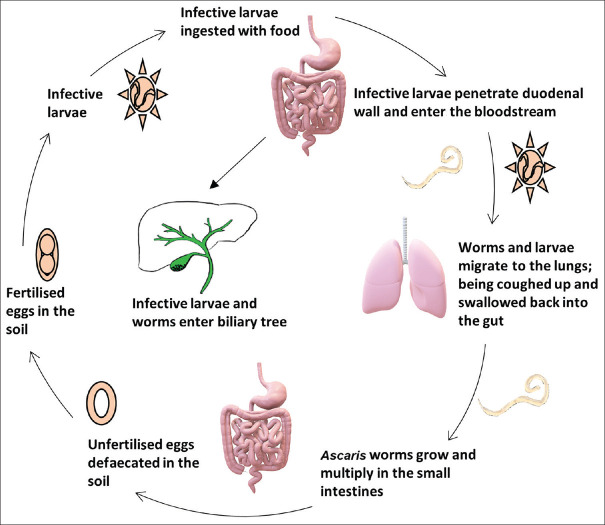
Problem of Ascariasis in India:
Ascariasis remains a significant public health problem in India, particularly in rural, periurban, and socioeconomically disadvantaged areas.
1. High endemicity:
India contributes substantially to the global burden of soil-transmitted helminthiasis, including ascariasis, due to:
- Large population with variable sanitation coverage.
- Persistent open defecation in some regions despite improvements under Swachh Bharat.
- Warm, humid climate favorable for egg survival.
2. Child health impact:
- High prevalence among school-age children, leading to malnutrition, anemia, stunting, and impaired cognitive development.
- Frequent co-infection with other helminths, compounding health effects.
3. Health system burden:
- Intestinal and biliary complications contribute to pediatric surgical emergencies in endemic areas.
- Increased school absenteeism and reduced learning capacity.
4. Control efforts:
- National Deworming Day (NDD) and state-level programs have reduced prevalence in many areas, but coverage gaps and reinfection remain challenges.
- Integration with WASH (Water, Sanitation, and Hygiene) initiatives is critical but unevenly implemented.
Incubation Period of Ascariasis:
The “incubation period” in ascariasis is best understood as the time from ingestion of infective eggs to the appearance of symptoms or detectable stages:
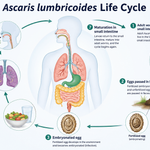
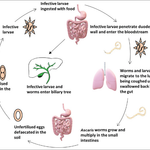
1. From egg ingestion to larval migration (pulmonary phase):
- Eggs hatch in the small intestine within hours to a day.
- Larvae migrate to the lungs via the blood stream in about 1 to 2 weeks.
- Pulmonary symptoms (cough, wheeze, fever) may appear during this period (Loffer’s syndrome).
2. From egg ingestion to egg passage in stool:
- Approximately 9 weeks (about 60 to 70 days) from ingestion of eggs to appearance of new eggs in stool
- An additional ~ 3 weeks are needed for passed