

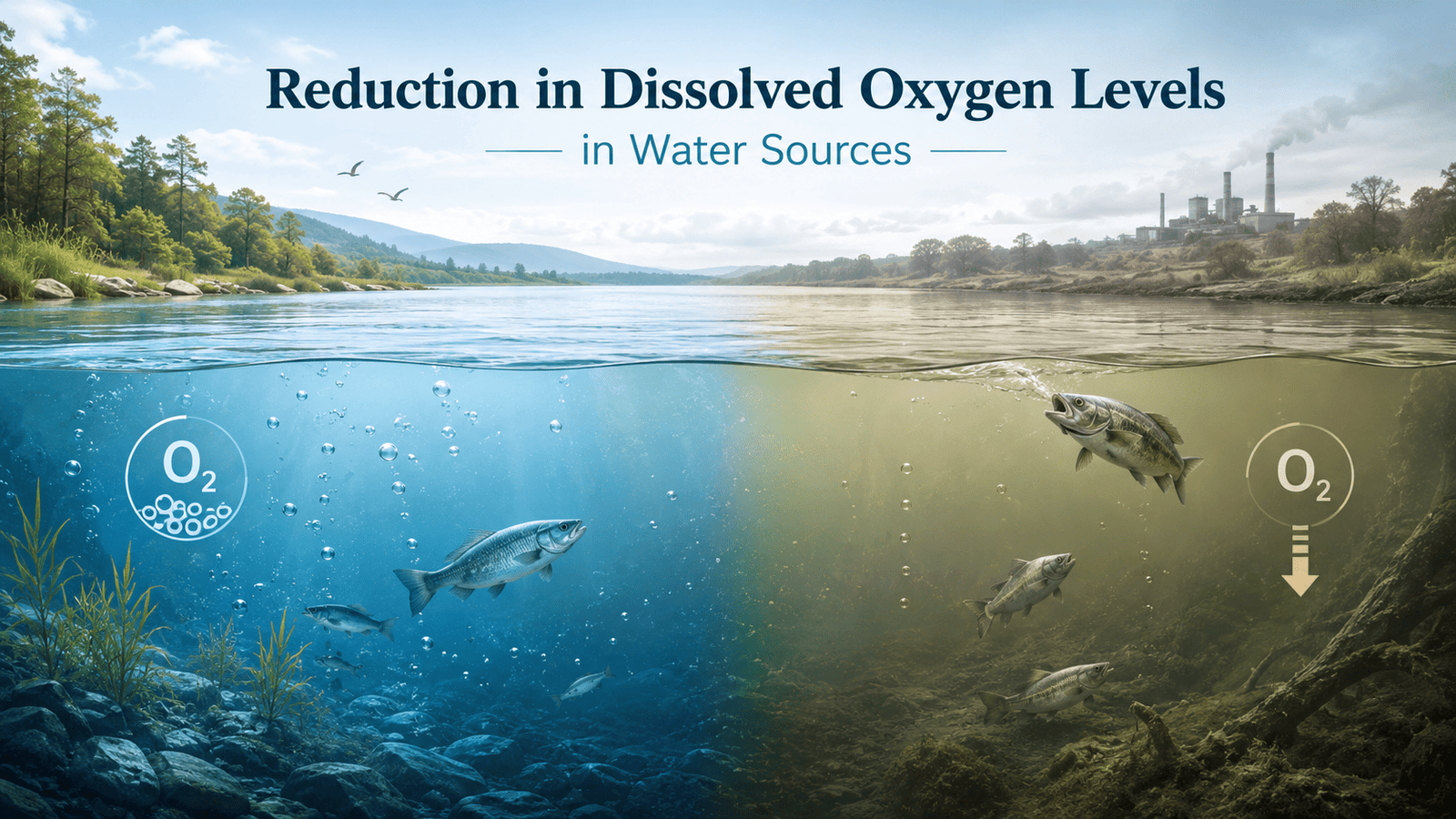
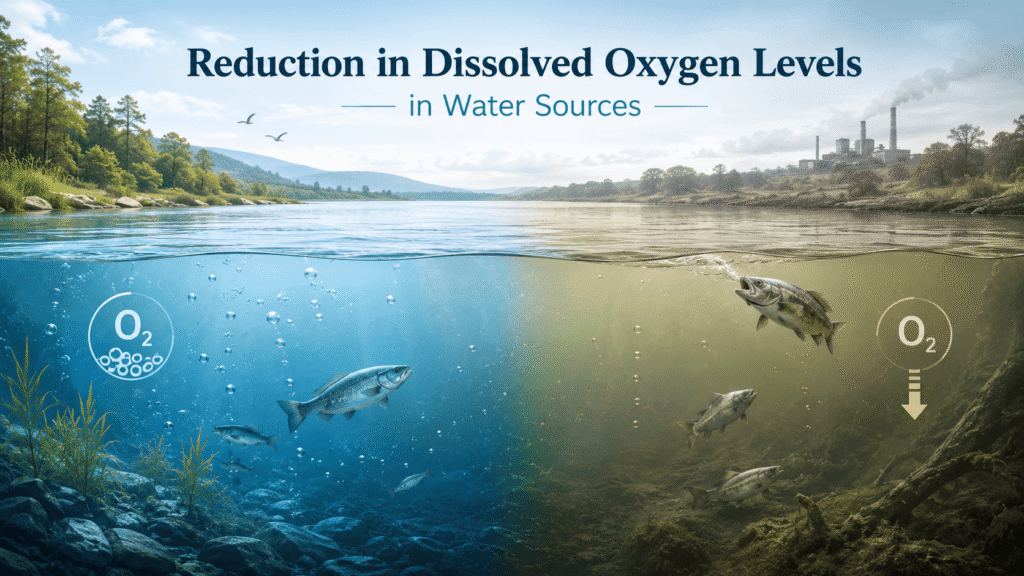
Dissolved oxygen levels in water (DO) in water bodies are a major public health and environmental concern. When oxygen levels fall—often due to rising water temperatures, organic pollution from sewage and agricultural waste, and nutrient-driven algal blooms—aquatic life becomes stressed or dies, leading to loss of biodiversity and reduced fishery productivity. Low DO waters can develop foul odours, release harmful gases, and become unsuitable for drinking, bathing, or recreation without costly treatment. Protecting water quality by controlling pollution, improving waste management, and monitoring oxygen levels is therefore essential to safeguard both ecosystem health and community well-being.
Definition of “Declining Oxygen in Water
Declining oxygen in water is also called “aquatic deoxygenation” and refers to the sustained reduction in the amount of dissolved oxygen (DO) in water bodies such as oceans, rivers, lakes, and estuaries. Oxygen is essential for the survival of most aquatic organisms; when DO levels fall, it stresses or kills fish, invertebrates, and microbes and can create “dead zones” where few organisms can live. Aquatic deoxygenation is a growing global environmental and public health concern, driven largely by climate changes, nutrient pollution, and land-use changes. This trend threatens aquatic ecosystems, biodiversity, fisheries, and even planetary stability by disrupting biogeochemical cycles that regulate Earth’s climate.
Dissolved oxygen (DO) refers to the amount of oxygen gas (O₂) that is dissolved in water, usually measured in milligrams per liter (mg/L). It is essential for the respiration of fish, invertebrates, aerobic bacteria, and other aquatic organisms.
Meaning and Importance
- Adequate DO is required to maintain healthy aquatic ecosystems and support fisheries, biodiversity, and water quality.
- When DO falls below about 2-4 mg/l, water becomes hypoxic; if it falls to near zero, it is anoxic, creating “dead zones” where most oxygen-dependent life cannot survive.
Causes of Declining Dissolved Oxygen Levels in Water
Natural Factors/Physical drivers
- Higher water temperature: Warm water holds less oxygen than cold water; as temperature rises, oxygen solubility drops. Oxygen is less soluble in warm water; climate changes reduce DO in oceans and lakes.
- Nighttime respiration: Aquatic plants and algae consume oxygen at night, lowering DO, especially in dense vegetated waters.
- Stratification: In deep lakes, thermal layering can prevent oxygen from reaching bottom layers.
- Restricted flow: In rivers and enclosed basins, low turbulence and long residence times allow oxygen to be consumed faster than replenished.
Human-induced (anthropogenic)/Biogeochemical drivers
- Organic pollution: Sewage, animal waste, food-processing effluents, and decaying plant matter increase Biological Oxygen Demand (BOD); bacteria use up DO while decomposing this material.
- Nutrient enrichment (eutrophication): Fertilizer runoff (nitrogen, phosphorus) from agriculture and urban wastewater causes algal blooms. When algae die, their decomposition sharply reduces DO.
- Reduced water flow and mixing: Dams, water abstraction, and stagnant conditions limit oxygen replenishment from air and photosynthesis.
- Floating vegetation mats: Thick layers of floating plants can block oxygen diffusion from air into water.
- Land-use and hydrological changes: Urbanization, dam construction, and altered flow regimes reduce water circulation and increase organic matter loading, further depleting oxygen.
Ecological and health impacts
- Stress and mortality in aquatic life: Fish may suffocate or migrate; sedentary organisms (shellfish, eggs, and benthic invertebrates) often die in hypoxic zones.
- Loss of biodiversity and fisheries: Sensitive species decline, food webs are disrupted, and fishing yields drop.
- Water quality deterioration: Low DO waters often develop foul odors, release toxic substances (e.g., hydrogen sulphide) and become unsuitable for drinking or recreation without treatment.
- Reduced growth, reproduction, and survival in fish and invertebrates.
- Dead zones: threaten fisheries, aquaculture, and tourism.
Control and mitigation
- Reduce organic and nutrient loads: Improve sewage treatment, control industrial effluents, manage agricultural fertilizer use, and prevent direct dumping of waste into water bodies.
- Enhance aeration and flow: Use mechanical aerators in ponds, restore natural flow regimes, and design dams with oxygenation measures.
- Monitor DO and BOD regularly: Use DO meters and BOD tests to detect early declines and trigger corrective action. Regular DO measurements using sensors, remote sensing, and water quality modeling help track trends and identify hotspots.
- Manage algal blooms: Control nutrient input and, where needed, use safe algal control methods to prevent massive die-offs that deplete oxygen.
- Mitigation strategies: Reduce nutrient runoff via improved agriculture practices and wastewater treatment. Restore wetlands and riparian buffers to filter pollutants. Address climate changes through emissions reduction to limit warming and stratification.
Observed trends
- Lakes: ~ 5.5% oxygen loss since 1980
- Reservoirs: ~18.6% loss since 1980
- Oceans: ~ 2% global oxygen loss since 1960, with some regions, e.g., off Central California, losing up to 40%
Key Definitions
| Term | Definition | Typical Threshold |
| Dissolved Oxygen (DO) | The amount of oxygen gas dissolved in water is usually measured in milligrams per liter (mg/L) or as % saturation | Varies by temperature, salinity, and altitude. |
| Hypoxia | Low oxygen conditions that harm most aquatic life | Do < 2 to 3 mg/L |
| Anoxia | Complete absence of dissolved oxygen. | DO~0 mg/L |
| Deoxygenation | The overall decline in oxygen content of oceanic and coastal (or freshwater) waters over time. | — — |
| Dead Zone | Informal term for hypoxic or anoxic areas where most marine life dies or migrates away. | DO < 2 mg/L |
Why It Matters for Public Health
- Food security: Declining fish stocks affect nutrition, especially in vulnerable coastal communities.
- Water quality: Hypoxia can promote toxin-producing microbes and degrade drinking water sources.
- Economic and mental health: Loss of livelihoods in fishing and tourism sectors impact community well-being
Declining oxygen in water is a global environmental change driven by climate warming, nutrient pollution, and hydrological alternations. It leads to hypoxia and dead zones, disrupting ecosystems and human services. Long-term solutions require reducing nutrient inputs, mitigating climate change, and monitoring DO trends to protect aquatic and human health.
Cyanotoxins & Algal Blooms: Note that low DO caused by eutrophication promotes harmful algal blooms (HABs), which release cyanotoxins dangerous to human liver and nervous systems upon ingestion or contact.
Heavy Metal Mobilization: Explain that anoxic/hypoxic sediment conditions trigger the release of toxic heavy metals (like arsenic and manganese) into drinking water reservoirs.
Disclaimer: This article is for informational and educational purposes only and should not replace professional environmental testing or municipal public health advisories. If you suspect local water contamination, contact your local water authority immediately.