

Globally, low sexual literacy contributes to:
- 376 million new curable STIs annually (WHO estimate for ages 15 to 49)
- 121 million unintended pregnancies each year, many among adolescents
- 1.5 million new HIV infections globally in 2023, disproportionately affecting young women and key populations.
- Increased material morbidity / mortality due to unsafe abortions and untreated infections.
Countries with comprehensive sexuality education (CSE) and strong sexual health literacy show later sexual debut, higher condom use, and lower STI rates.
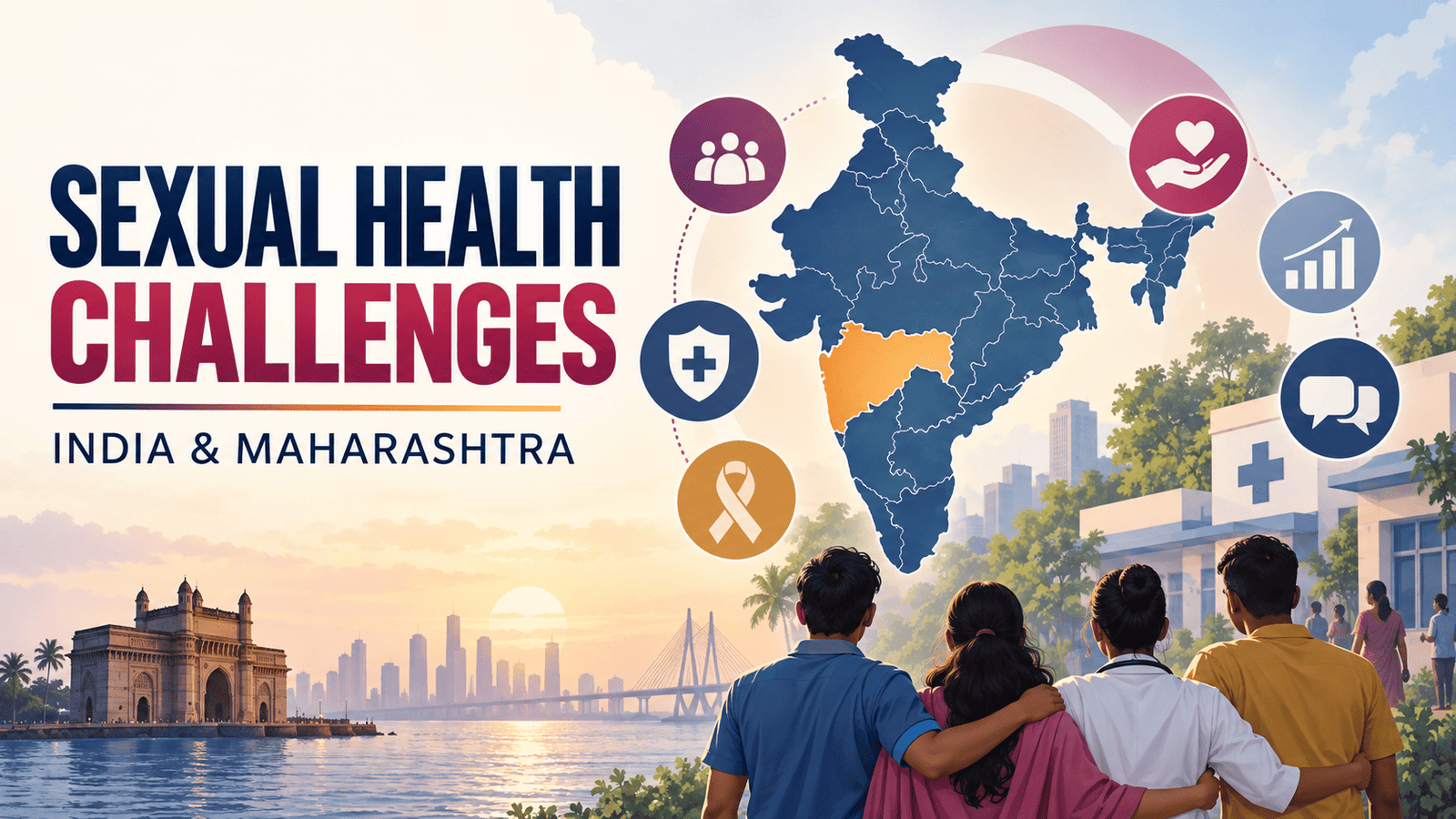
Magnitude of Sexual Health Issues in India and Maharashtra:
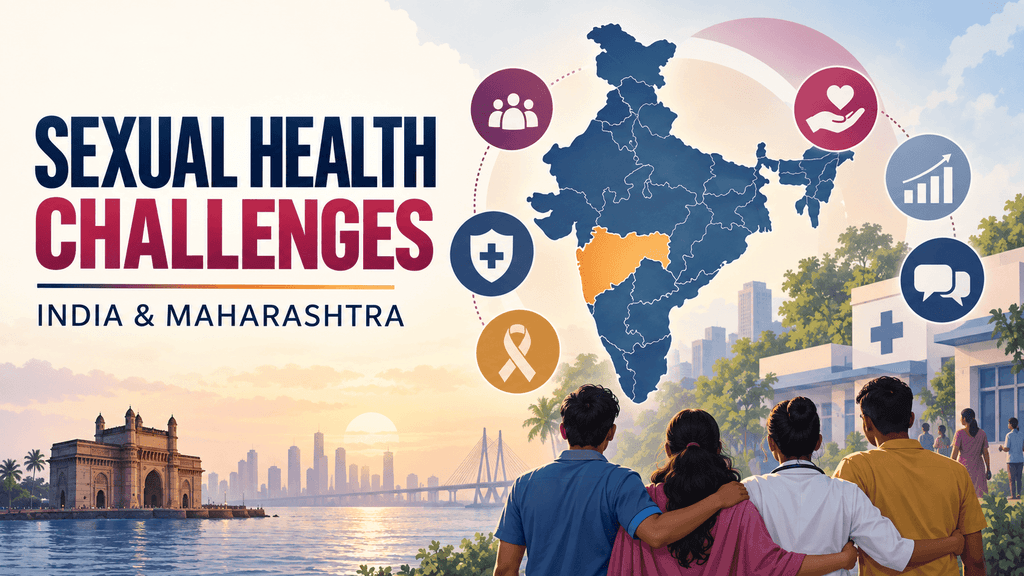
Sexual health challenges in India remain substantial, with millions affected by STIs, unintended pregnancies, and HIV each year; Maharashtra, as one of the country’s most populous and highest-burdened states, reflects and in some indicators exceeds national averages.
- National Magnitude (India):
- Sexually Transmitted Infections (STIs):
- Self-reported STI symptoms (NFHS-5, 2019-21): 12.3% of women and 9.3% of men aged 15 to 49 reported symptoms suggestive of an STI (genital discharge, sore, or ulcer) in the past 12 months. This is an increase from NFHS-4, where 11.2% of women and 7.5% of men reported such symptoms.
- Earlier NFHS rounds estimated that 23 to 43% of women and 4 to 9% of men had symptoms suggestive of STI/RTI at some point, highlighting a long-standing, under-treated burden.
- Large-scale laboratory confirmed prevalence data for specific STIs (e.g., chlamydia, gonorrhoea) are limited, but syndromic data and clinic reports indicate a rising trend in symptomatic STIs.
- HIV:
- India has the third-largest HIV epidemic globally.
- Estimated 23.19 lakh (2.32 million) people living with HIV (PLHIV) in 2020.
- Adult (15-49 years) HIV prevalence: 0.22% nationally (down from 0.55% in 2000 and 0.32% in 2010).
- New infections and AIDS-related deaths have declined since 2010, but absolute numbers remain high due to India’s large population.
- Adolescent Sexual Health and Pregnancy:
- 6.8% of women aged 15 to 19 were either pregnant or had already given birth at the time of NFHS-5 (2019-21).
- This translates to roughly 4 million teenage mothers in India.
- Among adolescent women (15-19): About 2 million pregnancies occur annually. 63% are unintended (too soon or not wanted). An estimated 53% of adolescent pregnancies end in abortion, with 78% of these abortions unsafe.
- Child marriage: 23.3% of women aged 20 to 24 were married before age 18 (NFHS-5). Early marriage strongly predicts early and frequent pregnancies, with higher maternal and infant risks.
- Contraception and Unmet Need:
- Among adolescents (15-19) who had premarital sex in the past year, only about 60% used a condom at last intercourse, indicating significant protection gaps.
- Unmet need for modern contraception among adolescents accounts for 9 out of 10 unintended pregnancies in the 15-19 age group.
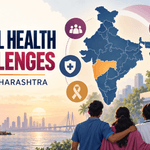
- Magnitude in Maharashtra:
Maharashtra is among India’s high HIV/STI-burdened states and also faces significant adolescent sexual health challenges.
- HIV:
- Adult HIV prevalence: ~0.29% ,higher than the national average (0.22%).
- Estimated 3.9 lakh PLHIV in the state.
- Unsafe sexual contact is now the dominant mode of HIV transmission, while bloodborne and vertical transmission have declined.
- Treatment retention remains a challenge: over 800 people dropped out of ART in a recent year.
- STI:
- In 2022-23, Maharashtra recorded over 1 lakh STI cases, a 33% increase from the previous year.
- This surge signals gaps in prevention, condom use, and early treatment-seeking, especially in urban and semi-urban areas.
C) Adolescent Pregnancy and Child Marriage:
- Teenage pregnancy (women 15 to 19 yrs already mothers or pregnant): NFHS-5: 8.2% in Maharashtra, slightly above the national 6.8%
- This indicates a high-priority status for adolescent SRH interventions in the state.
- Child marriage: * Around 21 to 22% of women aged 20-24 in Maharashtra were married before age 18 (NFHS-5), reflecting persistent social norms despite legal prohibitions.
- Maharashtra is classified as a dual high-priority state for adolescent pregnancy due to both high prevalence and large rural-urban disparities.
d) Knowledge and Risk Behaviour:
- Like much of India, comprehensive knowledge about HIV prevention (condoms + one uninfected partner) remains low, particularly among unmarried youth, women, and rural populations.
- Condom use at last high-risk sex among young people is suboptimal, contributing to ongoing STI/HIV transmission.
Overview:
Sexual health problems in India are large, diverse, and substantially undercounted. They include sexually transmitted infections (STIs), HIV, unintended pregnancy, unsafe abortion, infertility, sexual dysfunction, cervical cancer, sexual violence, and limited access to confidential, non-judgemental services. India lacks a comprehensive population-based STI surveillance system, so available figures should be interpreted as estimates rather than a complete national count.
India: major components of the burden:
- STIs and HIV:
- India has a very large absolute burden of STIs because of its population, although the prevalence of individual infections varies considerably by age, sex, region, and population group.
- Many STIs are asymptomatic, especially chlamydia, gonorrhoea, HPV, and some infections in women. Consequently, clinic-based statistics underestimate community prevalence.
- HIV is concentrated in key populations and certain geographic areas rather than being uniformly distributed across the population.
- STIs are associated with infertility, ectopic pregnancy, chronic pelvic pain, adverse pregnancy outcomes, neonatal infection, and increased HIV transmission risk.
- A longitudinal study in Goa illustrates the importance of social determinants: among 2180 women followed for up to one year, 64 incident STI infections occurred, a cumulative incidence of 2.9%. Women reporting spousal sexual violence or concern about a husband’s extramarital affairs had markedly higher STI risk than other married women.
- Unintended Pregnancy and Abortion:
India continues to face a substantial need for contraception and abortion-related care. Unmet need is not simply a question of contraceptive availability: it is also shaped by misinformation, fear of side effects, partner opposition, stigma, cost, and unequal access for unmarried people and adolescents. The BMJ literature notes that many Indian women who undergo abortion do not use contraception afterward and that there is an unmet need for modern contraceptives. Is particularly important in urban populations. These data are older and should be treated as current national estimates, but they demonstrate the scale and persistence of the service gap.
- Sexual Violence:
Sexual and intimate-partner violence are major sexual health issues because they can result in physical injury, STIs including HIV, unintended pregnancy, unsafe abortion, infertility, and psychological trauma. Under-reporting is substantial because of stigma, fear of retaliation, dependence on the perpetrator, and limited trust in services. Sexual violence also directly reduces a person’s ability to negotiate condom use or seek timely testing and treatment. The Goa cohort found that women exposed to spousal sexual violence were among those at highest risk of incident STI.
- Sexual dysfunction and infertility:
Erectile dysfunction, premature ejaculation. Low sexual desire, painful intercourse, vaginismus, and orgasmic difficulties affect both men and women. Reliable national prevalence estimates are limited because people often do not disclose symptoms, and many studies use different definitions. Infertility is another important component of sexual and reproductive health. Causes include untreated STIs, pelvic inflammatory disease, tubal damage, endometriosis, age-related factors, male-factor infertility, and conditions such as diabetes or hormonal disorders. Access to diagnosis and assisted reproduction is highly unequal.
Maharashtra has relatively strong health infrastructure and high literacy compared with many Indian states, but its size, urban-rural inequality, migration, and socioeconomic diversity create substantial variation in sexual health outcomes.
Important issues include:
- HIV and STI risk among selected high-risk and mobile populations, including sex workers, men who have sex with men, transgender people, migrants, and people who inject drugs.
- Unintended pregnancy and abortion access, particularly for adolescents, unmarried women, rural populations, and people facing confidentiality concerns.
- Sexual and intimate-partner violence.
- Limited adolescent access to accurate sex education and confidential services.
- Persistent misconceptions about contraception and concern about judgement from healthcare providers.
- Unequal access to infertility and sexual dysfunction care outside major cities.
Why the magnitude is difficult to measure:
The apparent burden is lower than the true burden because:
- Many STIs have no symptoms.
- Sexual history is often not disclosed in surveys of clinics.
- Sexual violence and same-sex behaviour are underreported.
- Private-sector diagnoses are not integrated into a single surveillance system.
- Rural and marginalised populations may have limited access to testing.
- Studies differ in sampling, laboratory methods, definitions, and age groups.
Therefore, national or state-level numbers should be presented with their source, year, population studied, and limitations. India and Maharashtra in particular face a substantial but incompletely measured sexual health burden. The most important public health priorities are integrated STI/HIV surveillance, confidential youth-friendly services, contraception and safe abortion access, HPV and hepatitis B vaccination, screening and treatment for cervical disease, protection from sexual violence, and better services for infertility and sexual dysfunction.