

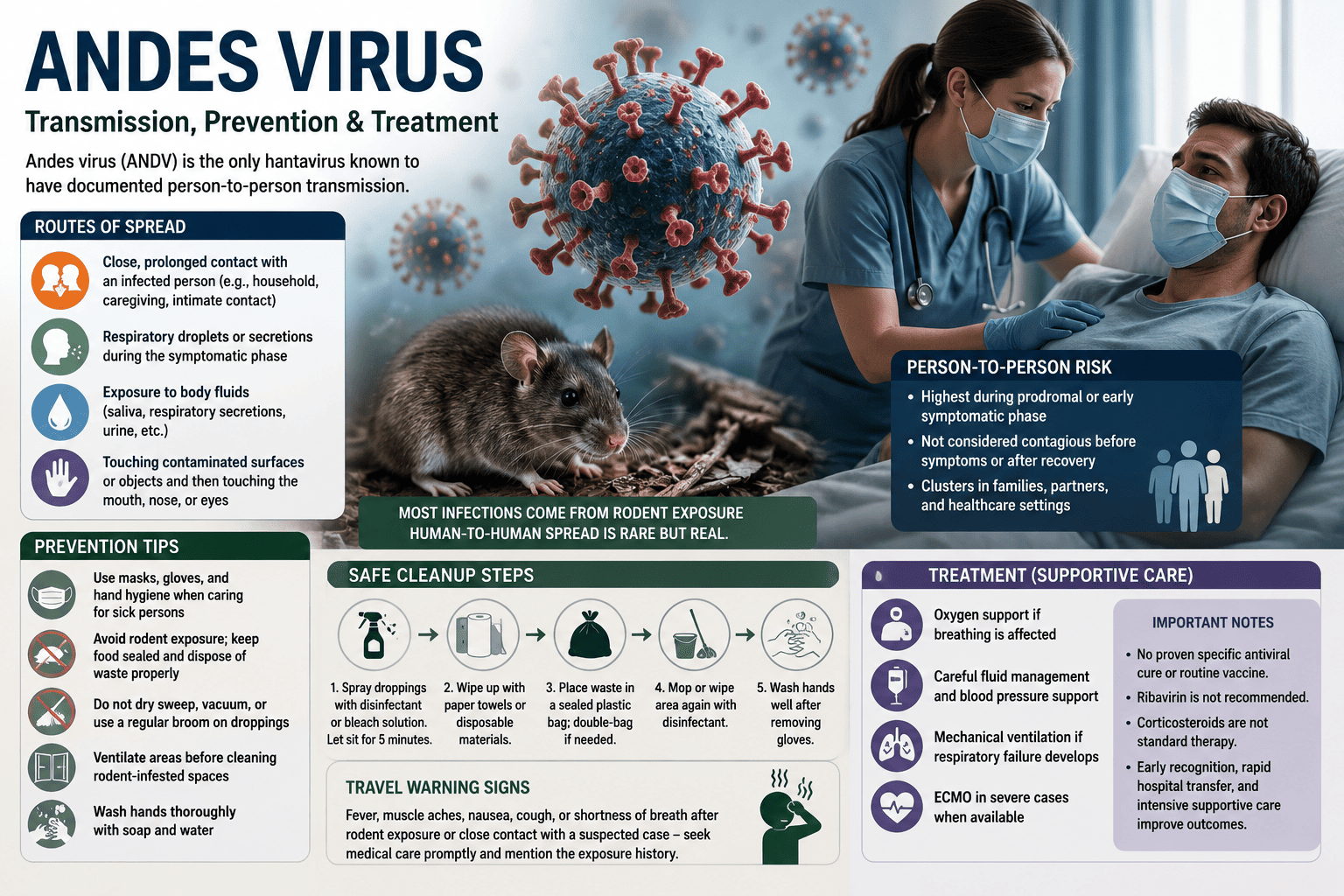
Andes virus spreads mainly through close, prolonged contact with an infected person, not through casual, brief contact. It is the only hantavirus known to have documented person-to-person transmission.
Key Takeaways: Andes Virus Quick Guide
- Unique Transmission: Unlike other hantaviruses, the Andes virus can spread person-to-person, primarily through close, prolonged contact with an infected individual during early symptomatic phases.
- Not Like Flu/COVID: It is not easily spread via long-range airborne transmission or casual community contact.
- Prevention Priority: Avoid dry-sweeping rodent droppings (which stirs up virus particles). Always disinfect first, wear protective gear, and ensure proper ventilation.
- No Specific Cure: There is no approved antiviral treatment or vaccine. Effective management relies entirely on early hospitalization and intensive supportive care (like oxygen and fluid management).
Person-to-Person Transmission Mechanisms
Transmission happens from infected humans, usually during the symptomatic phase, particularly in the prodromal or early clinical stage (fever, myalgia, gastrointestinal symptoms).
The infected person is generally not considered contagious before symptoms start or after full recovery, indicating a narrow “infectious window.”
Direct physical contact with a sick person.
Exposure to body fluids, especially during the early symptomatic phase.
Sharing enclosed spaces for a long time, such as homes or hospital rooms.
It can also spread when a person touches a contaminated surface or object and then touches the mouth, nose, or eyes.
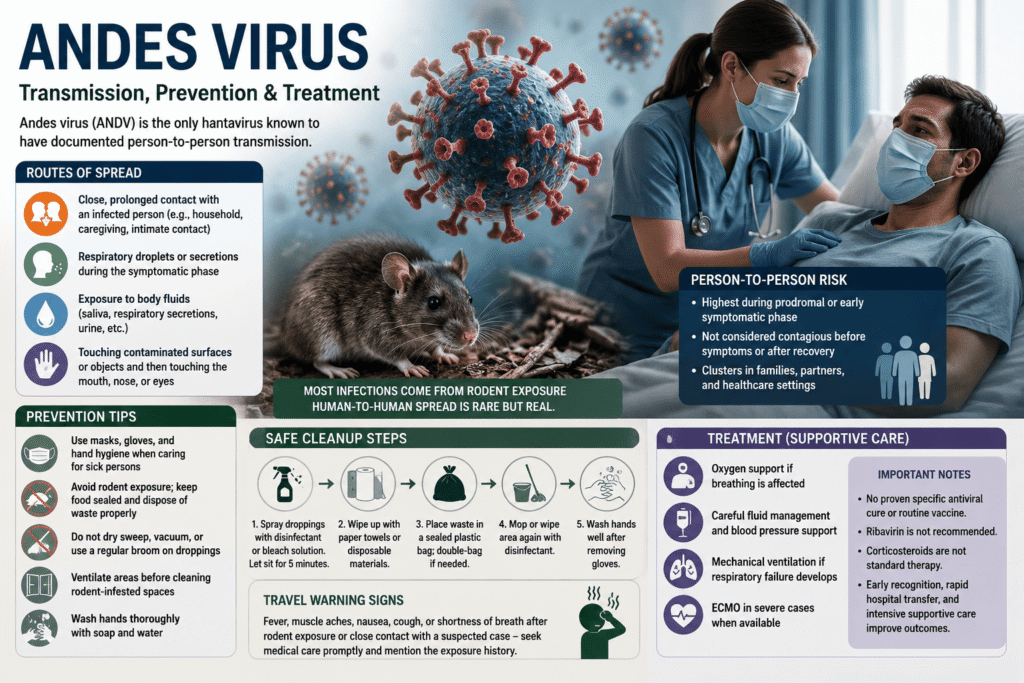
How Does the Andes Virus Spread?
Respiratory droplets/secretions:
Close or prolonged contact with a symptomatic person, e.g., in a household or hospital setting, can lead to transmission via respiratory droplets or secretions, though this is rare and limited.
Direct contact and body fluids:
Transmission has been linked to close physical contact, prolonged time in enclosed spaces, and exposure to the patient’s body fluids, e.g., during caregiving or intimate contact.
Epidemiological Features
Person-to-person episodes are clustered, involving family members, partners, or healthcare workers in close unprotected contact.
Most cases worldwide still arise from rodent exposure (rodent excreta and secretions); human-to-human spread is exceptional but well documented for Andes virus.
Basic Prevention
Avoiding kissing, sexual contact, and sharing utensils with someone suspected of having an Andes virus infection.
Use standard and droplet precautions like masks, gloves, and hand hygiene when caring for symptomatic patients, especially in endemic areas of South America.
What is Not
The Andes virus is not spread like the flu or COVID through efficient long-range airborne transmission in the general community. Sustained casual transmission has not been demonstrated.
Why Andes Virus Uniquely Capable of Human-to-Human Transmission
The Andes virus is uniquely capable of human-to-human transmission, mainly because of its biological behavior in humans and the way it exits the body, combined with close-contact exposure patterns. The exact biological reason is still not fully resolved, but evidence suggests it has traits that may allow higher viral presence in the respiratory secretions and better spread between close contacts than other hantaviruses.
Most hantaviruses are “dead-end” infections in humans and do not pass between people. The Andes virus is the exception: documented transmission has occurred in family clusters and healthcare and household settings, with high risk during prodrome or early illness.
Viral Factors
Andes virus replicates widely in the respiratory tract and other organs, producing high viral loads in saliva, respiratory secretions, and other body fluids during the symptomatic phase.
This allows the virus to reach the site of exit (mouth, nose, lungs) in sufficient quantity to be transmitted to others, unlike most other hantaviruses that mainly stay restricted to the rodent host and rarely exit the human body in the contagious form.
High viral shedding early in illness, especially in respiratory secretions.
Host and Environment
In endemic areas of South America, behavioral and social factors (sharing living spaces, intimate contact, and caregiving without protection) create the ideal setting for this limited human-to-human spread.
The timing of infectivity is narrow, mostly during acute symptoms, so spread is not efficient or widespread like influenza or SARS-CoV-2, but it is enough to explain the documented clusters.
Transmission requiring very close contact, which favors households and caregiving situations rather than casual community spread.
Virus-host interactions that may make Andes virus more compatible with limited person-to-person spread, though this is still under study.
Prevention Tips
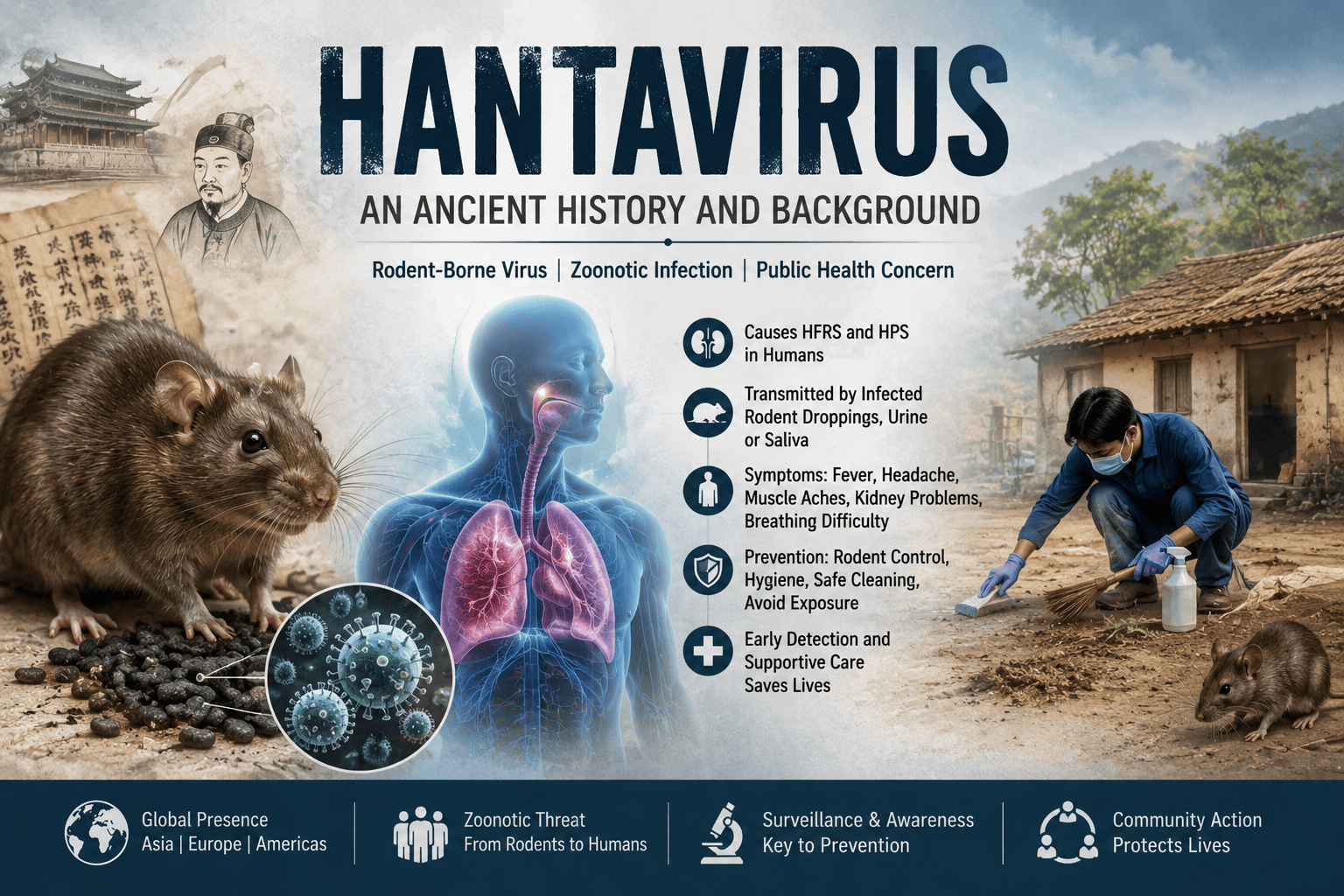
For cruise or travel settings, the main goal is to avoid rodent exposure and close contact with anyone who may be ill. Safely clean a rodent-infested area; first, protect yourself: wear gloves, a mask or respirator, and, if possible, eye protection, then open windows and doors for ventilation before starting cleanup. Do not sweep or vacuum dry droppings, nests, or dust because that can stir contaminated particles into the air.
Safe Cleanup Steps
- Spray droppings, urine, nests, and contaminated surfaces with a disinfectant or a bleach solution, then let it sit for about five minutes.
- Use paper towels or disposable materials to wipe up the softened waste.
- Place waste, used towels, and nesting materials in a sealed plastic bag; double-bag if needed.
- Mop or wipe the area again with disinfectant after visible materials are removed.
- Wash hands well with soap and water after removing gloves.
Before and During Travel
Wash bedding, towels, curtains, or clothes that may have been contaminated in hot water with detergent and dry them on high heat if they can be laundered safely.
If soft items are heavily contaminated and cannot be cleaned properly, disposal may be safer.
Choose cabins, lodges, and storage areas that are clean and show no signs of rodents.
Keep food in sealed containers and dispose of waste properly.
Avoid sleeping in places with droppings, nests, or evidence of rodent activity.
If you are in a situation with a suspected case, use a well-fitting mask and keep your distance, especially in enclosed spaces.
What to Avoid
Do not dry sweep, vacuum, or use a regular broom on droppings.
Do not touch dead rodents with bare hands.
Do not clean without ventilation in a closed room.
If the infestation is large, heavily contaminated, or in a closed space like a shed, cabin, or storeroom, a proper filtered respirator and more controlled cleanup approach are safer.
After cleanup, seal entry points, remove food sources, and set traps or call pest control to prevent re-infection.
Travel Warning Signs
If fever, muscle aches, nausea, cough, or shortness of breath develops after rodent exposure or after close contact with a suspected case, seek medical care promptly and mention the exposure history. For travel handouts, the simplest message is to seal food, avoid rodents, don’t dry sweep droppings, and report symptoms early.
Treatment for Andes Hantavirus
Treatment for Andes hantavirus is mainly supportive hospital care because there is no proven specific antiviral cure or routine vaccine. Patients can worsen quickly, so early hospitalization and ICU-level monitoring are important.
Management
- Oxygen support if breathing is affected.
- Careful fluid management and blood pressure support.
- Mechanical ventilation if respiratory failure develops.
- ECMO in severe cases when available, especially if cardiopulmonary collapse occurs.
Are There Specific Medications for Andes Virus?
Ribavirin is not recommended as a proven treatment for Andes hantavirus infection in current drug guidelines.
Corticosteroids are also not supported as standard therapy for Andes virus disease.
Antibiotics may be given initially if another infection is being considered, but they do not treat hantavirus itself.
The best outcomes are from early recognition, rapid hospital transfer, and intensive supportive care rather than waiting for symptoms to improve on their own.