


A. Transovarian Transmission of Dengue Virus
Transovarian transmission of the dengue virus means that a mother Aedes mosquito can pass the virus to her babies through her eggs. This helps the dengue virus stay alive and continue spreading among mosquitoes even when no humans around them are infected.
Key Points on Transovarian Transmission
Mechanism
The virus moves into the mother mosquito’s ovaries and gets inside the eggs she is making. When these eggs hatch, the baby mosquitoes already have the virus. When they grow up, they can bite people and spread dengue.
Virus Maintenance in Nature
This type of transmission helps the dengue virus stay in the environment even when fewer people are sick. The virus “hides” inside mosquito eggs and waits. When the weather and conditions become good for mosquitoes, the virus can spread again and cause new outbreaks.
Transmission Routes within Mosquitoes
Transovarial transmission can occur via
1. Infected females laying infected eggs after feeding on viremic hosts.
2. Infected males transmitting the virus sexually to uninfected females.
3. Direct infection of ovarian tissues, enabling virus inheritance.
Evidence
Scientists have found that many Aedes aegypti and Aedes albopictus mosquitoes are born already carrying the dengue virus. Even male mosquitoes, which don’t bite humans, have been found infected. This proves that the virus is passed down from the mother mosquito to her babies, not just spread by biting humans.
Implication
Transovarian transmission makes it harder to control mosquitoes because some baby mosquitoes are born already carrying the dengue virus, even if no one nearby is sick. This is why removing mosquito eggs and larvae is very important—it helps stop infected mosquitoes before they become adults.
Summary
Transovarian transmission is a significant biological mechanism by which the dengue virus persists in mosquito populations over time.
B. Horizontal and Vertical Transmission of Dengue Virus
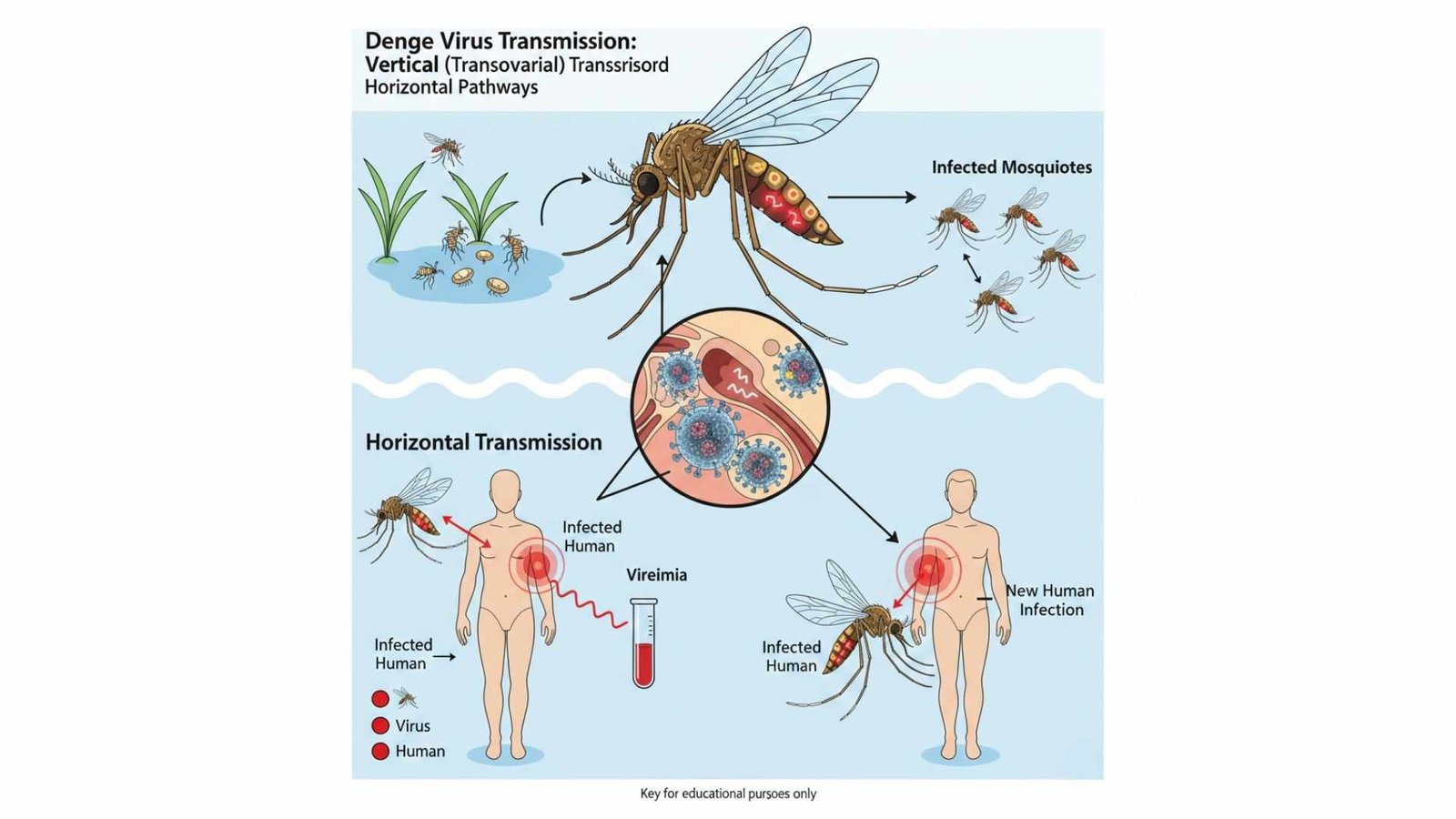
In dengue virus transmission by Aedes mosquitoes, vertical and horizontal transmission are two distinct pathways.
1. Horizontal Transmission
This is the main and most common way dengue spreads.
How it happens
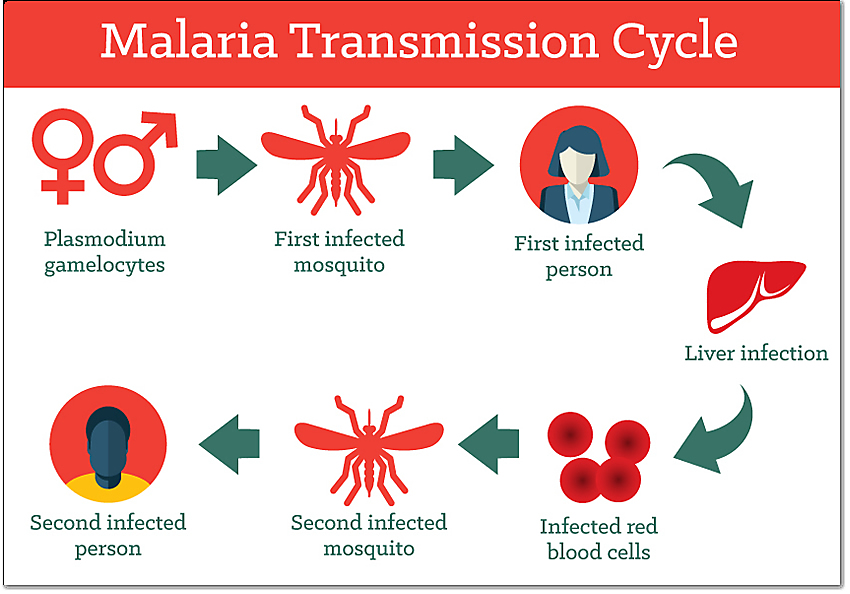
When a healthy female Aedes mosquito bites a person who already has dengue virus in their blood, the mosquito picks up the virus. Then the mosquito becomes infected and can spread dengue to other people.
Replication
After an extrinsic incubation period inside the mosquito, the virus reaches the mosquito’s salivary glands.
Spread
The infected mosquito then transmits the virus to another human host during subsequent blood meals through its saliva.
Effect
This back-and-forth cycle between humans and mosquitoes keeps dengue spreading.
Horizontal transmission means the virus passes between a mosquito and a human, from mosquito to human, then human to mosquito, and so on.
2. Vertical Transmission
Vertical transmission, also known as transovarial transmission, occurs when an infected female Aedes mosquito passes the dengue virus directly to her offspring via her eggs.
Process
The virus gets into the mosquito’s ovaries and then into her eggs. These eggs hatch into baby mosquitoes that already have the virus. When they grow into adults, they can spread dengue even without biting a sick person first.
Effect
Vertical transmission helps maintain dengue virus circulation during periods of low human infection or environmental conditions unfavorable to horizontal transmission.
Importance
This form of transmission is important for virus persistence and may complicate control efforts because infected mosquitoes can emerge independent of recent human cases.
Vertical transmission means the virus is passed from the female Aedes mosquito to its progeny (dengue virus survival and reservoir persistence within mosquito populations).