


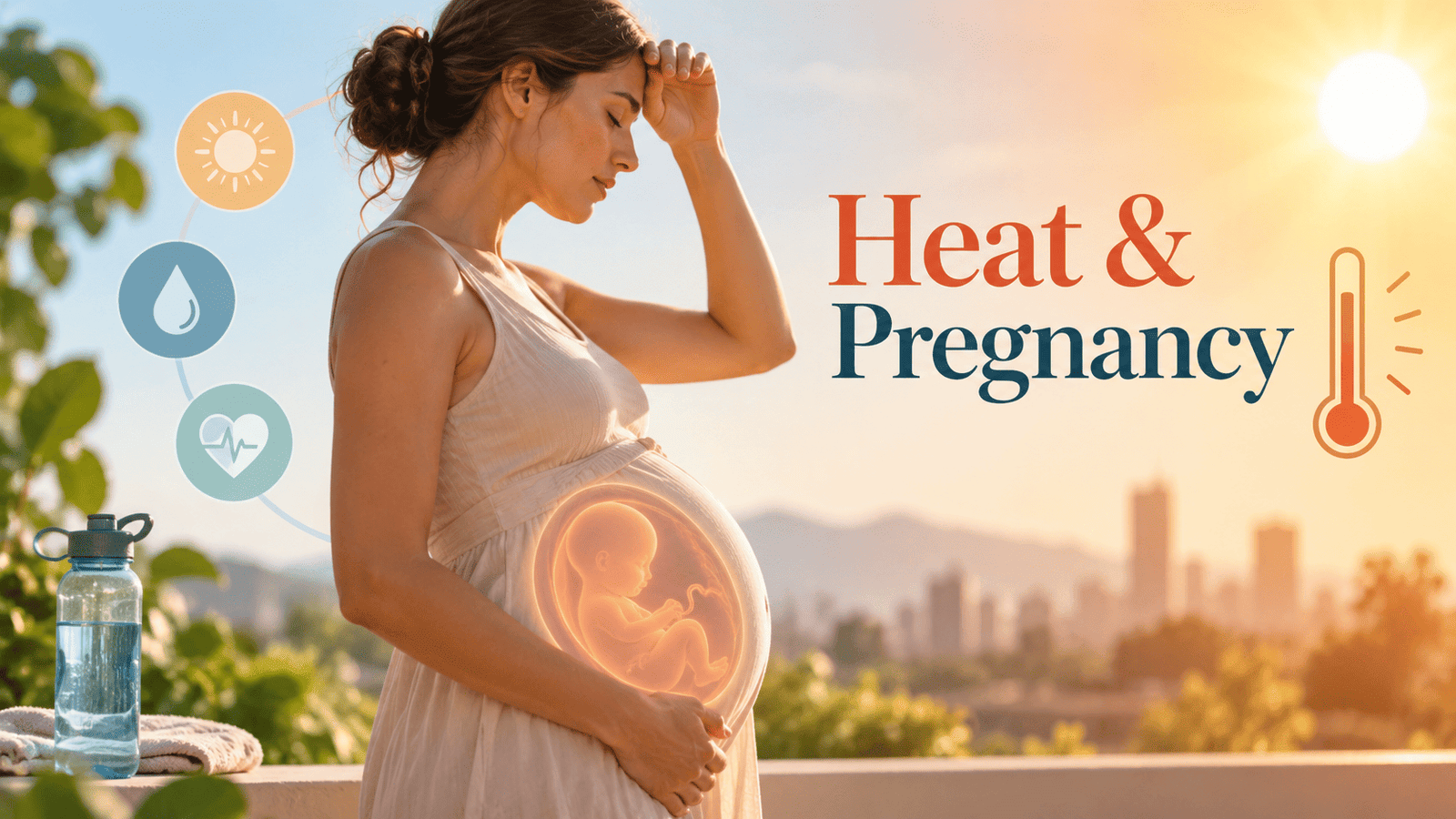
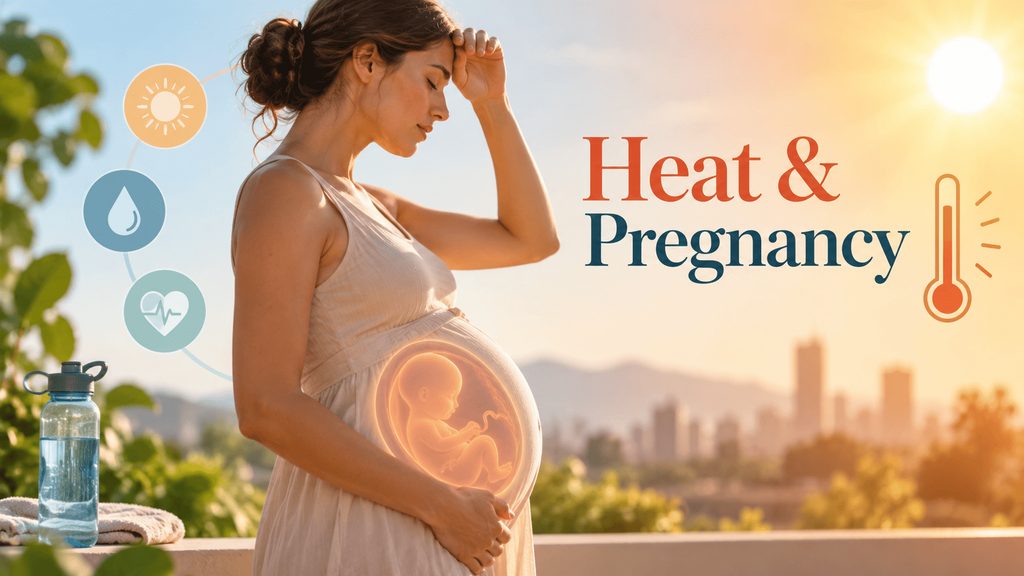
Heat exposure during pregnancy can affect both the mother and the fetus, and the main fetal concerns are preterm birth, stillbirth, low birth weight, and—when exposure happens early in pregnancy—some birth defects. The risk rises with hotter temperatures, longer exposure, dehydration, and poor access to cooling.
Definitions:
- Heat stress means the body is struggling to cool itself because of high temperature, humidity, or both.
- A heatwave in India is defined by IMD using temperature thresholds and how far temperatures rise above normal; heatwaves are more dangerous for vulnerable groups, including pregnant women.
- Fetal effects are the changes or harms that occur to the developing baby during pregnancy, such as reduced growth or early delivery.
Effects on fetus:
High maternal heat exposure has been linked with preterm birth, stillbirth, low birth weight, and some congenital anomalies, especially with first-trimester exposure. The mechanism is thought to involve maternal dehydration, reduced blood flow to the uterus, inflammation, and heat-related strain on the placenta. Pregnant women also have a reduced ability to dissipate heat, so the same weather can have a larger impact than it does on nonpregnant adults.
Effects on mother and pregnancy:
Heat can cause dehydration, dizziness, muscle cramps, exhaustion, and, in severe cases, heat stroke. During pregnancy, overheating may also worsen high blood pressure and other complications, and some sources note that oxygen and blood flow to the baby can decrease when the mother overheats. The WHO notes that babies in the womb do not “feel” heat directly, but they are affected by the mother’s body changes, so hydration and cooling matter.
Prevention and Control:
- Drink water regularly and do not wait for thirst.
- Avoid going out in peak heat, usually late morning to afternoon.
- Wear light, loose cotton clothing, use shade, and reduce strenuous activity
- Use fans, cool showers, AC, or cooling shelters when available.
- Seek medical help if there is fainting, confusion, severe weakness, or reduced fetal movements.
Public Health Role:
Public health departments should run heat action plans, send warnings, open cooling centers, and prioritize pregnant women in risk communication and relief measures. They should also improve antenatal counseling, include heat exposure in risk screening, and ensure access to safe drinking water and cool indoor spaces in vulnerable neighbourhoods. Urban planning measures like trees, shade, reflective surfaces, and heat-resilient housing also reduce risk over time.
Global effects:
A large meta-analysis covering 66 countries found that heat exposure during pregnancy is associated with adverse maternal, fetal, and neonatal outcomes across many regions, not just one climate zone. WHO also notes that hotter weather affects pregnant women worldwide, especially where poverty limits access to cooling, safe housing, or healthcare. In other words, climate change is turning heat into a global pregnancy-health issue.
Indian cities and reasons:
Cities and regions commonly affected by severe heat in India include Delhi, Chandigarh, parts of Punjab and Haryana, Rajasthan, Uttar Pradesh, Madhya Pradesh, the Vidharbha region, Jharkhand, and parts of Chhattisgarh. These places are vulnerable because of a mix of dry pre-monsoon weather, continental climate, low rainfall, dense construction, less tree cover, and the urban heat island effects. In cities, concrete, asphalt, crowded buildings, and waste heat keep temperatures high even after sunset.
In Maharashtra’s major cities—Nagpur, Pune, and Mumbai—rising temperatures and more frequent heatwaves are increasingly recognized as a public health threat to pregnant women and their fetuses. Local and national studies now link higher ambient temperatures and extreme heat days to preterm birth, low birth rate, stillbirth, and pregnancy complications such as hypertension and gestational diabetes.
Why these cities:
Delhi is often hotter because it is landlocked, dry before the monsoon, densely built, and strongly affected by the urban heat island effects. Central and northwestern Indian areas often face very hot, dry air masses and severe heatwave conditions, while many Indian cities stay warmer at night because buildings and roads store heat. Nagpur and other inland cities in central India are also at risk for the same reasons: high summer temperatures, urban growth, and limited cooling at night.
Global Heat Exposure During Pregnancy: A 66-Country Meta-analysis of preterm
Global heat exposure in pregnancy is linked to higher risks for the fetus, especially preterm birth, stillbirth, low birth weight, and some congenital anomalies.
The 66-country meta-analysis found that heat exposure during pregnancy is associated with a higher risk of preterm birth. In the pooled analysis, the odds of preterm birth rose by 4% per 1°C increase in heat exposure and by 26% during heatwaves.
What the study covered:
The review included 198 studies from 66 countries across six continents and looked at 23 pregnancy and newborn outcomes. It found consistent evidence that heat can affect maternal, fetal, and neonatal health, with preterm birth being one of the clearest and most repeatedly observed outcomes.
What “preterm” means:
Preterm birth means delivery before 37 completed weeks of pregnancy. This matters because preterm babies have higher risks of breathing problems, feeding difficulties, infection, and longer-term developmental issues.
Why heat may trigger preterm birth:
Heat can stress the mother’s body, cause dehydration, raise heart rate, and reduce effective blood flow to the uterus and placenta. Those changes may contribute to contractions, placental stress, and earlier delivery.
How to interpret the result:
The effect size is not huge for one person, but it is important because heat exposure is common and increasing worldwide. Small increases in risk can translate into many additional preterm births at the population level during hot seasons and heatwaves.
For pregnant women, the main message is to avoid prolonged heat exposure, stay hydrated, and seek cooling early during hot spells. For health systems, the finding supports heat-health action plans that specifically include pregnancy as a high-risk condition.
How Dehydration and Reduced Placental Blood Flow Affect the Fetus:
Dehydration and reduced placental blood flow mainly harm the fetus by lowering the supply of oxygen and nutrients. That can lead to fetal distress, slowed growth, low amniotic fluid, preterm birth, and, in severe cases, stillbirth.
What happens in the body:
When the mother is dehydrated, her blood volume can fall, and the placenta may receive less blood. With less placental perfusion, the fetus gets less oxygen and fewer nutrients, which can interfere with normal growth and development.
Effects of maternal dehydration on the fetus:
- Reduced blood volume and placental hypoperfusion: Dehydration decreases maternal plasma volume, leading to lower uteroplacental blood flow (placental hypoperfusion).
- Fetal hyperosmolality and hormonal changes: Maternal dehydration raises maternal plasma osmolality, prompting fetal release of arginine vasopressin (AVP) and altering fluid balance, urine output, and blood volume in the fetus.
- Impaired growth: Chronic dehydration during pregnancy is associated with lower birth weight, shorter length, and smaller head and chest circumference, indicating effects on overall fetal growth.
- Neurodevelopmental and cardiovascular programming: Animal studies show prenatal water deprivation can alter the fetal brain’s renin-angiotensin system and may predispose offspring to long-term cardiovascular and fluid-regulation changes.
Effect of Reduced Placental Blood Flow on the Fetus:
When placental perfusion is reduced—whether from dehydration, vascular disease, or other causes—the fetus experiences a chronic undersupply of oxygen and nutrients.
- Fetal growth restriction (FGR/IUGR): Inadequate nutrient/oxygen delivery commonly leads to intrauterine growth restriction, where the fetus fails to reach its growth potential.
- Oligohydramnios: Reduced renal perfusion in the fetus lowers urine production, decreasing amniotic fluid volume, which increases the risk of cord compression and abnormal fetal positioning.
- Chronic hypoxia and “brain-sparing” redistribution: The fetus redistributes blood flow to vital organs like the brain and heart at the expense of kidneys, gut, and limbs, which can protect the brain short-term but harms other organs and growth.
- Acute and potential complications: These include fetal distress during labor, acidemia at birth, hypoglycemia, thrombocytopenia, and, in severe cases, hypoxic ischemic encephalopathy (HIE), intraventricular hemorrhage, stillbirth, or long-term neurodevelopmental disability, e.g., cerebral palsy or seizures.
- Placental metabolic strain: With marked reductions in uterine blood flow, the placenta may maintain its own oxygen use at the fetus’s expense, worsening fetal hypoxemia.
If pregnant women become dehydrated during very hot weather, her circulating blood volume can drop, the placenta may perfuse less well, and the fetus may receive less oxygen for a period of time. If this happens repeatedly or severely, it can affect fetal growth and increase the chance of early birth. Pregnant women should seek medical help if they have persistent vomiting, fainting, severe weakness, contractions, or reduced fetal movements.
Impact of Low Amniotic Fluid on Fetal Development:
Low amniotic fluid, called oligohydramnios, can limit fetal growth and organ development because amniotic fluid cushions the baby, allows movement, and helps the lungs, muscles, and bones develop normally. If it is severe or starts early, it can cause lung undevelopment, limb deformities, umbilical cord compression, fetal growth restriction, preterm birth, and, in serious cases, stillbirth.
How it affects development:
Amniotic fluid gives the fetus space to move. which supports normal muscle and joint development. When fluid is very low. The fetus may be compressed in the uterus. which can lead to joint contractures, limb deformities, and abnormal body positioning. It also helps the lung mature, so severe low fluid during key growth periods can cause pulmonary hypoplasia, meaning underdeveloped lungs.
Why it is risky:
Low fluid can squeeze the umbilical cord, reducing oxygen and nutrient delivery to the fetus. That may lead to fetal distress and growth restriction, especially later in pregnancy. In some cases, the baby may not tolerate labor well, increasing the chance of operative delivery or emergency delivery.
Severe or early cases:
If oligohydramnios happens early in the pregnancy, the effects can be more serious because organs are still forming. Early severe fluid loss can cause structural deformations and major lung problems, and these carry a higher risk of fetal or neonatal death.
Thus, in short, low amniotic fluid can affect the fetus by limiting movement, compressing the body, reducing oxygen supply, and interfering with lung growth. The earlier and more severe the fluid loss, the greater the risk to fetal development.