





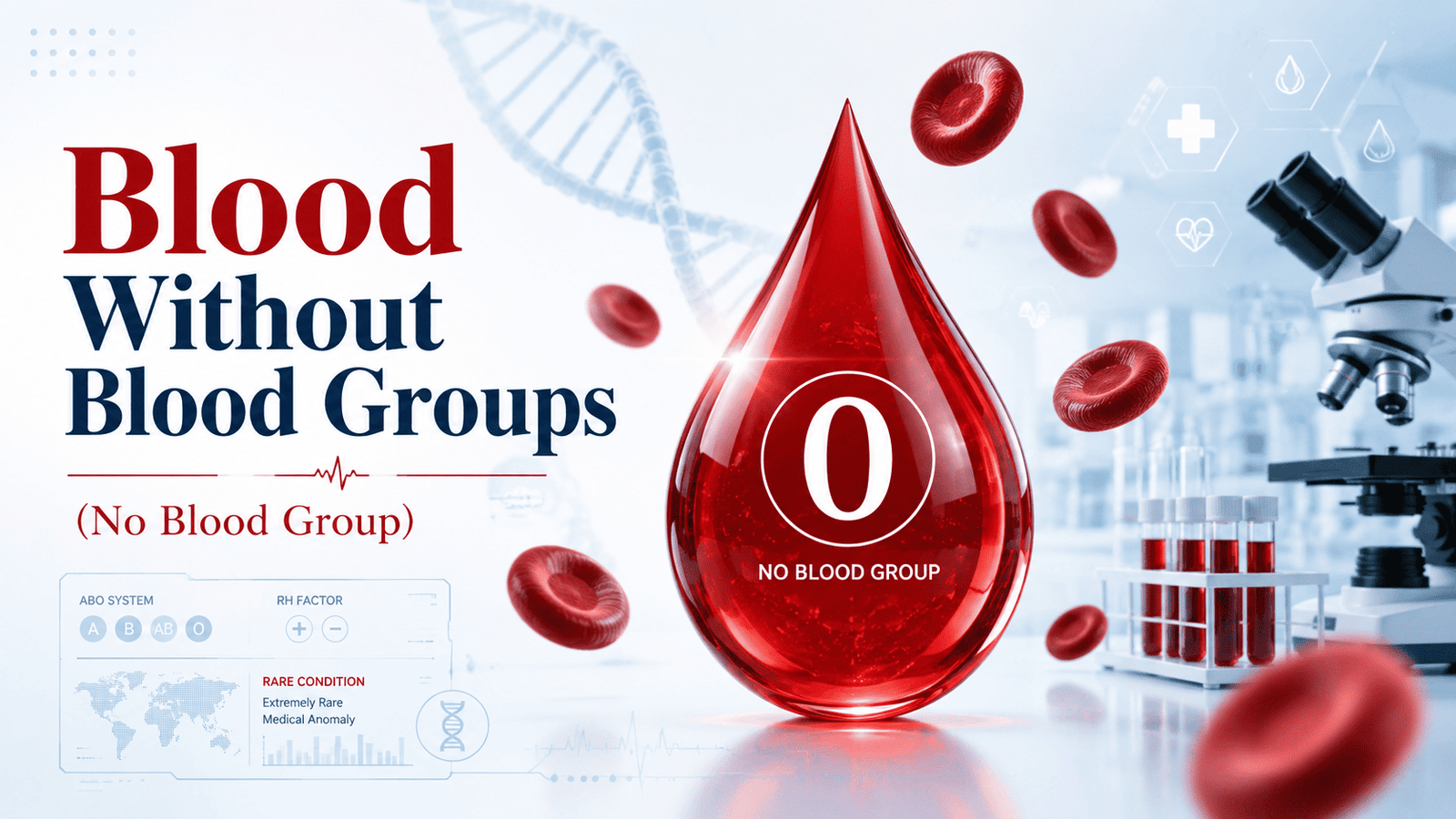
Understanding your blood group is essential for medical safety and transfusion compatibility. While most people fall into common categories, some possess incredibly unique variations.
“Golden blood,” or Rh-null, is the rarest blood type in the world, characterized by a complete absence of all 61 antigens in the Rh system. It is truly “null” because it lacks the proteins that define the Rh system entirely.
- Rh-null blood (Golden Blood): Unlike common blood types that are A, B, AB, and O, Rh-null completely lacks antigens on the red blood cells, which can trigger immune responses, making it exceptionally rare.
- The “Golden” Name: It is called “golden blood” because it is invaluable for scientific research and can be used for individuals with rare blood types. Only one in six million people are estimated to have this blood type, with fewer than 50 cases reported worldwide in the last 50 years. Rh-null individuals cannot donate to anyone needing rare blood; they can only receive blood from other Rh-null donors. Individuals with this type of blood may experience chronic mild anemia.
- Bombay phenotype (h/h): people with this type lack the “H” antigen, which is the precursor or “building block” for A and B antigens. On a standard blood test, they appear to be type O, but they cannot even receive type O blood because they lack that basic H marker. a condition thoroughly documented by the National Institutes of Health (NIH).
Blood groups are systems that classify a person’s blood based on specific markers (antigens) on the surface of red blood cells and the corresponding antibodies in the plasma. These markers are genetically inherited and help doctors decide who can safely donate or receive blood.
What do blood groups mean?
A “blood group” (or blood type) is a way of grouping people according to which antigens are present on their red blood cells. The most important systems are the ABO group (A, B, AB, O) and the Rh factor (+ or –), because mismatched transfusions can cause danger. Immune reactions.
What Are the Main Types of Blood Groups?
The two main systems used in transfusion medicine are the following:
- ABO system:
- Blood group A: A antigens on red blood cells, anti-B antibodies in plasma.
- Blood group B: B antigens on red blood cells, anti-A antibodies in plasma
- Blood group AB: both A and B antigens, no anti-A or anti-B antibodies (universal recipient for ABO).
- Blood group O: no A or B antigens, both anti-A and anti-B antibodies (universal donor for ABO).
Rh System:
- If the Rh protein (D antigen) is present, the blood is Rh-positive (e.g., A⁺, B⁺).
- If absent, it is Rh-negative (e.g., A-, B-)
- Together with ABO, this gives 8 common blood types (A+, A-, B+, B-, AB+, AB-, O+, O-)
Why Is Public Awareness About Blood Groups Important?
Overall many people know that blood has different “types,” but awareness of antigens, antibodies, and Rh-negative risks is often low. Studies from India and other countries show that fewer people understand complications of Rh-negative blood, for example, in pregnancy, or the importance of knowing their own group for safe transfusions. Awareness tends to be better in those who have donated blood, have higher education, or live in cities with active blood-donation campaigns.
In public health terms, improving knowledge includes
- Teaching that O-negative is the universal donor type and AB-positive the universal recipient.
- Encouraging people to know their own blood group and donate regularly, especially in communities with rare types.
- Using school lessons, blood-donation camps, and digital campaigns to explain compatibility and the role of blood banks.
The Ultimate Blood Group Compatibility Chart for Transfusions
A blood-group compatibility chart shows which blood types can safely receive blood from which donors for a red blood cell transfusion. The main chart is based on the ABO system (A, B, AB, O) and the Rh factor (+ or -)
Key Rules:
- O-negative (O-): is the universal donor for red cells; can be given to almost everyone in emergencies.
- AB-Positive (AB+): is the universal recipient for red cells: can receive from all ABO types.
- Rh-negative patients should usually get Rh-negative blood to avoid future reactions.
Red-blood-cell transfusion chart: This is for standard red cell transfusion whereas plasma and platelet rules are different
| Blood group types | Receiving blood from different blood group types |
| O+ | O+, O- |
| O- | O- |
| A+ | A+, A-, O+, O- |
| A- | A-, O- |
| B+ | B+, B-, O+, O- |
| B- | B-, O |
| AB+ | AB+, AB-, A+, A-, B+, B- |
| AB- | AB-, A-, B-, O- |
Why Does Blood Type Incompatibility Cause Transfusion Reactions?
Blood-type incompatibility causes reactions because the recipient’s immune system attacks the donor’s red blood cells as if they were “foreign invaders.” This happens when the antigens (markers) on the donar red cells do not match the antibodies naturally present in the recipient’s plasma.
How the reaction starts:
- Every blood group has specific surface antigens (like A, B, and Rh-D) and corresponding antibodies; e.g., people with type O have anti-A and anti-B.
- If a person receives incompatible blood, for example, type A blood given to someone with type O, their pre-formed antibodies rapidly bind to the donor red cells, marking them for destruction.
What happens in the body:
- The antibodies trigger hemolysis; donor red cells are torn apart inside blood vessels, releasing hemoglobin and other cell contents.
- This can cause symptoms such as fever, chills, back pain, low blood pressure, red-colored urine (hemoglobinuria), and, in severe cases, acute kidney injury or clotting disorders.
Why ABO incompatibility is most dangerous:
- ABO antigens are very abundant on red cells, and most people already have strong anti-A or anti-B antibodies, so the immune response is fast and strong.
- Even a small amount of mismatched ABO blood (as little as 10 ml) can initiate a severe, sometimes life-threatening, acute hemolytic transfusion reaction.

1 Comment
Rh Factor Optimization: 5 Critical Facts on Blood Group Safety
July 2, 2026[…] type, or blood group, is determined by the presence of specific antigens on red blood cells, mainly in the ABO system […]