

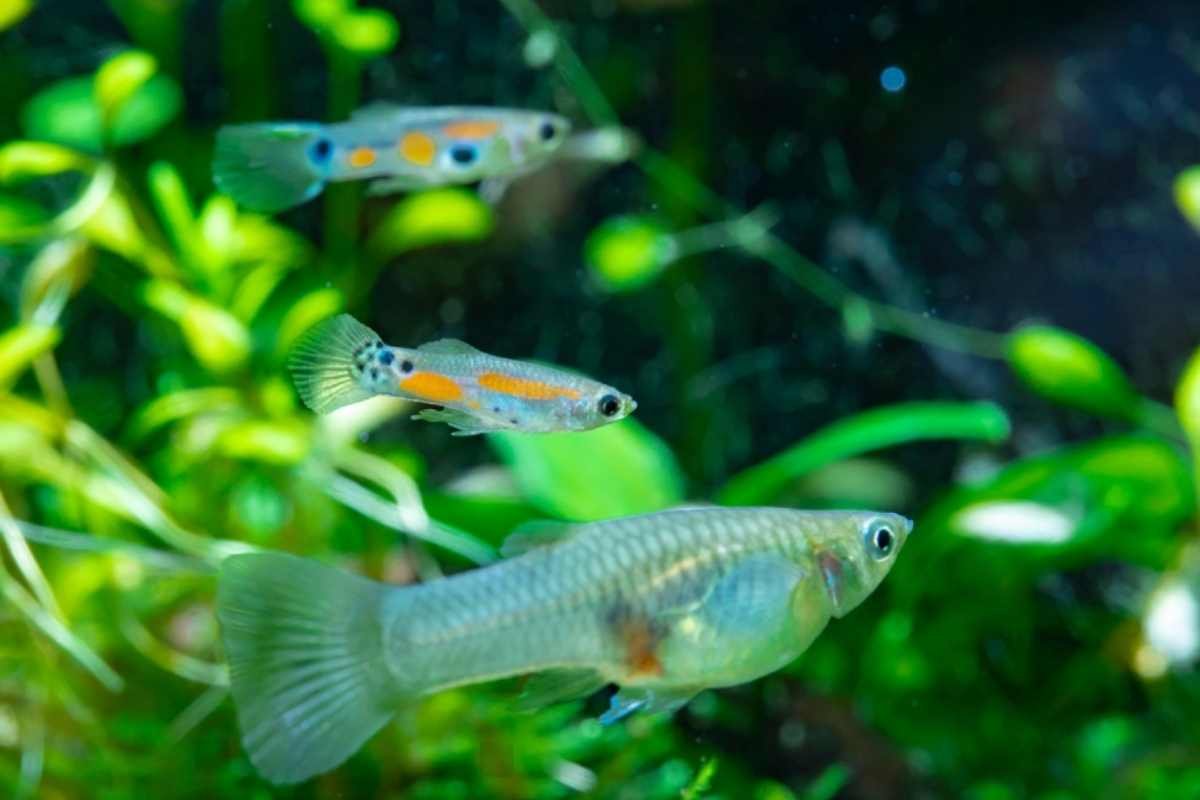
Purpose and Biology
- Fish hatcheries are established at the state, district, block, Primary Health Center (PHC), and subcenter levels to breed larvivorous fish.
- The primary species are Gambusia affinis and Poecilia reticulata (guppy fish).
- These two fishes are selected for their strong larval-eating behavior, adaptability, and easy breeding.
Ideal Fish Hatchery (Guppy Fish Breeding Place)
The ideal breeding place is a well-maintained aquarium with the following conditions:
Construction
- The size of fish hatcheries should be 3 meters long and 3 meters wide, with a depth of at least 1.5 meters.
- Tanks should be made from bricks, with a cement lining to prevent leakage and maintain water quality.
- An inlet at 1.25 meters height is needed for fresh water inflow.
- An overflow outlet should be about 5 cm below the inlet, protected with wire mesh to prevent fish escape.
- A proper bottom outlet is required for draining and cleaning.
- The bottom of the tank should be covered with 10 cm of sand, seeded with organic matter for plant growth.
Environment and Maintenance
- Vegetation: Include submerged aquatic plants like Hydrilla and Vallisneria to provide habitat, oxygen, and shelter for the fish.
- Protection: The hatchery must be shielded from heavy rains, floods, and the heat of the sun.
- Water Quality: Routine water changes should occur every 15 days. Maintain clean water with zero ammonia and low nitrate levels.
- Water Parameters:
- Temperature should be about 24°C to 28°C.
- pH value should be within 7 to 7.8 (slightly alkaline).
- Water hardness should be 8 to 12 dGH.
- Lighting: Sufficient light is needed for plant growth.
- Stocking Ratio: The male-to-female fish ratio should be 1:2 or 1:3 to reduce stress on the females.
- Predators: There should be no fish-eating animals, such as frogs, in the tank.
- Chlorination: The chlorination of water should not exceed 1 ppm (parts per million); otherwise, the fish will die.
Food for Guppy Fish
The best protein feeds to boost guppy survival include:
- Microworms
- Dried cow dung
- High-quality powder-fried food
- Finely crushed protein-rich flakes
- Cooked egg yolk mashed into a paste (provides excellent protein)
- Mosquito larvae
Transportation of Guppy Fish
Guppy fish are typically transported from hatcheries to breeding sites using well-established live-fish transport methods that prioritize minimizing stress, maintaining water quality, and maximizing survival rates during transmission.
- Timing: Transportation should be done in the morning when the water temperature is low, and direct sunlight exposure should be prevented.
- Water Source: Water should be sourced from the same hatchery to prevent osmotic stress.
- Tap Water: The use of tap water for drinking (by the fish) should be minimized.
- Short Transport (Less than Two Hours):
- Fish should be placed in a strong plastic bag and transported in an open container, without a lid.
- This prevents the fish from coming into contact with each other in the container and avoids injury.
- Long Transport (More than Two Hours):
- Put water and fish in a plastic bag, mix it with oxygen, seal it, and then place it in a large container for transport.
Releasing Fish at Mosquito Breeding Sites
The process of releasing guppy fish at mosquito breeding sites involves several careful steps to ensure their survival and minimal ecological disturbance. The number of fish released depends on the size of the site and the density of larvae present.
Preferred Habitats
Guppies are released in common breeding habitats such as
- Stagnant ponds
- Unused wells
- Slow-moving streams
- Quarry pits
- Large borrow pits
- Margins of ponds
Other potential breeding sites include
- Wells (useful and useless)
- Drains (raw and concrete)
- Riverside water ponds
- Domestic water tanks
- Fountains
- Overhead tanks
Release Procedure
- Predator Check: Before releasing the fish, ensure that there are no large fish, frogs, or other predators in the mosquito breeding center.
- Acclimatization: Before releasing the fish, it is necessary to drain some water from the place where they are to be released and put the fish in that water for a while so that they can stay there and tolerate the temperature.
- Larvae Assessment: Before releasing fish, measure the type and quantity of mosquito larvae present. This allows for an assessment to be made after the fish are released.
- Monitoring: After releasing the fish, check every month to see whether the fish have grown or not.
- Re-stocking: It is not guaranteed that the fish will survive in every mosquito breeding center. Therefore, the center should be checked frequently, and if the fish are not alive, release them again.
Stocking Density
- General Density: Generally, 5 to 10 male and female fish should be released in a surface area of 1 square meter.
- Alternative Density: One fish per 1.25 square feet is considered enough, but release double this amount. For example, for a well with a diameter of 2 meters and a water level of 0.75 meters (total area 3 square meters), you would need about 54 fish, or 4 to 5 dozen fish. (This is approximately 1 fish per 0.011 square meters, doubled) .
- Perimeter Release: Guppies are generally released at 5 to 10 fish per linear meter of the water body perimeter.
- High Larval Density: If there is a very high larval density, this rate can be increased up to 20 fish per linear meter.