






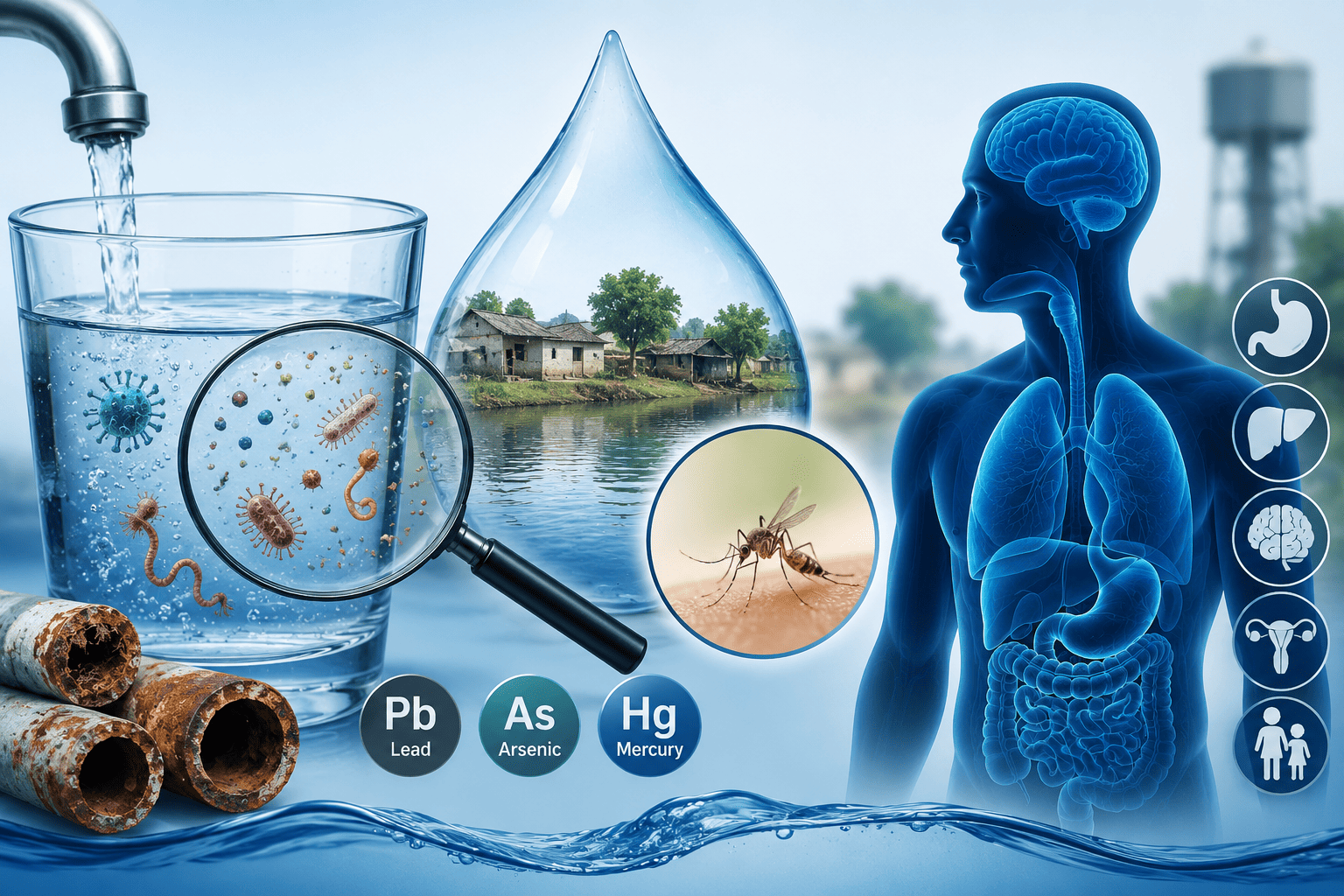
Contaminated water contains harmful microorganisms, chemicals, or radionuclides that can cause short-term illness and long-term chronic diseases depending on the contaminant type, concentration, exposure duration, and individual susceptibility.
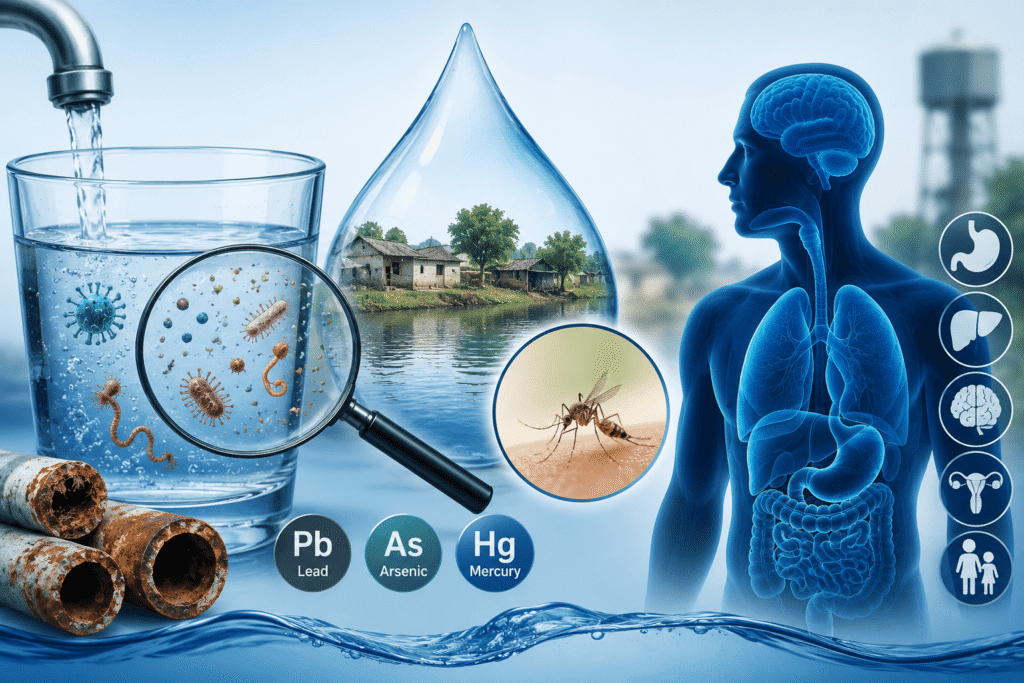
Microbial Contaminants (Bacteria, Viruses, and Parasites)
Gastrointestinal illnesses:
- Stomach pain, vomiting, diarrhea, fever
Waterborne diseases:
- Typhoid fever
- Cholera (rare in developed countries but life-threatening)
Infections:
- Hepatitis (can be severe/fetal in immunocompromised people)
- Kidney failure
Common symptoms:
- Headache
- Fever
- Dehydration
Chemical Contaminants—Contaminated water
Nitrates/Nitrites
Causes methemoglobinemia (blue baby syndrome) in infants under six months. Reducing blood’s oxygen-carrying ability, shortness of breath, and skin blueness can be fatal.
Heavy Metals (Lead, Arsenic, Mercury, etc.)
Acute and chronic toxicity. Liver, kidney, and intestinal damage. Anemia, cancer.
Organic Chemicals (Pesticides, Industrial Solvents)
Damage to kidneys, liver, and circulatory system. Nervous system and reproductive system harm.
Endocrine-Disrupting Chemicals (EDCs)
Hormone function disruption. Harmful even at low doses. Altered growth/development in fetuses & children.
Long-term Chemical Effects
| Effect Category | Specific Risks |
|---|---|
| Cancer | Lung, bone, and general cancer risk |
| Organ toxicity | Liver, kidney, heart |
| Neurotoxicity | Central nervous system damage |
| Reproductive | Adverse birth outcomes, congenital defects, low birth weight, preterm delivery |
| Immune | Immune system dysfunction |
| Blood | Anemia, altered blood chemistry |
Radionuclides (Radium, Uranium)
Increased cancer risk (lung, bone). Toxic kidney effects.
Fluoride (Excessive)
Dental fluorosis:
- Tooth discoloration
- Pitting
Skeletal fluorosis:
- Bone/joint pain and tenderness.
Vulnerable Populations
Infants and children:
Higher risk from nitrates, EDCs, and developmental disruption.
Elderly:
More severe hepatitis outcomes.
Pregnant women:
Fetus development at risk.
Immunocompromised (cancer, AIDS patient):
Higher mortality risk.
Many health risks result from long-term repeated exposure.
Waterborne diseases are often under-reported.
Clean tap water significantly reduces sickness risk.
How to Detect Lead or Arsenic in Residential Tap Water
Key fact: we cannot see, taste, or smell lead or arsenic dissolved in water; testing is the only way to confirm if they’re present.
1) Use a Certified Laboratory (Recommended Method)
EPA recommends sending samples to a certified lab for reliable analysis. Home test strips/kits sold online or at hardware stores are often inaccurate and may not clearly specify what they test for.
Steps
Find a certified lab:
- Contact your state drinking water agency or local water utility for certified lab listings.
- Your health department may offer free or low-cost testing.
Order a test kit (mail-in kits are sent to a certified lab):
- Simple Lab Tap Score
- National Testing Laboratories
- Healthy Babies Bright Futures: Low-cost lead-only test option.
Collect the sample properly:
- First draw sample: Water that has sat in pipes 6 to 8 hours
- Fill bottle to the fill line
- If collecting flush sample too: run water 30 seconds, then collect second sample
- Sample from kitchen faucet where you drink
Ship and wait:
- Seal bottles, fill out lab paperwork, and ship per instructions.
- Results typically arrive in 2 to 3 weeks.
2) Check your Water Utility’s
- Request your consumer confidence report from your water supplier.
- This annual report includes contaminated levels detected in your area’s water.
- If you don’t receive it, call your local water supplier.
3) Home Test Kits (Less Reliable but Quick Screening Only)
Arsenic-specific test kits:
Detects arsenic presence. These may not be accurate for regulatory level detection. Use only for initial screening, then confirm with lab testing.
4) Check for Lead Plumbing Risk Factors
Even if your service line isn’t lead, lead can be in other plumbing.
Lead pipes:
- Dull gray metal, soft enough to scratch with a key.
Lead service lines:
- Older homes, pre-1950s, are more likely.
Lead fixtures/faucets:
- Can contaminate water even with non-lead pipes.
Quick check for lead pipes:
- Use a magnet and penny/key.
Common Sources of Lead and Arsenic
Common Sources of Lead and Arsenic in Home Plumbing System
Lead Sources in Plumbing
Lead Service Lines
The pipe connecting your home to the main water supply under the street.
- Common in homes built before the 1950s.
- The most common source of lead in drinking water.
Lead Pipes Inside the Home
- Dull gray metal, soft enough to scratch with a key.
- Most common in older homes that haven’t been renovated.
- Water systems built before the 1950s likely have higher lead concentrations.
Lead Solder
Used to connect copper pipes (banned in 1985).
- Found in homes built prior to 1985.
- Lead leaches into water as solder corrodes over time.
Brass Components (Faucets, Valves, Fixtures)
- Can contain up to 8% lead even if installed before 2014.
- Newer “lead-free” brass still may contain trace amounts.
- Lead dissolves, especially in the first few months of use.
- Even fixtures that don’t appear brass-colored can contribute lead.
Older Faucets and Fixtures
- Pre-1986 plumbing items more likely to contain lead.
- Corrosion allows lead to leach into drinking water.
Key Factors That Increase Lead Exposure
- Water sits stagnant in pipes for 6+ hours (overnight)
- Aging/corroding plumbing materials
- The home has older plumbing
b) Arsenic Sources in Plumbing
Arsenic typically does NOT come from plumbing materials themselves. Unlike lead, arsenic is not a component of pipes, solder, or fixtures. Instead:
Natural Groundwater Contamination
- Arsenic naturally exists in soil, rock, and water sources.
- More common in well water than municipal water.
- Arsenic in groundwater dissolves from natural mineral deposits.
Agricultural/Industrial Contamination
- Past use of arsenic-based pesticides on crops.
- Industrial waste discharge.
- Mining activities.
How It Enters Your Home
- Arsenic enters through the water supply source, like a well or municipality.
- Once in the water, it travels through all plumbing to your taps.
- Not generated by plumbing materials but transported by them.
Hence,
Lead: comes from plumbing materials themselves (service lines, pipes, solder, and fixtures).
Arsenic: Comes from water source contamination (natural groundwater or industrial/agricultural) and is simply transported through plumbing.
Health Risks of Heavy Metals Contaminated in Water
Heavy metal contamination in drinking water poses serious health risks, including both immediate (acute) and long-term (chronic) effects that can damage multiple body systems and even cause cancer.
Cancer Risk
Persistent exposure to heavy metals above safe levels significantly increases cancer risk.
- Arsenic: Lung cancer, skin cancer, and bladder cancer.
- Chromium: Lung cancer.
- Cadmium: Lung cancer, prostate cancer, kidney cancer.
- Lead: probable carcinogen.
Organ Damage
Heavy metals can cause damage to vital organs even at low concentrations.
- Kidneys: Toxic kidney effects, kidney damage, kidney failure.
- Liver: Liver damage, liver toxicity.
- Intestinal: Intestinal damage.
- Stomach: Stomach damage.
- Skin: Skin damage, dermatitis, ulcers.
Neurological Damage
Heavy metals are particularly dangerous to the nervous system.
- Neurological disorders and nervous system damage.
- Brain damage (irreversible at high doses).
- Learning difficulties and memory impairment in children.
- Behavioral problems: aggressiveness, hyperactivity.
- Neurotoxicity causing retardation.
Children are especially vulnerable: their rapidly developing bodies suffer more severe effects.
Cardiovascular and Blood System Damage
- Heart failure from arsenic exposure.
- Anemia from heavy metal consumption.
- Circulatory system diseases.
- Hemochromatosis from excess iron.
Developmental & Reproductive Effects
- Reduced growth and development.
- Reproductive system damage from lead exposure.
- Developmental issues from chronic exposure.
- Autoimmunity development (immune system attacks its own cells) from mercury and lead.
Other Specific Health Effects
Arsenic:
- Heart failure
- Gastrointestinal effects
- Anemia
- Neural injury
- Cumulative poison
Lead:
- Kidney damage
- Nervous system damage
- Reproductive system damage
- Highly toxic
Mercury:
- Autoimmunity
- Kidney disease
- Circulatory system disease
- Nervous system disease
Cadmium:
- Carcinogenic
- Lung/prostate/kidney cancer risk
Chromium:
- Ulcers
- Dermatitis
- Toxic
Selenium:
- Nausea
- Headache
- Tooth decay
- Tooth staining
- Nail brittleness
Aluminum:
- Potential non-cancer health effect
Types of Toxicity
Heavy metal exposure causes two types of toxicity.
Acute toxicity
Immediate effects from high doses.
Chronic toxicity
Long-term effects from persistent low-level exposure.
Toxicity Depends On
- Concentration of metals.
- Duration/period of exposure.
- Route of exposure (drinking water, inhalation, skin contact).
Heavy metal contamination is a critical global public health concern due to the toxic, persistent, and non-biodegradable nature of these metals. The effects range from organ damage and neurological disorders to cancer, making water purification essential for safe drinking water.
2 Comments
Water Quality Monitoring: 5 Roles of Public Health Lab
July 13, 2026[…] or natural mineral sources. High chloride gives a salty taste and may indicate contamination from wastewater or saline […]
Microplastic Pollution: 5 Critical Health & Environmental Facts
July 13, 2026[…] and other small sea animals, because they filter water and can take in tiny plastic pieces […]