


Clinical Characteristics and Complications
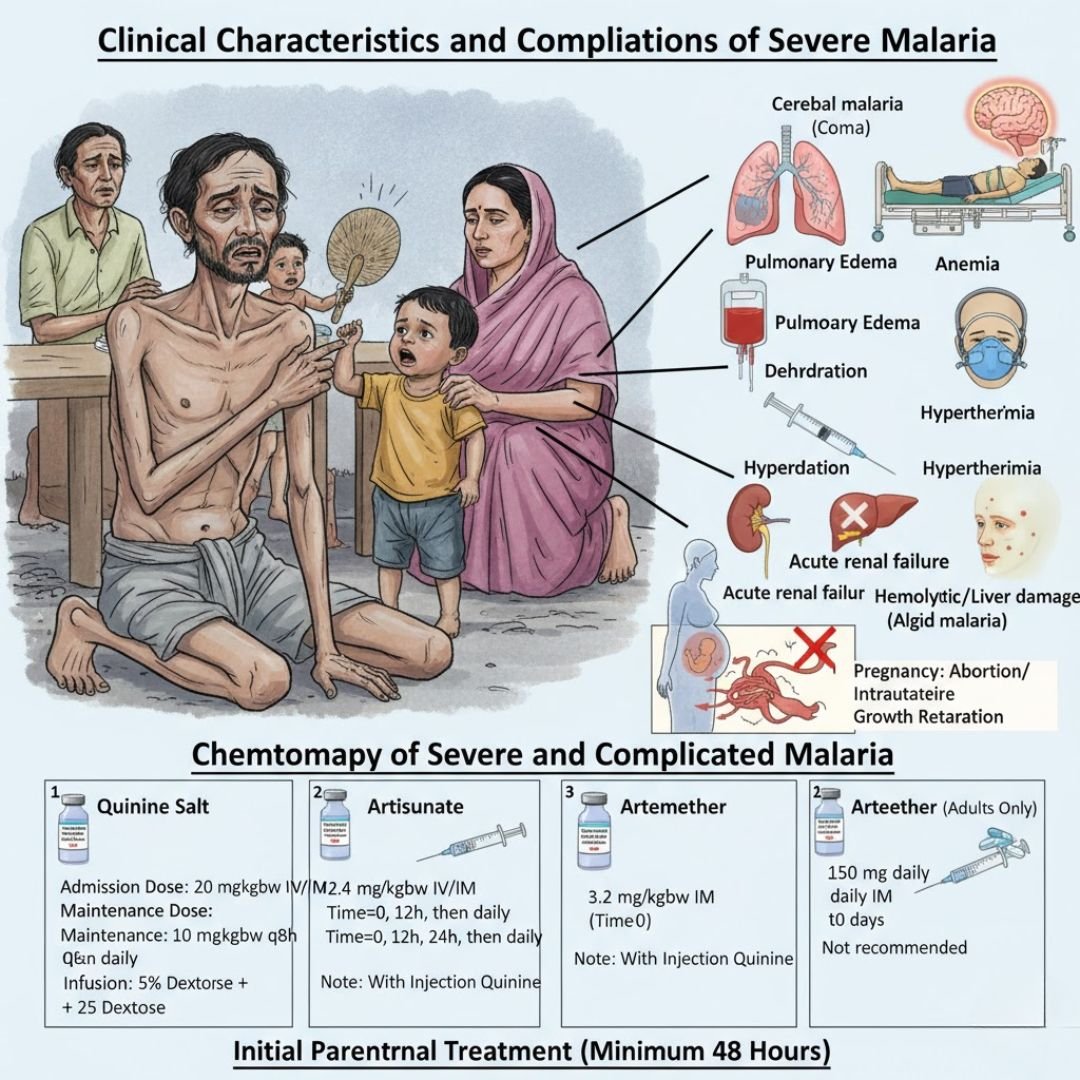
Severe malaria is clinically characterized by confusion or drowsiness with extreme weakness (prostration).
Complications that may develop due to P. falciparum infection include
- Hyperthermia
- Anemia
- Hypoglycemia
- Dehydration
- Pulmonary Edema
- Cerebral malaria (Coma)
- Shock/General collapse (Algid malaria)
- Acute renal failure
- Hemolytic jaundice/Liver damage
- Petechial hemorrhages
In children, febrile convulsions, repeated vomiting, and dehydration are common if the temperature is high, regardless of the cause. Therefore, these specific symptoms are not necessarily indicative of severe malaria. However, children with such symptoms should be managed as having severe malaria in routine program situations, and a diagnosis of malaria should be confirmed as early as possible.
In pregnancy, malaria, especially P. falciparum, carries a high risk of abortion or intrauterine growth retardation because the sequestration of parasites in the placenta restricts oxygen and nutrient flow to the fetus.
Chemotherapy of Severe and Complicated Malaria
In severe and complicated P. falciparum malaria cases, intravenous quinine or parenteral artemisinin derivatives must be administered.
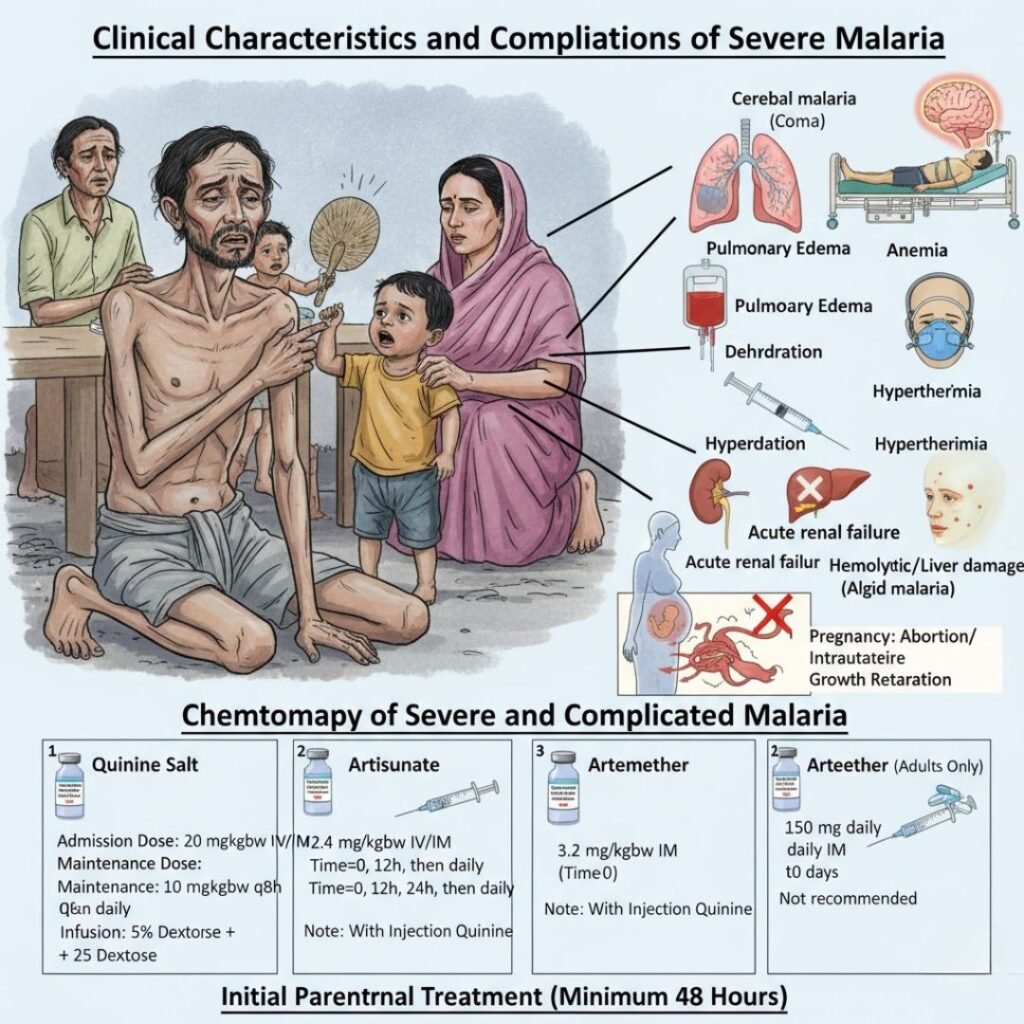
Initial Parenteral Treatment (Minimum 48 Hours)
Initial parenteral treatment should be given for at least 48 hours. The parenteral treatment must be given for a minimum of 24 hours once started, irrespective of the patient’s ability to tolerate oral medication earlier than 24 hours.
Choose one of the following four options:
1. Quinine Salt
- Admission Dose: 20 mg/kgbw on admission (IV infusion or divided IM injection).
- Maintenance Dose: Followed by a maintenance dose of 10 mg/kgbw every 8 hours.
- Infusion: The infusion rate should not exceed 5 mg salt/kgbw per hour. Drip in 5% dextrose plus an ampule of 25% dextrose.
2. Artisunate
- 2.4 mg/kgbw IV or IM.
- Given on admission (time=0), then at 12 hours and 24 hours, and then as a once-a-day injection.
- Note: Artesunate is to be given with injection quinine.
3. Artemether
- 3.2 mg/kgbw IM given on admission (time=0).
- Followed by 1.6 mg/kgbw per day.
4. Arteether (Adults Only)
- 150 mg daily IM for 3 days in adults only.
- Not recommended for children.