




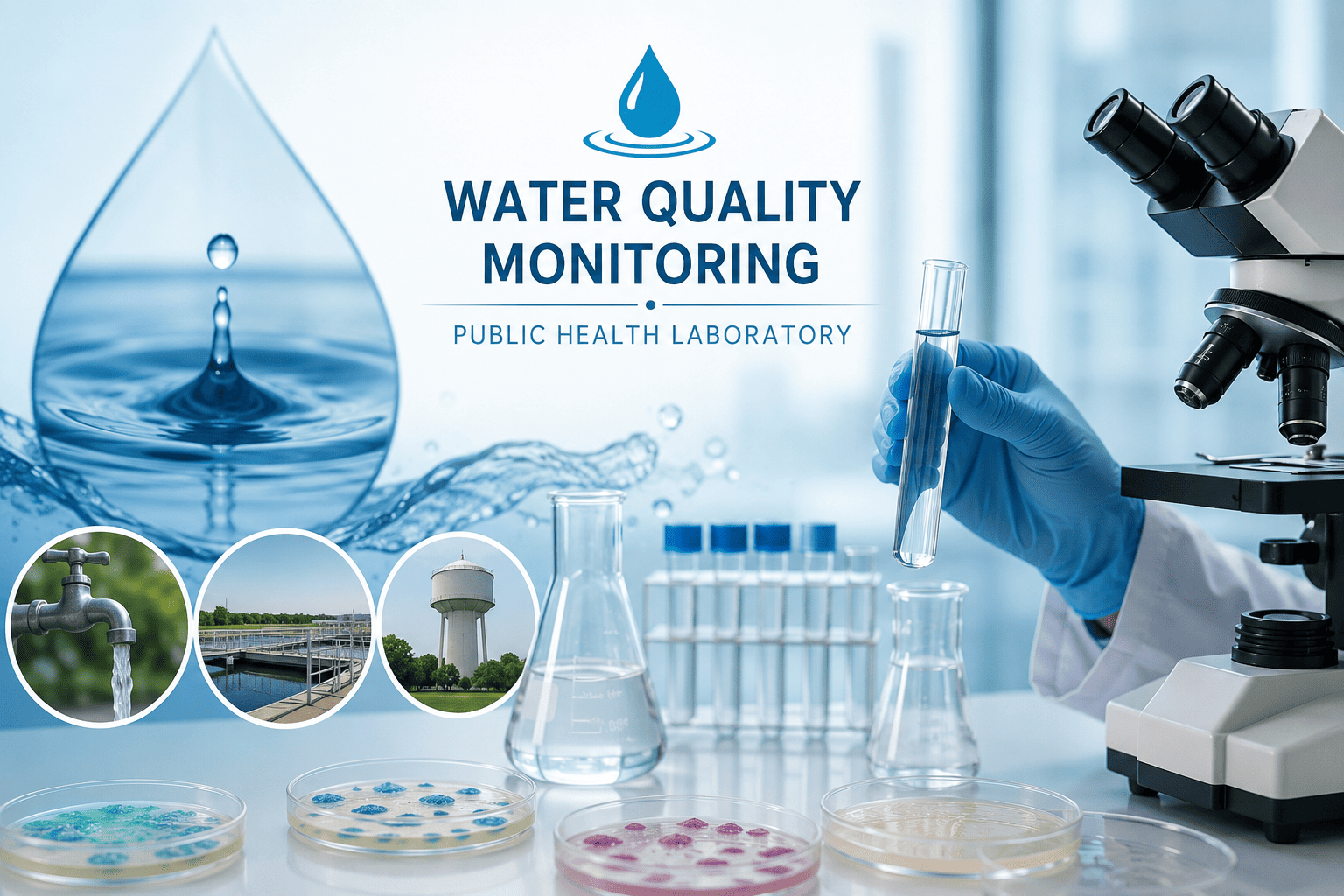
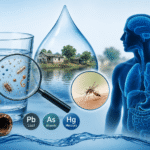
A public health laboratory supports water safety by monitoring drinking water sources, checking samples against standards, and reporting contamination early so corrective action can be taken. It typically performs physical, chemical, and bacteriological testing, especially for municipal and rural water supplies. Its main function is to collect, examine, and interpret water samples from sources such as wells, taps, storage tanks, treatment plants, and distribution systems. They protect the community by detecting contaminants that cause illness (pathogens and harmful algal toxins), long-term toxicants like lead, arsenic, and nitrate, and indicators of contamination, e.g., E. coli and total coliforms. It also traces the cause of waterborne diseases and recommends corrective measures such as chlorination, filtration, source protection, or repair of leaks and cross-connections.
The laboratory also acts as a surveillance center for water safety. By regulatory testing samples, it ensures that water supplied to the population meets accepted standards for physical, chemical, and bacteriological quality. In this way, it supports preventive medicine rather than waiting for illness to occur. Water testing data are also helpful for assessing long-term problems such as fluoride excess, nitrate contamination, salinity, or industrial/agricultural pesticide pollution.
📌 Key Takeaways: Public Health Laboratory Water Surveillance
- Primary Mandate: A public health laboratory protects community health through the proactive surveillance, physical, chemical, and microbial analysis of drinking water sources.
- Testing Parameters: Protocols evaluate physical characteristics (turbidity, color, odor), toxic chemical contamination (nitrates, heavy metals, fluoride), and indicator bacteria (E. coli).
- Chain of Custody: High-accuracy testing relies on strict sampling protocols using sterile containers, brief flush cycles, and rapid transport within 1 to 2 hours under cool temperatures.
- Disease Prevention: Regular monitoring provides early detection of pathogens responsible for critical waterborne outbreaks like cholera, typhoid, and hepatitis A.
Objectives of Water Examination
The examination of water samples is done to determine whether the water is safe and wholesome for drinking and domestic use. The objectives are:
- To detect visible or sensory abnormalities in water.
- To assess whether the water contains harmful chemicals.
- To identify microbial contamination, especially fecal pollution.
- To determine the suitability of water for drinking, cooking, and public supply.
- To guide treatment and control measures in the community.
Role in Monitoring
A public health laboratory performs the following functions in water quality monitoring:
- Collects and tests water from sources, treatment plants, reservoirs, and distribution systems.
- Detect physical defects such as color, odor, taste, turbidity, and clarity.
- Measures chemical quality such as pH, hardness, chloride, fluoride, iron, nitrate, sulfate, alkalinity, TDS, and conductivity.
- Performs bacteriological testing, especially for indicator organisms like total coliforms and E. coli, to assess fecal contamination.
How Samples are Examined
Physical Examination
Physical tests are the first check and include visible and sensory properties such as color, turbidity, odor, taste, temperature, and transparency. These help identify obvious contamination, suspended matter, and treatment failure.
Color
Pure water should be colorless. Colour may be due to dissolved organic matter, algae, industrial waste, pesticides, iron, or manganese. Apparent colour can be estimated visually or by comparison with standard colour scales.
Odor
Water should be free from objectionable odor. Odor may indicate decomposing organic matter, sewage contamination, phenolic compounds, hydrogen sulfide, or algal growth.
Taste
Drinking water should be pleasant and palatable. An unusual taste may suggest dissolved salts, organic contamination, metallic content, or algal metabolites.
Turbidity
Turbidity is caused by suspended particles such as clay, silt, organic matter, and microorganisms. It is measured using a turbidimeter and expressed in nephelometric turbidity units (NTU). High turbidity interferes with disinfection because microorganisms may be shielded by particles, so it is an important indicator of treatment efficiency.
Temperature and Transparency
Temperature influences taste, chemical reactions, and microbial growth. Transparency can be checked by visual methods and reflects the amount of suspended matter in water.
Chemical Examination
Chemical analysis is done to identify dissolved substances that may affect health, taste, corrosion, or suitability for use. The sample may be analyzed by standard titrimetric, colorimetric, spectrophotometric, or instrumental methods. Chemical samples are usually collected in clean bottles for analysis of pH, hardness, alkalinity, chloride, fluoride, nitrate, sulfate, iron, and dissolved plastics and solids. These results show whether water is corrosive, mineral-rich, polluted, or unsafe for drinking.
Important Chemical Parameters
- pH
- Alkalinity
- Acidity
- Hardness
- Chloride
- Fluoride
- Nitrate
- Sulphate
- Iron
- Total dissolved solids
- Electrical conductivity
- Residual chlorine when chlorinated water is tested.
pH
pH indicates whether water is acidic, neutral, or alkaline. It affects taste, corrosion, and the efficiency of chlorination. Water with extreme pH may damage pipes or affect disinfection.
Hardness
Hardness is mainly due to calcium and magnesium salts. It causes scaling in pipes and boilers and affects soap consumption. It is usually reported as mg/L of calcium carbonate.
Chloride
Chloride may come from sewage, industrial waste, or natural mineral sources. High chloride gives a salty taste and may indicate contamination from wastewater or saline intrusion.
Fluoride
Fluoride is important because both deficiency and excess are harmful. Low fluoride may contribute to dental caries, while excess fluoride can cause dental or skeletal fluorosis.
Nitrate
Nitrate contamination often comes from fertilizers, sewage, and animal waste. High nitrate in drinking water is dangerous, especially for infants, because it may cause methemoglobinemia.
Sulphate
Excess sulphate may produce a laxative effect and also affect taste. It may come from natural minerals or industrial pollution.
Iron
Iron commonly causes discoloration, staining, and an unpleasant taste. Although not usually highly toxic at low levels, it makes water objectionable and may indicate corrosion or groundwater enrichment.
Total Dissolved Solids
TDS indicates the total amount of dissolved salts in water. High TDS affects taste and may suggest salinity or pollution.
Bacteriological Examination
Bacteriological testing is one of the most important parts of water quality assessment because waterborne diseases are mainly caused by microbial contamination. Since direct detection of every pathogen is difficult, indicator organisms are used. For bacteriological testing, samples must be taken aseptically in sterile bottles, often after letting tap water run briefly and sterilizing the outlet when needed. Laboratories then test for indicator bacteria such as coliforms and E. coli because their presence suggests fecal contamination.
Indicators Used
- Total coliforms.
- Fecal coliforms.
- E. coli.
Sample Collection Basics
Correct sampling is essential because laboratory results are only as reliable as the sample collected.
- Use clean, appropriate bottles, larger bottles for chemical tests, and sterile smaller bottles for bacteriological tests.
- Send bacteriological samples quickly, ideally within 1 to 2 hours, and keep them cool during transport because bacterial counts may change if the sample is delayed or exposed to heat.
- For bacteriological examination, sterile screw-capped bottles are required, and the outlet may be flamed or disinfected if appropriate.
- The sample should represent the actual water supply and should be taken from a point where contamination is likely to be detected, such as a consumer tap, hand pump, well, or source outlet.
- Before collecting from a tap, the water is usually allowed to run for some time so that stagnant water in the pipe is flushed out.
- The bottle should not be touched inside, and the stopper should be replaced immediately after collection.
- Avoid contaminating the sample from the tap, stopper, or hands during collection.
- Label the source, date, time, collector’s name, mobile number, and location clearly so results can be traced correctly.
Common Methods
Multiple Tube Fermentation Method
This estimates the most probable number (MPN) of coliforms in a given volume of water. It involves presumptive, confirmed, and completed tests.
Membrane Filtration Method
A measured volume of water is filtered through a membrane, which is then incubated on selective media to count colonies.
Presence-Absence Test
Used for simple screening of potable water.
Steps in Examination
The laboratory examination generally follows these steps:
- Receive and verify sample details.
- Inspect the condition of the sample bottle.
- Perform physical tests.
- Perform chemical tests using standard methods.
- Carry out bacteriological tests under aseptic conditions.
- Compare results with drinking water standards.
- Report findings to health authorities and recommend action.
Significance of Results
The results of water testing help in:
- Detecting unsafe water early.
- Preventing outbreaks of cholera, typhoid, dysentery, and hepatitis A.
- Monitoring efficiency of treatment plants.
- Identifying pollution sources.
- Guiding public health interventions.
- Protecting vulnerable groups such as children, elderly persons, and immunocompromised individuals.
Thus, a public health laboratory is an essential part of water quality surveillance. It examines water samples physically, chemically, and bacteriologically to ensure that water is fit for human consumption. Physical tests assess appearance and sensory quality; chemical tests detect fecal contamination. Through regular monitoring and timely reporting, the laboratory helps prevent waterborne diseases and maintains safe public water supplies.
1 Comment
Human Waste Sanitation: 5 Critical Health Risks
July 15, 2026[…] properly constructed, protected from contamination, and capable of supplying enough wholesome water throughout the […]