






📌 Key Takeaways: Rh Factor & Blood Grouping Protocols
- Determination Methods: Blood grouping relies on identifying ABO and Rh antigens using commercial reagents; home testing cards and clinical slide/tube methods detect visual clumping (agglutination).
- Pregnancy Risks: Rh incompatibility occurs when an Rh-negative mother carries an Rh-positive fetus, risking Hemolytic Disease of the Newborn (HDN). Prophylactic RhIg (RhoGAM) injections at 28 weeks and post-delivery prevent maternal sensitization.
- Transfusion Compatibility: To prevent acute hemolytic transfusion reactions, Rh-negative recipients must strictly receive Rh-negative red blood cells, while Rh-positive individuals can accept either.
- Platelet & Plasma Flexibility: Platelet transfusions prefer Rh matching to avoid trace red cell sensitization in fertile females, while plasma/cryoprecipitate transfusions can safely bypass Rh structural constraints.
What Are the Methods for Determining Your Blood Group?
Blood type, or blood group, is determined by the presence of specific antigens on red blood cells, mainly in the ABO system (A, B, AB, O) and Rh factor (+ or -). You can’t reliably self-test without equipment, but home kits or professional labs make it straightforward.
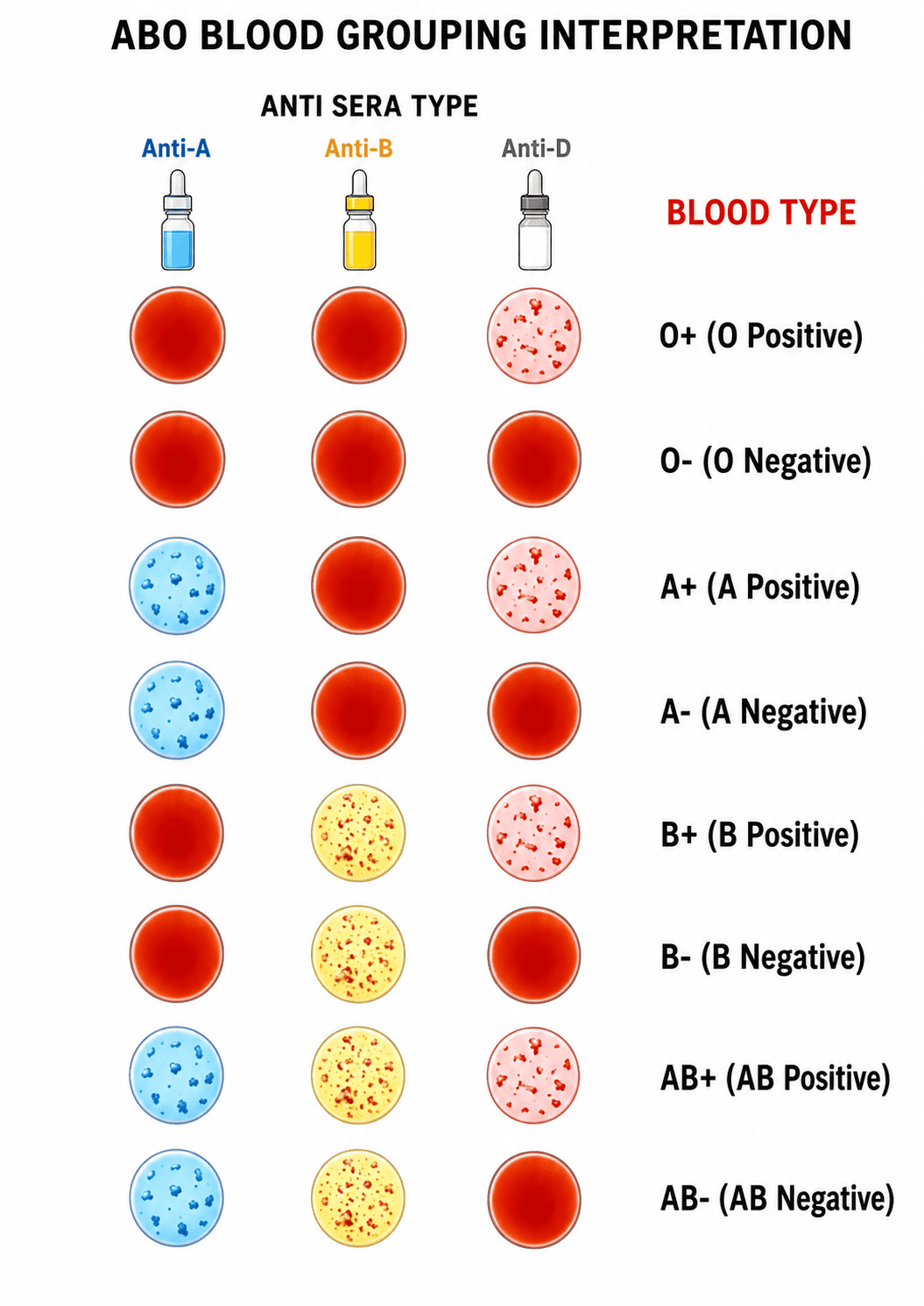
Home testing kits: Prick your finger to get a blood drop, then add it to a card with anti-A, anti-B, and anti-Rh reagents. Clumping, i.e., agglutination, appears in anti-A, meaning type A; anti-B means type B; both mean type AB; neither means type O. Rh⁺ clumping with the anti-D reagent.
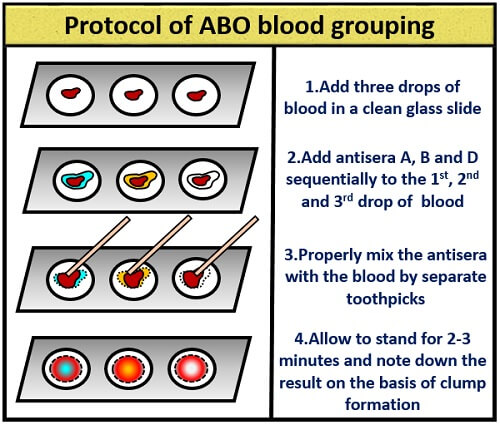
Slide Methods:
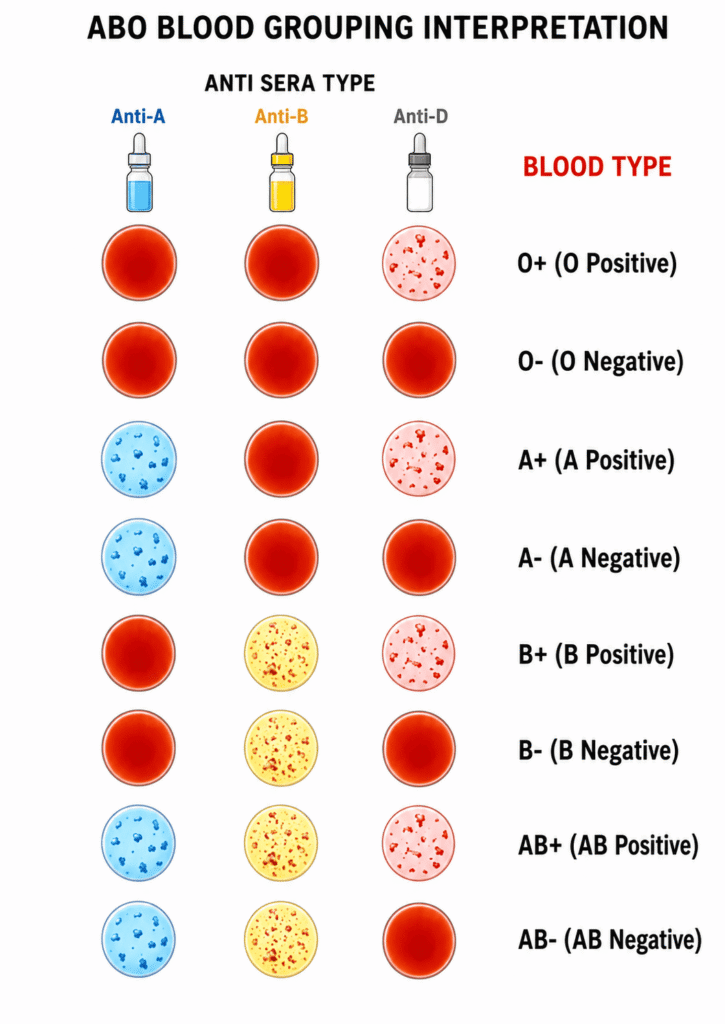
This visual shows typical agglutination patterns for each type on a test card.
Why Is the Rh Factor Important in Pregnancy and Transfusions?
The Rh factor plays a critical role in ensuring safe blood transfusions and healthy pregnancies by preventing immune reactions against red blood cells.
- Role in Pregnancy: Rh incompatibility arises when an Rh-negative mother carries an Rh-positive fetus, prompting her immune system to produce anti-D antibodies that attack fetal red blood cells. This can lead to hemolytic disease of the newborn (HDN), causing fetal anemia, jaundice, or miscarriage in severe cases. Prophylactic anti-D immunoglobulin (RhIg or RhoGAM) is given around 28 weeks gestation and post delivery to Rh-negative mothers with Rh-positive babies, preventing sensitization and protecting current and future pregnancies.
- Role in Transfusions: Rh compatibility is essential to avoid hemolytic transfusion reactions, where an Rh-negative recipient’s antibodies destroy Rh-positive donor cells. Rh-negative patients must receive Rh-negative blood, while Rh-positive patients can accept either, making Rh typing standard in blood banking, emergencies, and chronic transfusions like those for sickle cell disease. Mismatched transfusions can cause fever, kidney failure, or death.
What Are the Rh Compatibility Rules for Blood Transfusions?
Rh compatibility is crucial in blood transfusions to prevent hemolytic reactions where the recipient’s immune system attacks donor red blood cells.
Recipient Rules
- Rh-positive recipients can safely receive either Rh-positive or Rh-negative red blood cells, as they lack anti-Rh antibodies.
- Rh-negative recipients must receive only Rh-negative blood to avoid sensitization and antibody formation against the Rh (D) antigen.
- Exceptions occur in emergencies, where Rh-positive blood may be given to Rh-negative males or postmenopausal females, with monitoring for hemolysis.
Donor Rules
- Rh-positive donors can give to Rh-positive recipients, while Rh-negative donors are universal for both Rh-positive and Rh-negative recipients.
- For platelets and plasma, Rh matching is less strict but preferred; Rh-D immunoglobulin may be considered if Rh-positive platelets go to Rh-negative females of childbearing age.
Special Cases
| Component | Rh Compatibility Notes |
| Red blood cells | Strict for Rh-negative recipients; flexible for positives. |
| Platelets | Preferred match: RhIg if mismatch in fertile female |
| Plasma/Cryo | Any Rh type acceptable. |
| Emergencies | O-negative (universal donor) until type is known. |
What Are the Rh Compatibility Rules for Platelet Transfusions?
Rh compatibility rules for platelet transfusions are less stringent than for red blood cells but still prioritize preventing alloimmunization, especially in Rh-negative recipients.
Recipient rules or guidelines
- Rh-positive patients can receive platelets from either Rh-positive or Rh-negative donors without significant risk, as they lack anti-D antibodies.
- Rh-negative recipients, particularly females of childbearing potential , should preferentially get Rh-negative platelets to avoid anti-D formation from trace red cells in the product
- Rh-positive platelets may be used if needed, with post-transfusion Rh immunoglobulin (RhIg) prophylaxis.
Donor Rules or guidelines
- Rh-negative platelets are universally compatible as donors for both Rh types.
- Rh-positive platelets are restricted for Rh-negative recipients due to sensitization risk.
- ABO matching remains ideal but secondary to RhD for platelets, with plasma-related hemolysis risks minimized by low red cell volume.

1 Comment
Bombay Blood Group & Artificial Blood: 5 Critical Facts
July 6, 2026[…] is milder, often causing jaundice or anemia in first pregnancies without hydrops fetalis; Rh is severe, risking fetal loss, hepatosplenomegaly, or kernicterus in subsequent […]