


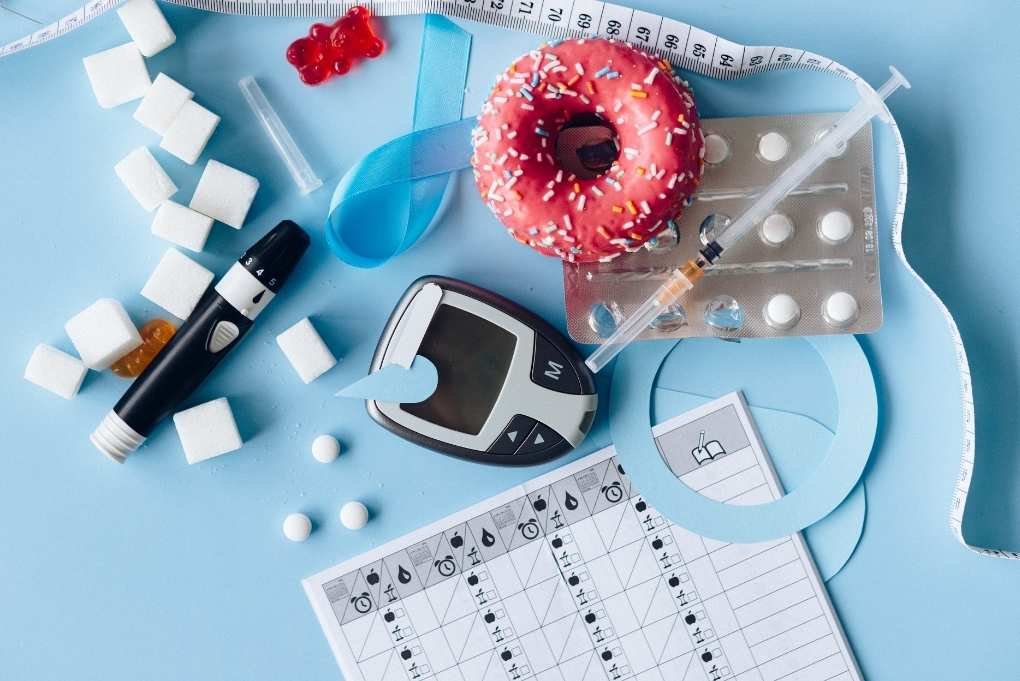
Diabetes is a disease in which the body does not produce or properly use the hormone insulin. The body needs insulin to convert sugar, starches, and other foods into energy. Impairment of insulin secretion and action in the body leads to abnormally elevated levels of glucose in the blood, a condition classically termed as diabetes. In other words, diabetes is a chronic metabolic disorder characterized by high blood sugar levels (hyperglycemia) due to either insufficient insulin production by the pancreas or the body’s ineffective response to insulin.
Early diagnosis and treatment are essential to prevent illness and death. If untreated, diabetes can cause serious complications affecting the heart, kidneys, eyes, nerves, and blood vessels.
Types of Diabetes
There are several types of diabetes, which are classified into three main types: type 1 diabetes, type 2 diabetes, and gestational diabetes.
1) Type 1 Diabetes (T1DM)
- This type of diabetes usually occurs in younger people, children, and adolescents. The diagnosis can be made throughout childhood but is more likely below 15 years of age.
- The onset is usually acute and severe, and insulin is required for survival. People with T1DM require daily insulin injections.
- T1DM results from the autoimmune destruction of the beta cells in the pancreatic islets.
- A family history of diabetes is rare in T1DM.
- It is characterized by the presence of features of associated autoimmunity (autoimmune disorders, vitiligo) and the absence of obesity and acanthosis nigricans.
- The urine of T1DM patients with uncontrolled hyperglycemia is positive for ketone bodies.
2) Type 2 Diabetes (T2DM)
- This is the commonest type of diabetes.
- It usually occurs after the age of 40 years but occurs frequently even at a lower age among Indians.
- T2DM was previously known as non-insulin-dependent diabetes mellitus.
- The onset is usually insidious and may be mild to severe.
- The family history is usually positive and strong.
- Obesity, metabolic syndrome, and acanthosis nigricans are usually seen in these patients, while there is no evidence of autoimmunity.
- There is no insulin dependence until late in the course of the illness.
3) Gestational Diabetes
- This type occurs during pregnancy and usually resolves after delivery.
Other Forms Other forms include diabetes due to genetic conditions or diseases affecting the pancreas.
Symptoms of Diabetes
Classical symptoms of diabetes include:
- Excessive thirst (Polydipsia)
- Frequent urination (Polyuria)
- Increased hunger (Polyphagia)
- Weight loss
- Blurred vision
When to Suspect Diabetes
Diabetes should be suspected if a person presents with:
- Symptoms of uncontrolled hyperglycemia: excess thirst, excess urination, and excess hunger with loss of weight.
- Frequent infections.
- Non-healing wounds.
- Unexplained lassitude.
- Fatigue.
- Impotence in men.
High Risk for Diabetes
A person is considered at high risk for diabetes if he or she meets any of the following criteria:
- Is overweight (BMI is more than 23 kg/m²).
- Is physically inactive (exercises less than 3 times a week).
- Has high blood pressure.
- Has impaired fasting glucose or impaired glucose tolerance.
- Has triglyceride and/or cholesterol levels that are higher than normal.
- Delivered a baby whose birth weight was 4 kgs or more.
Has had diabetes or even a mild elevation of blood sugars during pregnancy.
Glycosylated Haemoglobin (HbA1C)
- A fraction of the haemoglobin in the red blood cells (RBC) is found to be in a glycosylated form (has glucose attached to it).
- The HbA1c level is proportional to the average blood glucose concentration over the previous two to three months.
- Therefore, it is an excellent indicator of how well the patient has managed his or her diabetes over the last four weeks to three months.
- Glycated haemoglobin is recommended for monitoring blood sugar control in diabetes patients.
The American Diabetes Association (ADA) recommends an HbA1c goal of less than 7% for people with diabetes in general.
Criteria for Diagnosis of T2DM
The diagnosis of Type 2 Diabetes Mellitus (T2DM) using a venous blood sample is based on the following glucose levels:
| Condition | Fasting Glucose (mg/dl) | 2-hour post-glucose load (mg/dl) |
|---|---|---|
| Diabetes Mellitus | ≥126 or | ≥200 |
| Impaired Glucose Tolerance | <126 and | >140 to <200 |
| Impaired Fasting Glucose | ≥110 to <126 | — |
Export to Sheets Note: A capillary blood glucose value is also sufficient. Where capillary blood glucose measured by a glucometer is used in the fed state (post-food, post-glucose, or post-meal), the >200 mg/dl cutoff may be revised to >220 mg/dl.
Management of Diabetes
Management of T2DM should be initiated as soon as the diagnosis is established, even if the patient is asymptomatic. The management of T2DM comprises initial assessment, initial management, and follow-up visits.
Management generally focuses on:
- Controlling blood glucose through insulin therapy (for Type 1).
- Oral antidiabetic medications.
- Lifestyle modification, such as a healthy diet and exercise.
- Monitoring complications.
Initial assessment and management of patients should be carried out at the Primary Health Centre (PHC) / Community Health Centre (CHC) level.
Initial Assessment
Individuals suspected of having T2DM need to be subjected to an initial assessment, which includes:
- Risk assessment.
- History and physical examination.
- Assessment of blood glucose level.
- Presence of cardiovascular disease (CVD) risk factors (lipid profile, hypertension).
End-organ damage (urine for protein / ECG / fundus examination).