





Trichomoniasis, often called “trich,” is a common sexually transmitted infection caused by the parasite Trichomonas vaginalis. It primarily affects the genital tract, leading to vaginitis in women with symptoms like persistent discharge, itching, and burning during urination, though many cases, up to 70%, are asymptomatic.
Definition
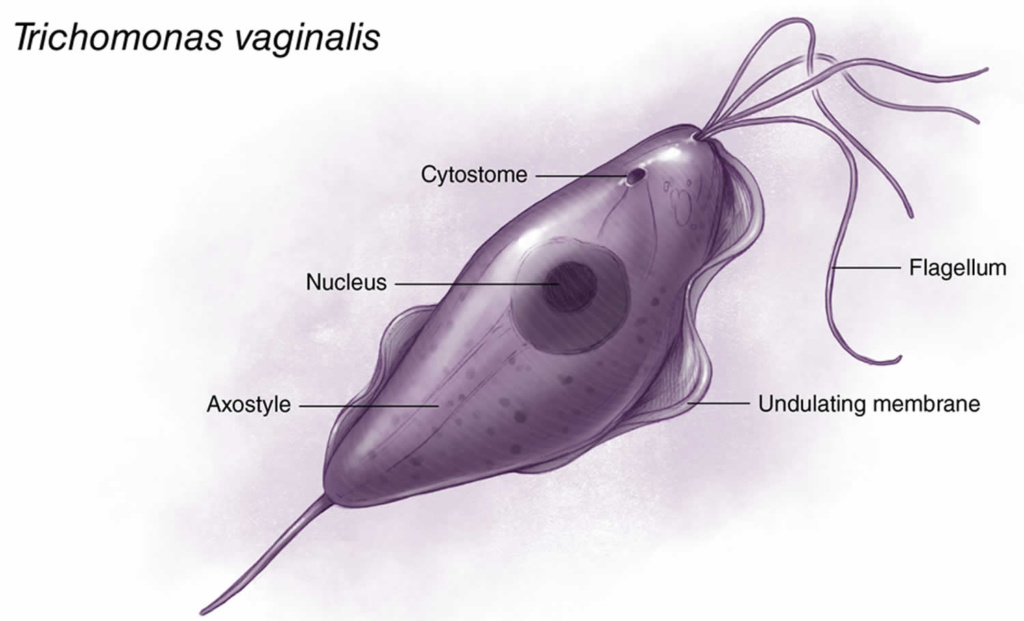
Trichomoniasis is an infectious disease caused by the protozoan parasite Trichomonas vaginalis, leading to inflammation in the vagina, urethra, or related areas. It is classified as a non-viral STI and is curable with antibiotics.
Medical Definition
Merriam-Webster:
“A human sexually transmitted infection occurring especially as vaginitis with a persistent discharge and caused by a trichomonad (Trichomonas vaginalis) that may also invade the male urethra and bladder.”
CDC:
“A very common STI caused by infection with Trichomonas vaginalis (a protozoan parasite); most people cannot tell they have it.”
Medicine Plus:
“A sexually transmitted infection (STI) caused by a parasite, spreading during sex with symptoms appearing 5 to 28 days post-infection.”
Causes
The infection spreads mainly through unprotected vaginal, oral, or anal sex or genital touching with an infected partner. It can transmit asymptomatically, and the parasite does not survive well outside the body, such as on dry surfaces.
Main Types
There is only one main type caused by Trichomonas vaginalis, but it manifests differently: vaginal trichomoniasis in women is most symptomatic, and urethral trichomoniasis in men is often asymptomatic. No distinct subtypes exist beyond infection sites.
Symptoms
About 70% of cases show no symptoms, but when present (5 to 28 days post-exposure), women may experience itching, thin foul-smelling vaginal discharge, burning urination, or pain during sex. Men rarely have symptoms like urethral irritation, while both genders risk increased HIV susceptibility or pregnancy complications.
Diagnosis
Diagnosis involves clinical evaluation plus lab confirmation, as symptoms mimic other STIs. Testing other STIs concurrently is recommended.
Diagnostic Methods
Common methods include wet mount microscopy of vaginal fluid or urine to spot motile parasites, culture for growth, NAAT (DNA testing) for high accuracy, or rapid antigen tests. Microscopy is quick but less sensitive; NAAT is preferred for precision.
Treatment
Antibiotics like metronidazole, tinidazole, or secnidazole cure it (a single oral dose often suffices); abstain from sex until completion and partner treatment. Resistance is rare but monitored.
Prevention Measures
Use condoms consistently, avoid multiple partners, get STI-tested before new relationships, and refrain from douching. Abstinence or mutual monogamy eliminates risk.
Control Measures
Partner treatment is essential to prevent reinfection (20% recurrence risk within 3 months), plus contact tracing and follow-up testing. Public health screening in high-risk groups aids control.
Public Awareness
Awareness campaigns emphasize asymptomatic spread and condom use, targeting high-risk groups like sex workers or those in remote areas. Education reduces stigma and encourages testing.
Community Engagement
It involves local health drives, peer education, and partnerships with NGOs for screening and counseling. Aboriginal or regional communities benefit from targeted outreach.
IEC Materials
Information, education, and communication tools include posters, pamphlets, videos on symptoms and prevention, and apps for STI info, distributed via clinics.
Role of Public Health Department
Departments conduct surveillance, provide free testing and treatment, run awareness campaigns, and integrate into routine STI programs. They track resistance and partner notification.
Magnitude
Globally, it’s the most common non-viral STI, with millions diagnosed yearly. High prevalence in those with multiple partners.
Global Burden
WHO estimates 156 million new cases in 2020 alone, part of 374 million curable STIs. Increases HIV risk and pregnancy issues worldwide.
Burden in India
India faces high STI rates; trichomoniasis contributes significantly, though exact figures vary (millions affected per WHO-aligned estimates). Underreporting due to stigma persists.
Burden in Maharashtra
Limited state-specific data, but as a populous region (Nagpur included), it mirrors national trends with urban/rural disparities; public health focuses on high-risk screening.
Common Complication of Untreated Trichomoniasis
Untreated trichomoniasis can lead to several serious health issues, particularly for women, though many cases remain asymptomatic for months or years. Prompt treatment with antibiotics is essential to avoid these risks.
Complication in Women
Women: face heightened risks of pelvic inflammatory disease (PID), which can cause chronic pelvic pain, ectopic pregnancy, or infertility. It also increases susceptibility to HIV acquisition and other STIs like bacterial vaginosis, plus links to cervical cancer and HPV persistence.
Complication in Men
Men may develop prostatitis, epididymitis, urethritis, or chronic urinary tract infections, with rare infertility risks. HIV transmission risk rises due to genital inflammation.
Pregnancy Risks
Pregnant individuals risk preterm birth, low birth weight babies, premature rupture of membranes, or perinatal transmission to newborns. These outcomes contribute to neonatal respiratory or vaginal infections.

1 Comment
Sioo
March 16, 2026I am in fact glad to read this website posts which contains tons of valuable data,
thanks for providing these statistics.