


Transmission Of Zika Virus
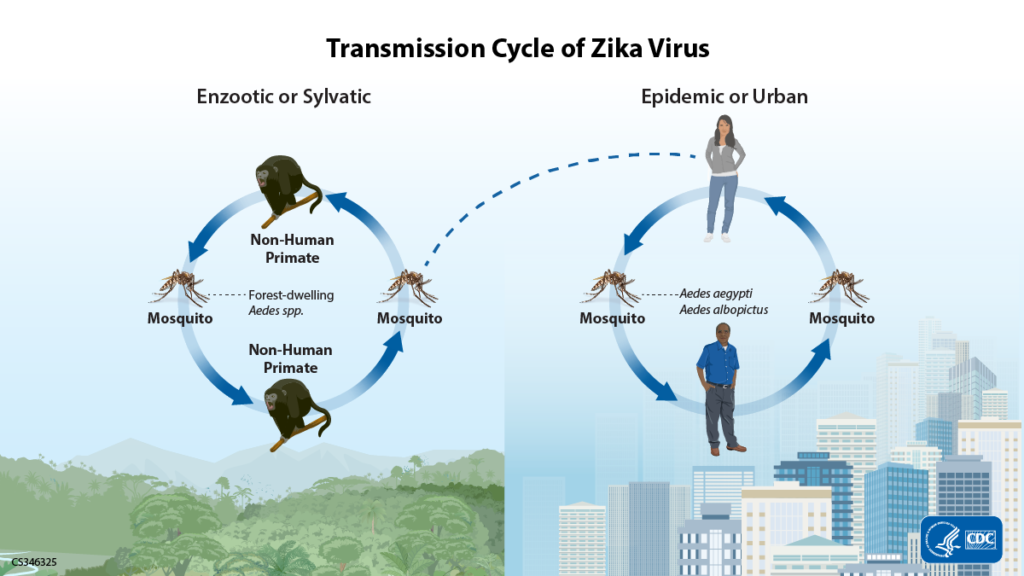
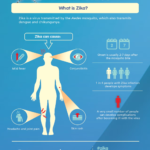
Zika virus primarily circulates through a sylvatic cycle involving non-human primates and forest-dwelling Aedes mosquitoes, but human outbreaks follow an urban transmission cycle with Aedes aegypti and Aedes albopictus as key vectors. Aedes mosquitoes act as the definitive host, and humans as the amplifying host. This cycle involves an extrinsic period in mosquitoes and an intrinsic period in humans, enabling transmission. Transmission occurs mainly through mosquito bites with rare sexual, perinatal, or blood transfusion routes.
Primary Vector (In Mosquito)
Primary Vector (in Mosquito):-
Aedes female mosquitoes acquire the Zika virus from infected humans through blood meals during the daytime, with peak morning or evening. In the mosquito, the virus replicates in midgut cells (the extrinsic incubation period is 8 to 12 days at 25°C to 30°C temperature) and then salivary glands, enabling transmission via the next bite.
Intermediate Host (In Humans)
Intermediate host (in humans):-
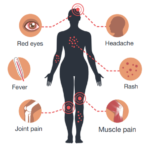
The virus enters human skin via mosquito saliva, infecting keratinocytes, fibroblasts, and dendritic cells, with viremia peaking 3 to 6 days post-infection (lasting up to 7 days). Symptomatic humans (20% of cases) transmit back to feeding mosquitoes, sustaining urban epidemics; Sexual contact, laboratory exposure, perinatal and transfusion of blood, and possibly organ transplantation routes amplify spread. In pregnancy, vertical transmission to the fetus risks congenital Zika syndrome. Zika virus has been found in breast milk. Most people (up to 80% ) infected with zika virus are asymptomatic. In symptomatic cases, the illness is usually mild and self-limiting, with symptoms typically lasting 2 to 7 days.
Sexual Transmission
Sexual Transmission:
Zika virus is transmitted through sex, so vaginal, oral, or anal sex should be avoided throughout pregnancy, or abstained from entirely, especially if the partner has traveled to or lives in Zika areas. This applies even without symptoms, as Zika can transmit sexually.
Transmission Traits
Transmission Traits: –
Persistent infection in mosquitoes with lifelong viremia, sexual transmission capability, and mother-to-fetus vertical spread distinguishes Zika from other flaviviruses. High placental tropism links to microcephaly via NS proteins disrupting neurogenesis.
Key Transmission Mechanisms
Key Transmission Mechanisms:
Horizontal Transmission
Horizontal transmission:
Vector to host (e.g., infected mosquito to healthy human) or host to vector (infected human, i.e., viremic host to uninfected mosquito) ); drives epidemics through active blood-feeding cycles. Infected female mosquitoes pass the Zika virus via saliva during biting to humans.
Vertical Transmission
Vertical Transmission:
Parent-to-offspring transmission (i.e., transovarial transmission in females or transstadial during larval stages). Infected female mosquitoes pass the Zika virus to eggs and larvae, maintaining the virus in populations between seasons.
Sexual Transmission
Sexual Transmission:-
Male-to-female during mosquito mating, allowing spread within vector populations independent of vertebrate hosts.
Comparison Table
| Type | Direction | Mechanism | Role in Zika |
| Horizontal | Mosquito-to-Human | Blood meal to Saliva | Primary outbreak driver |
| Vertical | Female -to eggs-to Offspring | Infected gametes/ova | Potential maintenance |
| Sexual | Male-to-female mosquito | Semen / Venereal | Amplifies vector infection |