


Treatment For CHPV
Treatment for Chandipura encephalitis virus (CHPV) infection is mainly supportive, as there is currently no specific antiviral therapy available.
Supportive Care
Supportive Care:
Fever management using antipyretics like paracetamol to reduce high-grade fever.
Hydration with intravenous fluids to prevent dehydration, especially in patients with vomiting.
Seizure control using anticonvulsant medications such as diazepam or phenytoin.
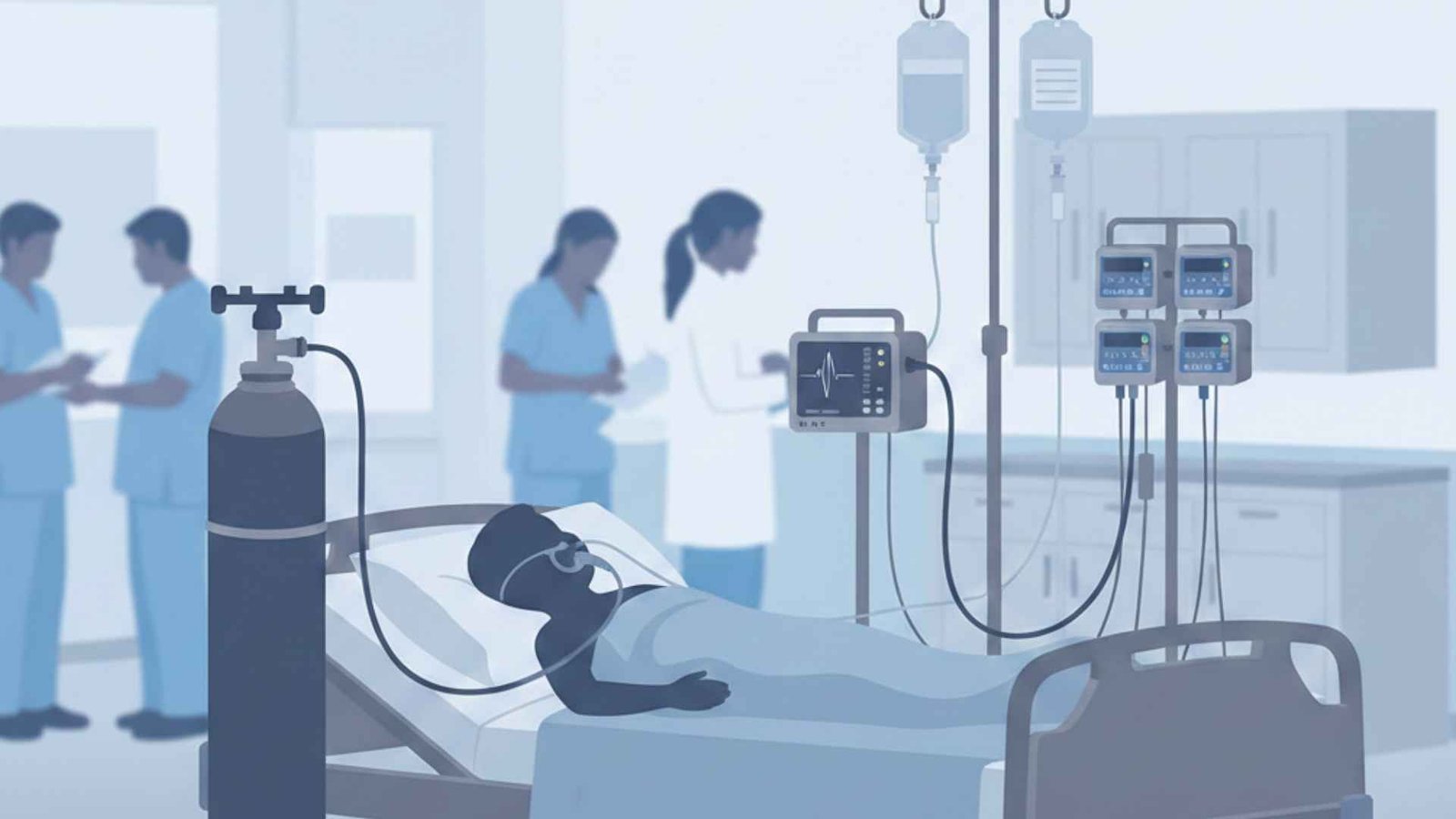
Intensive monitoring of neurological status and vital signs, with admission to intensive care units (ICUs) for severe cases.
Respiratory support indicating oxygen therapy or mechanical ventilation if breathing is compromised.
Management of electrolyte imbalances and prevention of secondary infections.
Long-term neurological rehabilitation may be needed for survivors with neurological deficits.
No approved antivirals or vaccines exist currently for CHPV.
Research into antiviral agents and therapeutic siRNAs targeting viral proteins is ongoing but not yet clinically available.
Early detection and prompt supportive care can improve outcomes by preventing severe complications.
Supportive management remains the mainstay to reduce symptoms and mortality during outbreaks.
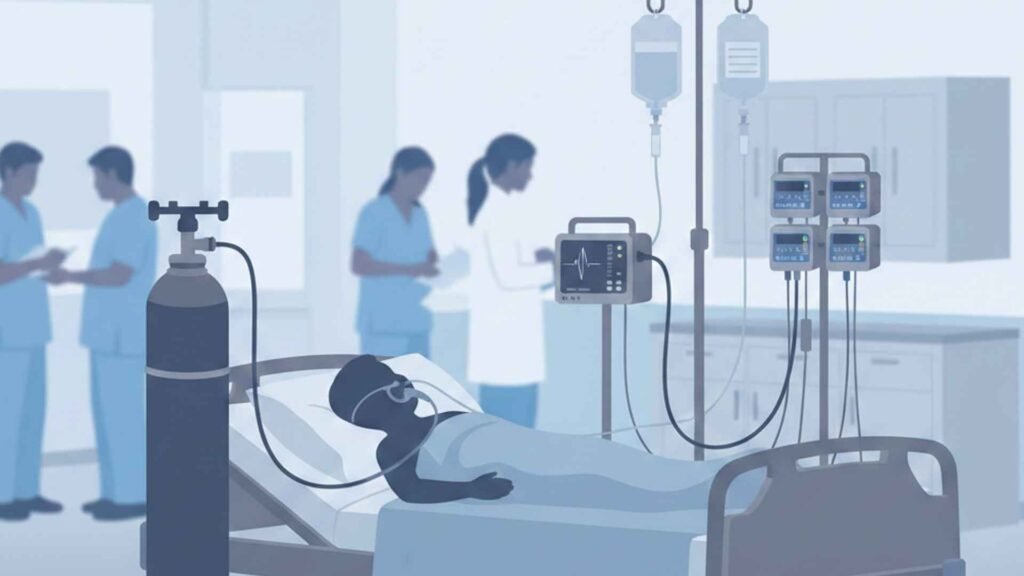
Treatment Focus
Thus, treatment focuses on symptom alleviation, critical care support, and preventing complications in the absence of specific antiviral therapy or vaccines for the Chandipura encephalitis virus.
Case Management Protocol of Viral Encephalitis
Case Definition
Suspected cases:
Acute onset of fever with altered sensorium in the pediatric age group less than 15 years of age.
Probable Case:
Case: Acute onset of fever with altered sensorium with or without convulsions, increased intracranial pressure, and without neck stiffness/rigidity in the pediatric age group less than 15 years and absence of other probable causes of encephalitis.
Confirmed Case:
- Laboratory evidence of one or more of the following
- Presence of viral RNA by PCR
- Presence of IgM antibodies
- Isolation of virus
Clinical Material Collection for Etiological Diagnosis
Clinical material to be collected for etiological diagnosis as per NIV guidelines is essential:
Serum sample
Blood clot after serum separation
Cerebrospinal fluid
Convalescent serum sample
Desirable:
Brain biopsy or Necropsy
Autopsy material: whole brain or brain tissue
Management Protocol of Encephalitis
At PHC level: Basic support control
At the CHC, RH, SDH, and district hospital level.
Basic Supportive Protocol
Assessment of Vital signs
—> Airway maintenance
—> Breathing-respiration rate. Abnormal/irregular
—> Circulation: Pulse, BP, capillary refill time
Investigations at PHC Level
Investigation: At PHC level—> Hb%, TLC/DLC, and BS for MP.
Basic Support
Maintain Airway (suction position—supine with head elevated by 30 degrees, oxygen therapy nasal catheter, or face mask oxygen tent with flow rate of oxygen 3.5 liters per minute)
Ambu bag and face mask for manual resuscitation
Maintain nutrition—IV fluid maintenance
Adequate nursing care—care of eyes, mouth, skin, bladder, bowel & back.
Treatment
Assessment of Shock
—> Pulse rate and volume (tachycardia, feeble, absent)
—> Systolic BP (mm Hg)
—> One to Ten years —> <70+(2*age in years)
—> More than Ten years —> <90
—> Delayed capillary refill time more than 3 seconds
NO Shock
- Maintain Airway
- Ambu-bag and face mask for manual resuscitation
- Start IV fluid maintenance—DNS/Isolyte-P
- Paracetamol—per rectal suppository, Inj. 10 mg/kgbw/dose, or oral dose at the interval of 8 hours
Below one year—> 100 ml/kgbw/24 hrs
1 to 3 yrs —> 1200 ml/24 hours
3 to 6 yrs —> 1500 ml/24 hours
6 to 12 yrs —-> 1800 ml/24 hours
Above 12 yrs —> 2000 ml/24 hours
5)Continue drug management as above.
If Signs of Shock Are Present
Treatment of shock:
Fluid resuscitation—> 30 ml/kgbw RL/NS over a period of 30 minutes.
If shock persists, start vasopressors.
Dopamine:
10 to 20 micrograms/kg/min in IV infusion & maintenance drip (0.6 * body wt. = dose in mg) dissolved in 100 ml IV fluid rate to be adjusted for appearance of pulse.
If not responding to dopamine drip:
Adrenaline drip:
—>0.06*wt. in kg = amount of mg of adrenaline to be dissolved in 100 ml of IV fluid given slowly till pulse appears.
Drugs for Seizures
IV diazepam 0.3 mg/kg bolus slowly over a period of 3 to 5 minutes can be repeated after 10 minutes to a maximum of 3 times
OR
IV Dilantin sodium —> 10 to 15 mg/kg bolus dose followed by 5 mg/kg/day—> divided
OR
Injection of phenobarbital—> 10 to 20 mg/kg/bolus loading dose followed by 5 mg/kg/day maintenance dose divided into two doses daily.
If not responding to the above treatment,
➖IV Midazolam—> 0.1 mg/kg/bolus dose stat followed by 0.1 to 0.4 mg/kg in maintenance infusion drip.
Drugs for Raised Intracranial Pressure
IV mannitol—> 5 ml/kg (1.2 gm/kg) over a period of 20 minutes every six hours for 48 hrs.
IV Lasix —> 2 mg/kg —> 12 hourly
Other Drugs
Antimalarial—> IV Quinine—> if not responding.
Injection Artether / Inj. Artesunate → 1.5 mg/kg bw once a day → 1 m/IV.
Antibiotics → Broad spectrum
Inj. Ampicillin —> 100 mg/kg/day
Inj. Cefotaxime → 100 mg/kg/day—> divided in 8 hourly
OR
Inj. Ceftriaxone → 50 to 100 mg/kgbw/day → divided in twice a day
Inj. Ciprofloxacin → 10 mg/kgbw/dose → 12 hourly
Management of G.I.T. Bleeding
Inj. Vitamin K 5 mg/1 mL stat.
—> cold bowel wash
Blood/fresh frozen plasma/platelet transfusion
Referral Criteria
If patient is ➖
Not responding to above management
Need ventilator support
Profuse bleeding
Refractory seizures not responding to treatment
Then
The patient must be referred to a tertiary care hospital—medical college hospitals or specialist hospitals—in an ambulance with basic life support and a detailed referral slip.