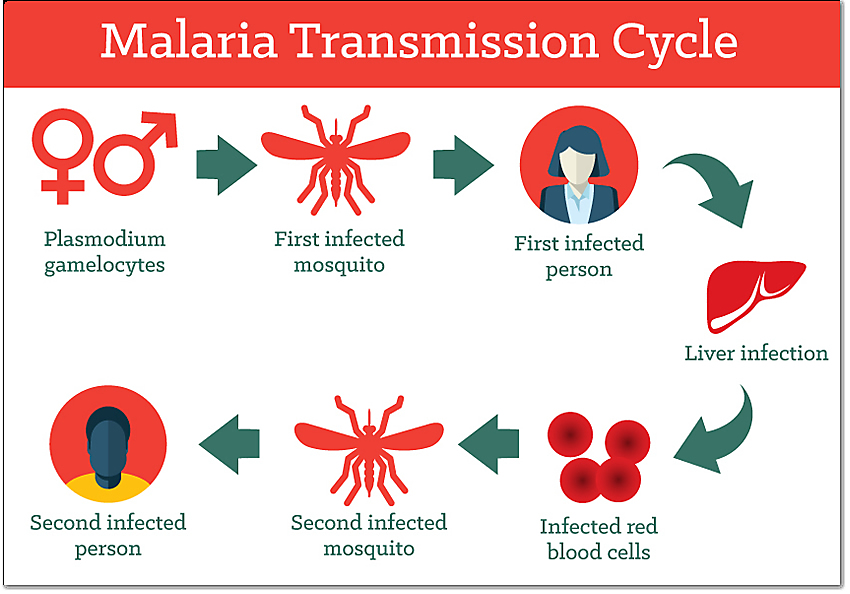
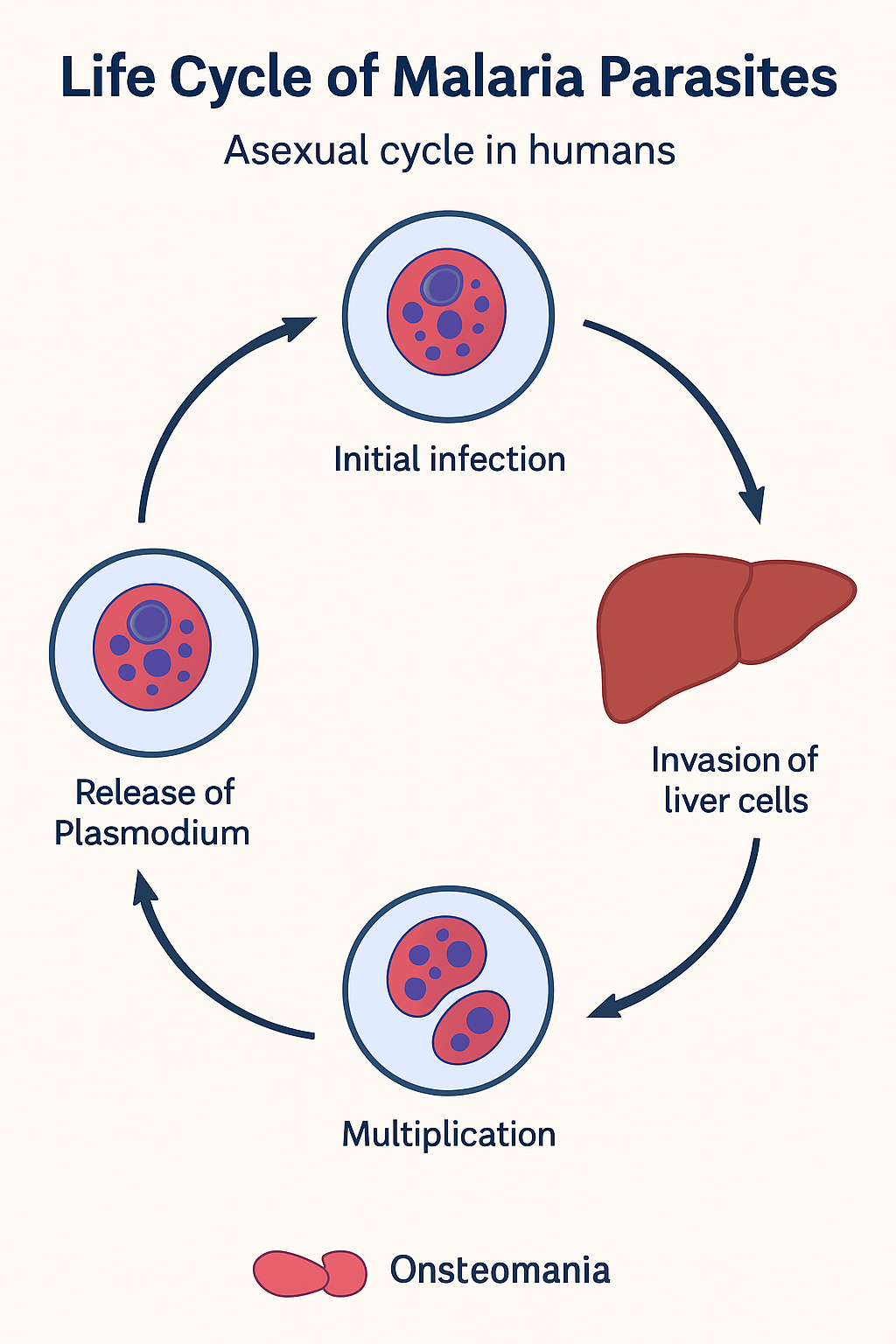


Malaria Transmission Cycle
Parasite → Vector → Human → Vector
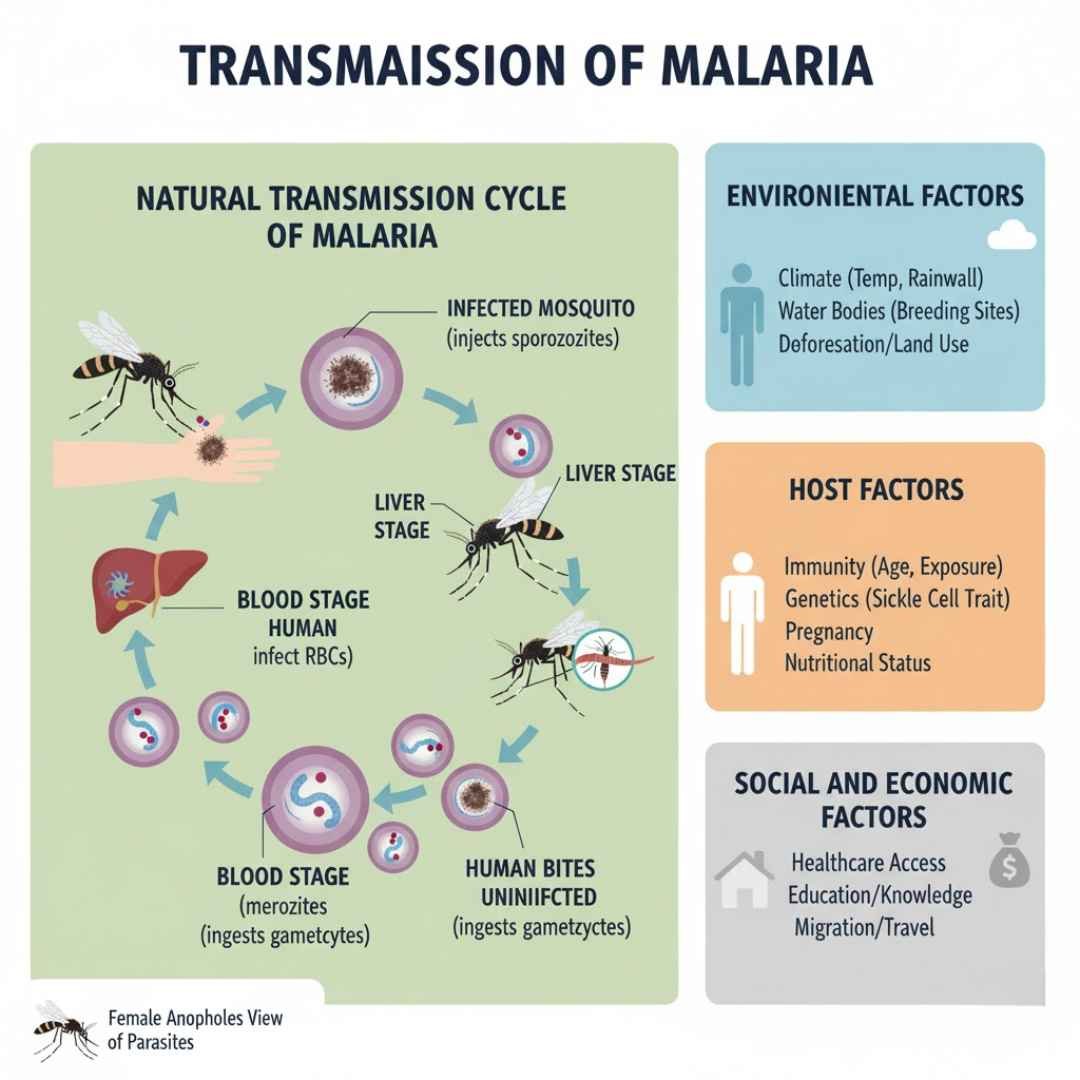
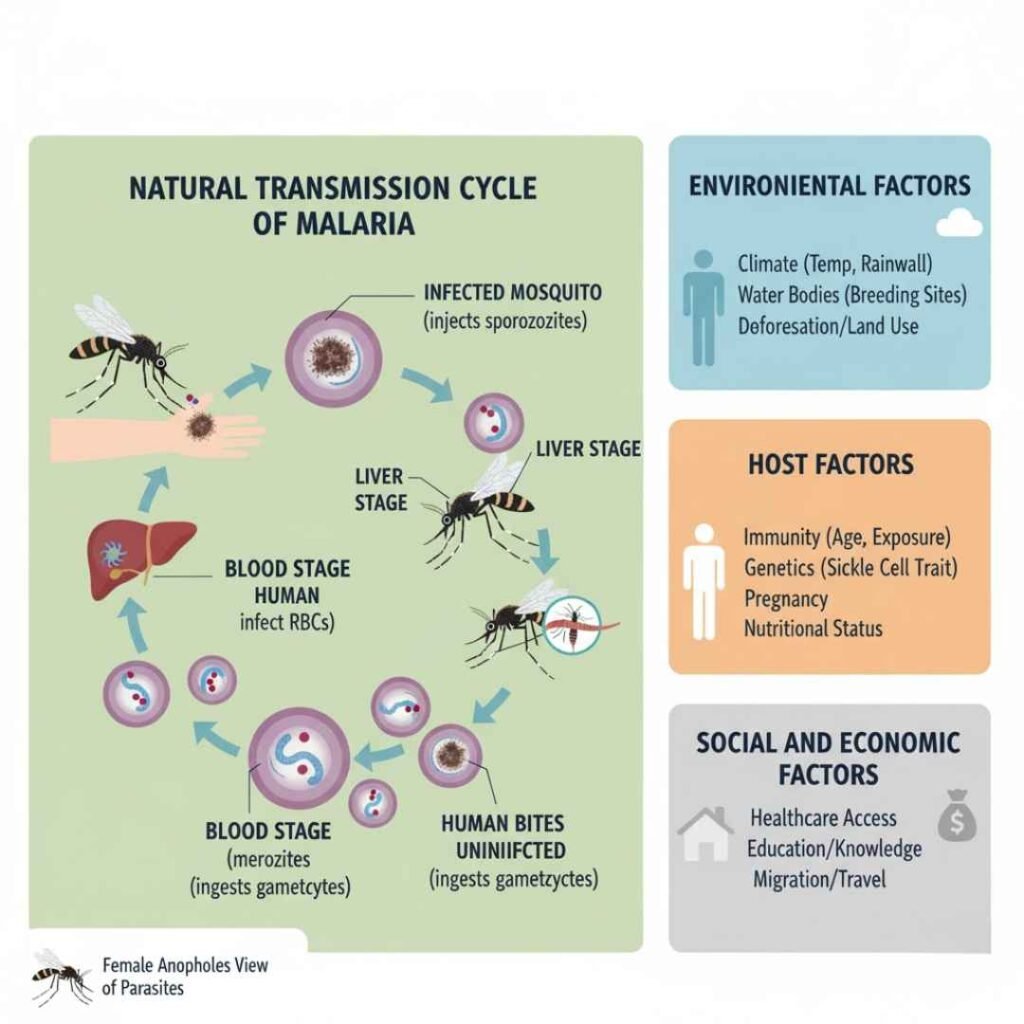
Natural transmission cycle of malaria
The natural cycle of malaria transmission consists mainly of a mosquito (vector), a parasite (having the gametocyte stage of an individual), and a human being (healthy person).
The transmission season of malaria is June to September. The natural cycle of transmission depends upon the following environmental factors.
a)Environmental Factors
The following environmental factors affect the transmission of malaria.
Temperature
If the temperature is optimum, i.e., 25 degrees centigrade to 30 degrees centigrade, then gametocytes develop into microgametes & macrogametes, and the sexual cycle continues.
Humidity
60% and above humidity is very good for the development of gametocytes, and it is necessary for mosquitoes to live their normal span of life.
Longevity
It is the most important factor in the transmission of the malaria parasite. Longevity depends upon the life span of mosquitoes. The extrinsic incubation period (within a mosquito’s stomach) usually lasts 10 to 14 days. The normal life span is 15 to 20 days for female Anopheles mosquitoes.
Density
Higher mosquito density increases biting rate, leading to more frequent contact between infectious mosquitoes and humans, thus raising the chance of malaria spread. The relationship between mosquito density and malaria transmission is complex and influenced by mosquito feeding success, parasite density, mosquito survival, and human intervention.
Feeding or Biting Habit
After obtaining a full blood meal, a female rests for 2 to 3 days while digesting the blood and developing eggs; then they are again ready to bite.
Season
Malaria is a seasonal disease; the maximum prevalence is from June to September.
Rainfall
In the rainy season, rain generally provides favorable opportunities for the breeding of mosquitoes. Rain increases atmospheric humidity and breeding places.
Man-made malaria disease
Malaria consequent on burrowing pits, garden pools, irrigation channels, construction sites, brick sides, coal mines, etc., is called man-made malaria
b)Vector habit
The relation between vector habits and malaria transmission is pivotal to understanding how malaria spreads and how it can be controlled.
some key connection here are
Feeding or Biting habits
Some mosquitoes prefer human blood, some animal blood, and some both. This is the different choice of vectors. The anthropophilic species, i.e., those that have a high preference for human blood, are better vectors of malaria. Different Anopheles species vary in their feeding behavior, host preference, and competence to transmit malaria.
Resting Habit
After a blood meal Some mosquitoes rest indoors on the wall for quite some time. This is known as “endophily.” The concept of malaria is based on endophilism. Some Anopheles species prefer biting indoors (endophagic), while others bite outdoors (exophilic).
Breeding habits
Some mosquitoes breed in moving water, some in brackish water, and some in wells, cisterns, fountains, and overhead tanks.
Flying habits
Anopheles mosquitoes can fly several kilometers to find a host. They generally fly within 2 km of their larval breeding sites.
Despite their short flight range, recent studies have shown that some species, like Anopheles gambiae in Africa, can ride high-altitude winds to spread over long distances. After a long-distance flight, the mosquitoes remain healthy and capable of transmitting malaria.
Thus vector habits, including feeding behaviours, biting times, resting times, resting location and host preferences, are crucial for malarial transmission
c)Host Factors
Host factors, including genetic variants affecting RBC receptors, immune response genes, immune system human behavior, etc., affect malaria disease. Key host factors are as below.
Age
Newborn infants have considerable resistance to infection with P. falciparum, probably due to high concentrations of fetal hemoglobin.
Sex
Males are more frequently exposed because of the outdoor life they lead.
Race
Individuals with sickle-cell trait have milder illness with P. falciparum infection.
Social and economic factors
Malaria is more prevalent in underdeveloped countries.
Movement of Population or Migratory Population
People migrate for one reason or another from one country to another or from one part of a state to another. Laborers connected with various engineering, irrigation, agriculture, dam projects, sugarcane factories, brick factories, building or any type of construction work, coal mining, and other projects and periodic migration of nomads and wandering tribes and holy place visitors are outstanding examples of internal migration. They may import malaria parasites in their blood and reintroduce malaria into areas where malaria has been controlled or eliminated.
Human habit
People sleeping out of doors, sleeping in few clothes, sleeping partially dressed, without bednets, without using mosquito repellent, etc., increases man-vector contacts.
Immunity
Man has no natural immunity. Only certain individuals who are carriers of hemoglobin S and probably certain other abnormal hemoglobins are more resistant and rarely fall seriously ill.
d)Reservoir of Infection
The reservoir of malaria parasites depends on the species, parasite life cycle stages, and infected human bone marrow and liver, where parasites develop and persist before entering the bloodstream to continue transmission.
For Plasmodium falciparum, humans are the sole reservoir. Children under 10 years of age are responsible in holoendemic areas.
For Plasmodium vivax, a major reservoir is the bone marrow parenchymal cell in the liver. Chimpanzees in tropical Africa are a reservoir of human Plasmodium parasites.
e)Period of communicability
Malaria is communicable as long as mature viable gametocytes exist in the peripheral blood in sufficient density to infect vectors.