

CHIKV Transmission Cycle (Human-Aedes-Human-Aedes)
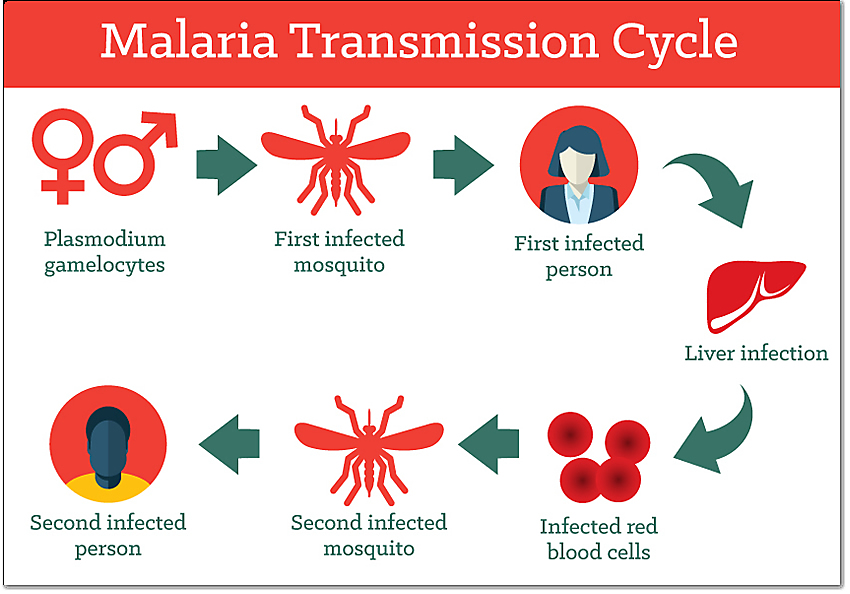
The transmission cycle of Chikungunya fever primarily involves the bite of infected female Aedes mosquitoes, mainly Aedes aegypti & Aedes albopictus. This cycle circulates in two transmission ways: an enzootic sylvatic cycle in Africa and Asia involving forest mosquitoes and nonhuman primates (e.g., African monkeys, rodents, and birds act as amplification hosts).

Transmission Cycle
- An Aedes female mosquito bites a healthy person who is currently viremic (has chikungunya virus circulating in their blood).
- The mosquito ingests the virus during the blood meal.
- The virus duplicates inside the mosquito over about 7-12 days, reaching the mosquito’s salivary glands.
- The infected mosquito then becomes capable of transmitting the virus to a new human when it bites again.
- The virus enters the new human host, replicates, and leads to viremia high enough to infect other mosquitoes, continuing the cycle
Additional Points
1) The mosquito vectors primarily bite during the daytime, with some variations in peak biting times.
2) Humans are the primary reservoir during epidemic periods, sustaining urban transmission cycles.
3) A sylvatic (enzootic) transmission cycle exists in Africa involving Aedes mosquitoes and nonhuman primates as the reservoir hosts.
4) Rare transmission routes include maternal-fetal (intrapartum and in utero) and bloodborne transmission, but CHIKV is not spread through casual contact, respiratory droplets, or breastfeeding.
5) Epidemiological Scale: The virus drives major global outbreaks, with over 445,000 suspected and confirmed cases plus 155 deaths reported worldwide from January to September 2025 alone. Annual symptomatic cases reach around 17.8 million, representing a significant fraction of arboviral burdens like dengue.
6) Transmission Metrics: CHIKV’s basic reproduction number (RO) averages 3.4, higher at 4.1 for Aedes aegypti-transmitted outbreaks and 2.8 for Aedes albopictus.
7) Mortality Rates: Overall mortality remains low at about 1 death per 1000 infections in epidemic settings like Reunion Island, with higher risks in the elderly over 75 years.
8) Severe Outcomes: Common severe complications include persistent joint pain, neurological issues, myocarditis, and multi-organ failure, particularly in those with comorbidities like diabetes or heart disease. Chronic kidney disease markedly increases death risk, with odds ratios over 10 in case-control analysis of fatal chikungunya in Brazil.
Key Differences of Chikungunya Transmission through Aedes aegypti, Aedes albopictus, and Aedes Vitatus
Chikungunya virus transmits primarily through bites from infected Aedes mosquitoes, with Aedes aegypti as the main urban & periurban vector & Aedes albopictus as a key secondary vector. Aedes vitatus plays a minor role mainly in Africa.
Key Differences
| Sr. no. | Aspect | Aedes aegypti | Aedes albopictus | Aedes vitatus |
| 1 | Habitat | Urban, domestic breeder in containers | Urban, Rural vector | Rural rock pools in Africa |
| 2 | Transmission Efficiency | Highest, quick viral replication & saliva loads | Similar to aegypti but temperature sensitive | Moderate, Sylvatic cycle |
| 3 | Global Role | Drives tropics/subtropics outbreaks | Europe, Asia, and E1 mutation enhances | Limited to Africa |
| 4 | RO impact | Elevates to ~4.1 | ~ 2.8 versatile but slower | Not well quantified ;lower |
Compare Vector Competence of Aedes aegypti, Aedes albopictus, and Aedes Vitatus for Chikungunya
Aedes aegypti, Aedes albopictus & Aedes vitatus all demonstrate vector competence for CHIKU ,but Aedes vitatus often shows the highest susceptibility and transmission efficiency particularly in African contents , while A. aegypti . A. albopictus vary by population , strain & environment.
Transmission Efficiency Comparison
| Sr. no. | Species | Infection Rate | Dissemination Speed | Transmission Potential |
| 1 | Aedes aegypti | 0-50% | Moderate (10-15 dpi) | Variable by population |
| 2 | Aedes albopictus | High (>50%) | Fast (5-10 dpi) | High temperature viable |
| 3 | Aedes vitattus | 50%-100% | Very fast (5 dpi) | Highly tested |
Here, “dpi” means days post-infection.