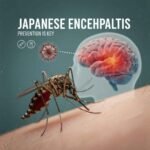


Key factors involved in Japanese encephalitis virus transmission
The transmission of the Japanese encephalitis virus depends on four key factors:
- Amplifying hosts (Pigs)
- Maintenance (Reservoir) hosts (Waterbirds)
- Vectors (Culex Vishnui group)
- Dead-end-hosts (human & horse)
1) Amplifying hosts
Amplifying hosts: Amplifying hosts, such as pigs, play a critical role by supporting high levels of virus replication and shedding it in large quantities through their blood, facilitating its spread to feeding mosquitoes. For instance, in rural pig-rearing areas of India and Southeast Asia, pig farms often serve as epicenters for JE outbreaks.
2) Maintenance (Reservoir) Hosts
Maintenance (Reservoir) Hosts: Maintenance or reservoir hosts, like waterbirds (e.g., egrets and herons), sustain the virus in nature over long periods without showing severe illness, ensuring its persistence in the ecosystem even during inter-epidemic phases.
3) Vectors
Vectors: Vectors, primarily mosquitoes of the Culex species, such as Culex tritaeniorhynchus and the Culex vishnui group, transmit the virus by taking blood meals from the infected hosts and injecting it into new ones while feeding, thriving in rice paddies and irrigation areas common in endemic regions.
4) Dead-end hosts
Dead-end hosts: Dead-end hosts like humans and horses cannot sustain or amplify the virus at levels sufficient for further transmission, as they develop strong immune responses that limit viremia, though they suffer severe neurological diseases.
Integrated prevention strategy for JE virus transmission
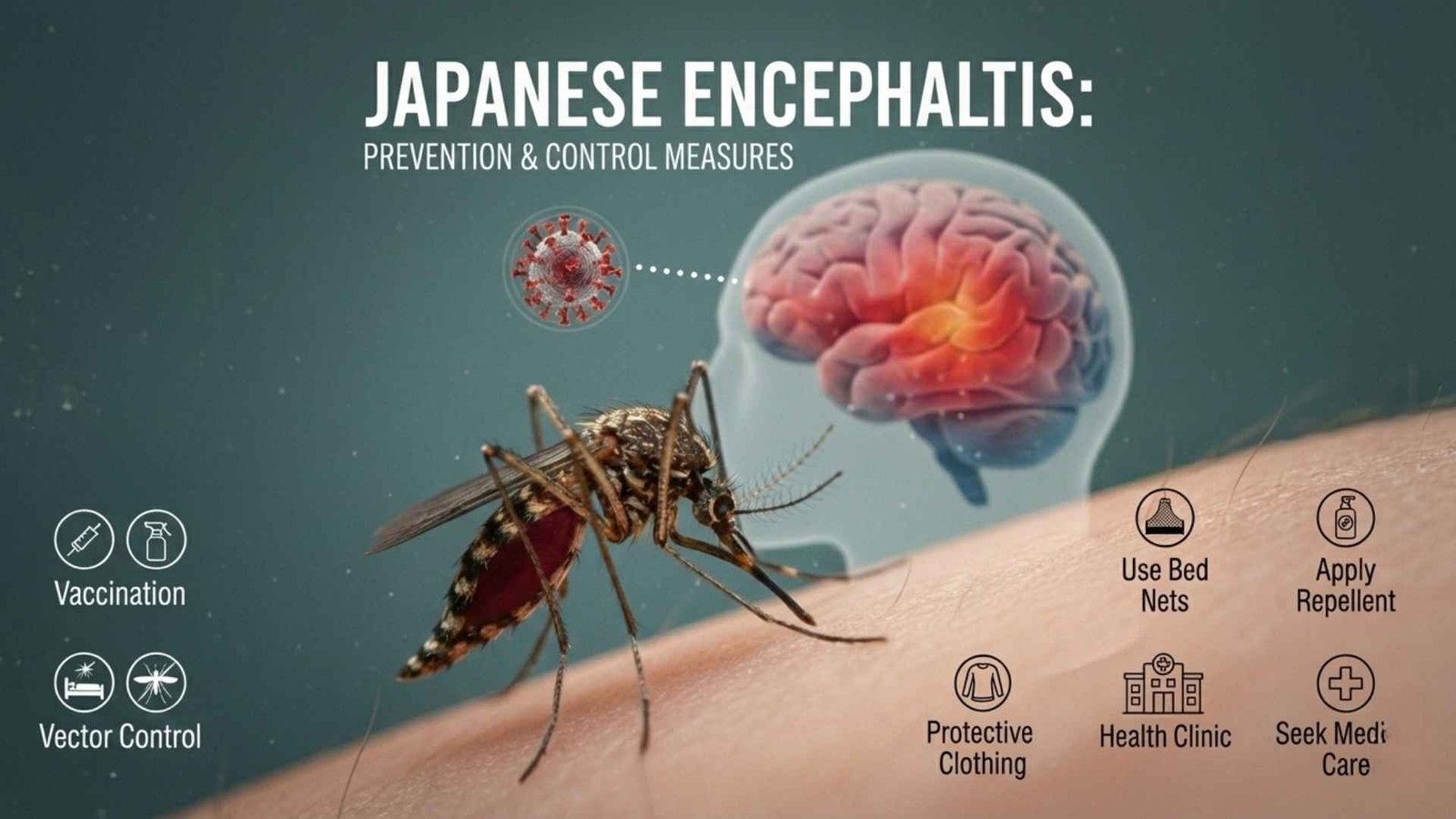
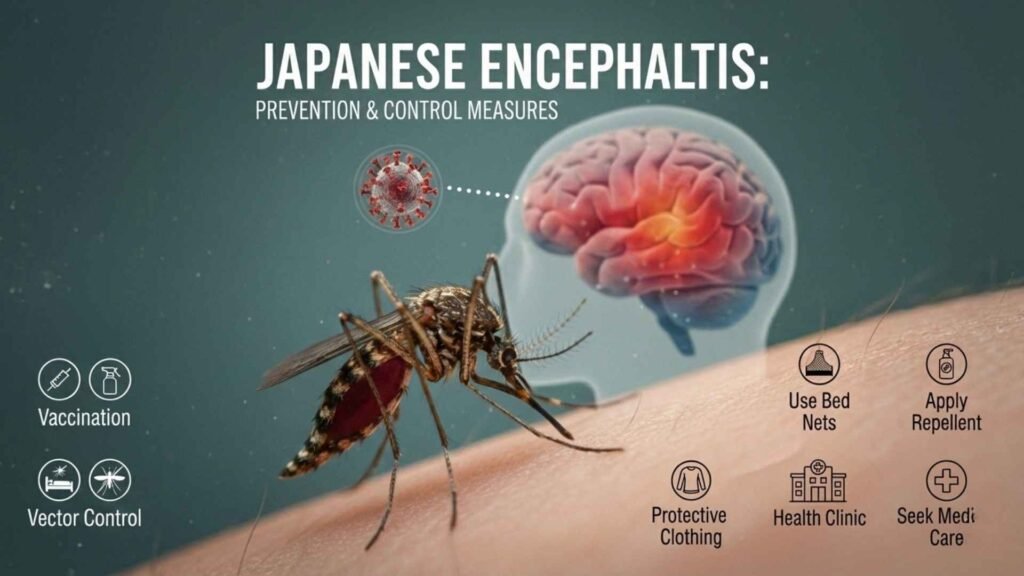
To prevent JE virus transmission, integrated control measures must target all four factors, including animal vaccination, bird habitat management, vector surveillance and larviciding, and human protective strategies like bed nets and vaccines.
JE Virus Transmission Factors & Control
Amplifying Hosts (e.g., Pigs): High virus replication & shedding
Control Methods:
Vaccinate pigs with inactivated JE vaccine; restrict pig rearing near human settlements; cull infected herds in outbreaks.
Maintenance (Reservoir) Hosts (e.g., Egrets, Herons): Sustain virus long-term in nature
Control Methods:
Monitor and manage waterbird colonies; destroy nests in endemic areas; conduct avian surveillance via serology.
3) Vectors: (e.g., Culex tritaeniorhynchus and the Culex vishnui group)
Transmit via blood meals in rice fields. To assess their density, distribution, and behavior in endemic areas.
Control Methods:
1) Larviciding:
Use Temephos mother solution (1 ppm) in breeding sites as per norm; Bti is also used as per guidelines. Larvivorous fish, i.e., Gambusia affinis, are used as per guidelines.
2) Adulticiding:
Use Malathion ULV for fogging (programmable 190-220 ml/ha), and Use Deltamethrin for IRS
3) Source Reduction:
Drain paddies, and use polystyrene beads. Use any other local ideas for stagnant water.
4) Dead-end hosts: (humans, horses)
Cannot amplify because it causes severe disease
Control Methods:
Human vaccination (SA14-14-2 live attenuated vaccine, 2 doses). Vaccination targets children aged 9 months to 2 years in endemic districts with live attenuated SA14-14-2 during campaigns.
horse vaccination (inactivated vaccine)
LLINs (0.3% deltamethrin nets)
Take all care for personal protection from mosquito bites.
5) Other Surveillance
Veterinary-based surveillance involves sampling sera from pigs, ducks, and birds near JE hotspots to detect HI antibodies or fresh infections tracking virus activity. Early warning signals, like rising antibodies in pigs, prompt intensified mosquito control before human cases surge. Keep pig or poultry farms more than one km away from human settlements to limit mosquito bridging.
Integrated vector management approach
Thus, integrated vector management targets all the above-mentioned four factors for JE prevention.
Limitations and alternatives
Direct interventions like pig vaccination (available in some countries) or depopulation are limited in India due to culture and economic factors. Emphasis remains on human vaccination and personal protection. No vaccines or culling for birds due to ecological roles, and impractical emphasis on human/pig vaccination and personal protection reduces overall risk of spillover from enzootic cycles.