


Lymphoedema
Lymphoedema is a chronic manifestation of lymphatic filariasis (LF), occurring due to progressive edema and repeated acute attacks. The affected organs typically include the legs, hands, breasts, and genitalia.
Obstruction to lymph flow causes the accumulation of extra fluid in the tissue spaces, which results in swelling of the affected part. The adult worms dilate lymphatic vessels, leading to their damage and dysfunction. The growing larvae cause a reaction in the lymph channels and glands, which results in blockage of lymph flow, kidney damage, and chyluria.
In its most severe form, the fibrosis is sometimes progressive, causing folded skin with deep creases, nodules, warty growths, papillomatosis, hyperpigmentation, and hypertrichosis.
Stages of Lymphoedema (Lymphatic Filariasis Grading)
The seven clinical stages, also known as the grading of lymphedema, are used for elephantiasis staging. They are based on the size, site, shape, and presence of swelling on the affected body part:
- Stage 1: Swelling is soft and pitting. The lymphedema is reversible overnight, as the swelling disappears spontaneously.
- Stage 2: Swelling persists and is mostly non-pitting. The lymphedema is irreversible overnight, and the skin begins to thicken.
- Stage 3: Irreversible lymphedema with thickened skin and shallow folds whose base is visible, along with fibrotic induration.
- Stage 4: Irreversible lymphedema with knobs (presence of knobs or bumps).
- Stage 5: Irreversible lymphedema with deep skin folds whose base is visible when separated by a finger, along with entry lesions.
- Stage 6: Irreversible lymphedema with mossy skin lesions (mossy foot).
- Stage 7: Irreversible lymphedema with disability to perform routine activities, leading to severe deformity and disability.
Strategy for Morbidity Management
1. Early Diagnosis and Treatment
Early diagnosis of an initial acute attack and prompt treatment are crucial. Treatment at this stage is likely to arrest both the transmission of infection and the progression to lymphedema.
2. Diagnosis and Management of Entry Lesions
Early detection of entry lesions and their proper management prevent acute attacks. Entry lesions include:
- Fungal infections
- Small wounds, blisters, and minor cuts
- Paronychia
- Cracks and eczema
- Ulcers and scratches on skin folds
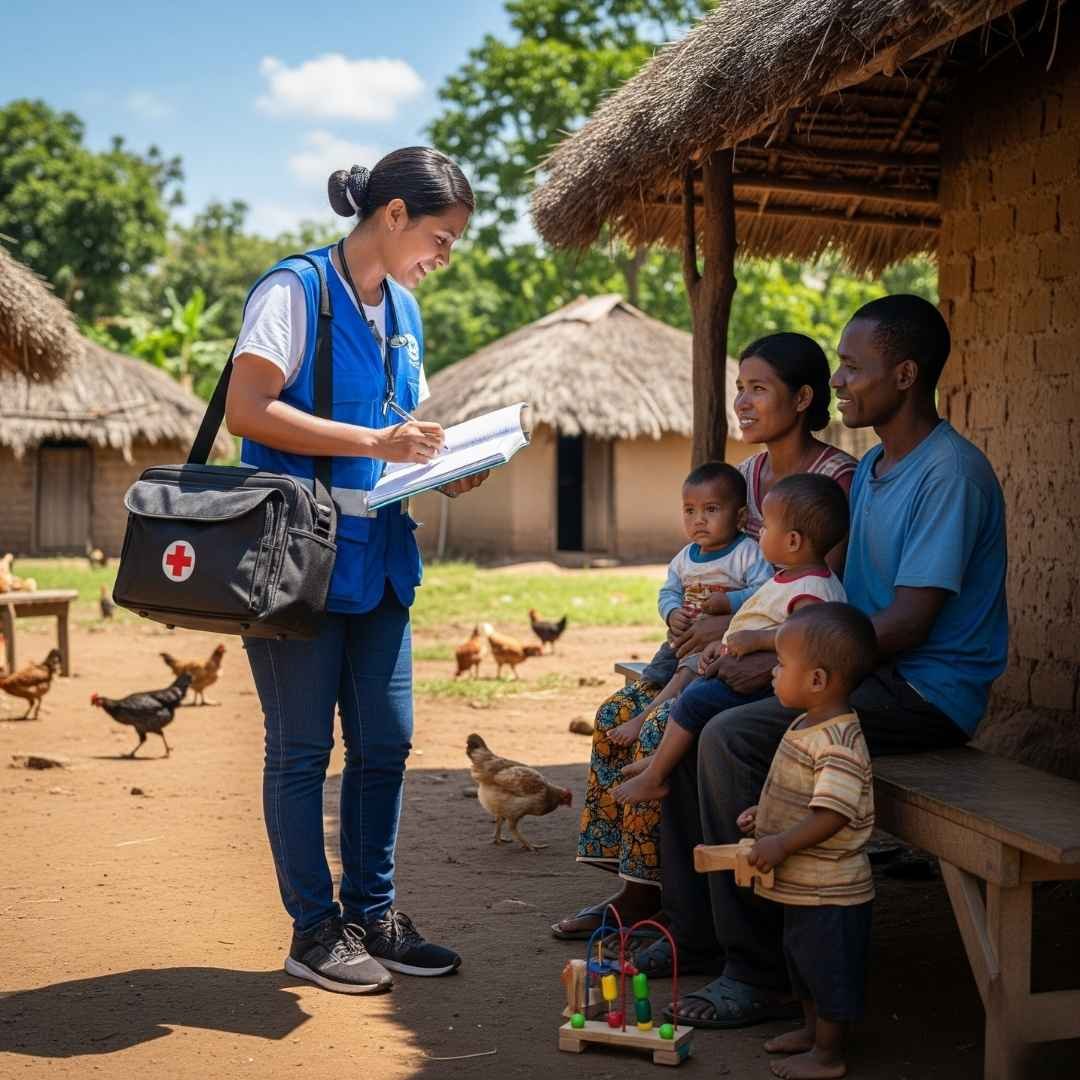
During home visits, health workers should be keen to detect such lesions in affected persons and emphasize prevention and early care. They should also teach patients about home-based care for disability prevention.
3. Prevention and Care of Entry Lesions
Prevention and cure of entry lesions involve early detection, maintenance of good hygiene, and symptomatic treatment like the application of antibacterial and fungal ointments.
4. Community Home-Based Prevention and Care
A prerequisite for community home-based care is to entrust a person (a family member, friend, or someone apart from the LF sufferer) to assist and monitor the home-based care.
Home-Based Management for Lymphoedema
This component is aimed at reducing the suffering attributed to the disability caused by lymphatic filariasis. The five key measures for managing lymphedema are:
- Hygiene
- Skin & Wound care
- Exercise
- Elevation
- Wearing suitable shoes
1. Limb Hygiene for Lymphoedema
A) Washing
- Supplies needed are clean water at room temperature, soap, a basin, a chair or stool, a soft cotton towel, a table fan for drying, and a cotton bundle.
- The affected limb should be washed with clean, room-temperature water and soap in a downward direction.
- Attention should be paid to the cleanliness of the toe web spaces.
- Cleaning must be gentle, without rubbing.
- For unilateral lymphedema, the normal leg should be washed first, followed by the affected leg.
- For bilateral cases, the more affected leg should be washed first, then the less affected one.
- Washing should continue until the water runs clear and should be performed preferably twice a day, with one washing before going to bed. This procedure should become a daily habit for a lifetime.
- In the presence of a bad smell or infection, potassium permanganate or another antibiotic (one gram per liter of water) should be added.
- Turpentine oil can be used to remove maggots.
B) Drying the Skin
- Drying should be done carefully and gently, paying extra attention to affected parts, skin folds, and interdigital spaces, using a small cloth, gauze, or cotton swab. This will reduce moisture, minimizing the risk of intertrigo.
- Precaution should be taken not to rub the skin hard, as this can cause injury or damage.
- In case of fungal or bacterial infection, an appropriate ointment should be applied.
2. Skin & Wound Care
Entry lesions are common in patients with lymphedema and are most frequently found between the toes, in deep skin folds, and around the toenails. They can also be found on the surface of the skin.
- Both fungi and bacteria can cause entry lesions.
- Fungal infections frequently damage the skin and create entry lesions, especially between the toes, and may cause itching.
- These lesions allow bacteria to enter the body through the skin, which can cause acute attacks.
- Fungi and bacteria can also cause a bad odor.
Antifungal and antibacterial creams can be used for local application.
3. Exercise
Simple exercises help by pumping the lymph fluid and improving drainage. However, patients should not exercise during acute attacks. Besides walking short distances, the following simple exercises can be carried out anywhere and at any time:
A) Standing (Up on the Toes Exercise)
- Stand with both feet slightly apart, holding onto a wall, a person, or other support.
- Raise up onto the toes of both feet at the same time, and then sink back down to flat feet.
- Repeat 5 to 15 times or as often as comfortable.
- If the patient is unable to rise on both feet at the same time, the exercise can be done one foot at a time.
B) Sitting or Lying Down (Toe Point Exercise)
- While sitting or lying down, point the toes towards the floor.
- Then bend (extend) the toes upwards.
- Repeat 5 to 15 times or as often as comfortable.
- Repeat with the other leg.
C) Sitting or Lying Down (Circle Exercise)
- While sitting or lying down, move the foot in a circle to the right and to the left.
- Repeat with the other leg.
- If sitting on the floor, protect the heel with a flat pillow.
4. Elevation
Elevation is important for patients with lymphedema of the leg or hand. It helps prevent lymph fluid from accumulating by improving flow in the elevated position.
Elevation can be done by:
- Placing a pillow under the mattress or bricks under the cot while sleeping.
- Placing a pillow or a folded blanket under the affected breast, arm, or scrotum.
Placing the affected leg on some support at the level of the waist during activities such as cooking, playing, working, or breastfeeding.
5. Wearing Suitable Shoes (Footwear)
Suitable footwear is essential to protect the foot, keep it clean, and prevent entry lesions. It also protects from injury. It is important to select the right footwear in the right size, as improperly fitted ones can cause more harm than good. Patients should avoid tight footwear.
The criteria for good footwear are as follows:
- It should fit like a glove but should not be too tight or too loose.
- It should not slip at the heel, and there should be plenty of space for the toes.
- It should not have heels or contain iron materials or nails.
- The outer sole should be 10 mm thick with 60-degree Shore hardness. The inner sole should be made of EVA and be 6 to 8 mm thick.
Upper straps should be nylon, 1 or 2 inches wide, and adjustable.
Hospital-Based Management: Hydrocele Operation
A hydrocele testis is an accumulation of clear fluid in the tunica vaginalis testis. It may be unilateral or bilateral or associated with elephantiasis of the scrotum.
The cardinal signs are a scrotal swelling with a positive transillumination test. If untreated, it may give rise to complications such as:
- Acute Dermatolymphangioadenitis (ADLA)
- Lymphuria
- Pyocele, Chylocele, Hematocele
- Calcification of the sac
- Testicular atrophy
- Rupture of the hydrocele
Management of Hydrocele
Hydrocele management is carried out at three levels of the health department:
- Community Level (Detection): Patients with scrotal swelling are detected by a healthcare worker or the patient themselves. Once detected, skin care is provided, and the patient is referred to upper facilities.
- Primary/Community Health Centre (Initial Surgery): This center should have a surgical facility and a trained surgeon.
District Hospital (Advanced Surgery): These institutions are equivalent to the district hospital, where patients with more serious problems, such as complicated hydrocele, can be operated on and associated complications tackled.
Public-Private Partnership (PPP) for Hydrocele
The expertise for hydrocele surgery is available in government institutions at Level-2 and Level-3, and mobilizing this technical service is necessary for the operation to be feasible. Since NGOs often lack this expertise, a program for successful hydrocele operations is feasible only in a Public-Private Partnership (PPP) mode.
In this approach, civil service organizations need to:
- Line-list the cases with hydrocele.
- Motivate the patients and their families to accept surgery.
- Scrutinize patients by willing surgeons from a government institution.
- Ensure patients get operated on on the scheduled date.
- Assist in follow-up.
- Mobilize resources from the government or donors to compensate for wage loss.
This type of periodic operation camp for hydrocelectomy is being practiced in LEPRA projects in some states.