

SURVEILLANCE
It is aimed at case detection through laboratory services and providing facilities for proper and complete treatment (EDCT). It is the continuous and systematic blood smear collection, analysis, and interpretation of malaria-related data for the program. There are five kinds of surveillance.
Types of Surveillance
1. Active Surveillance
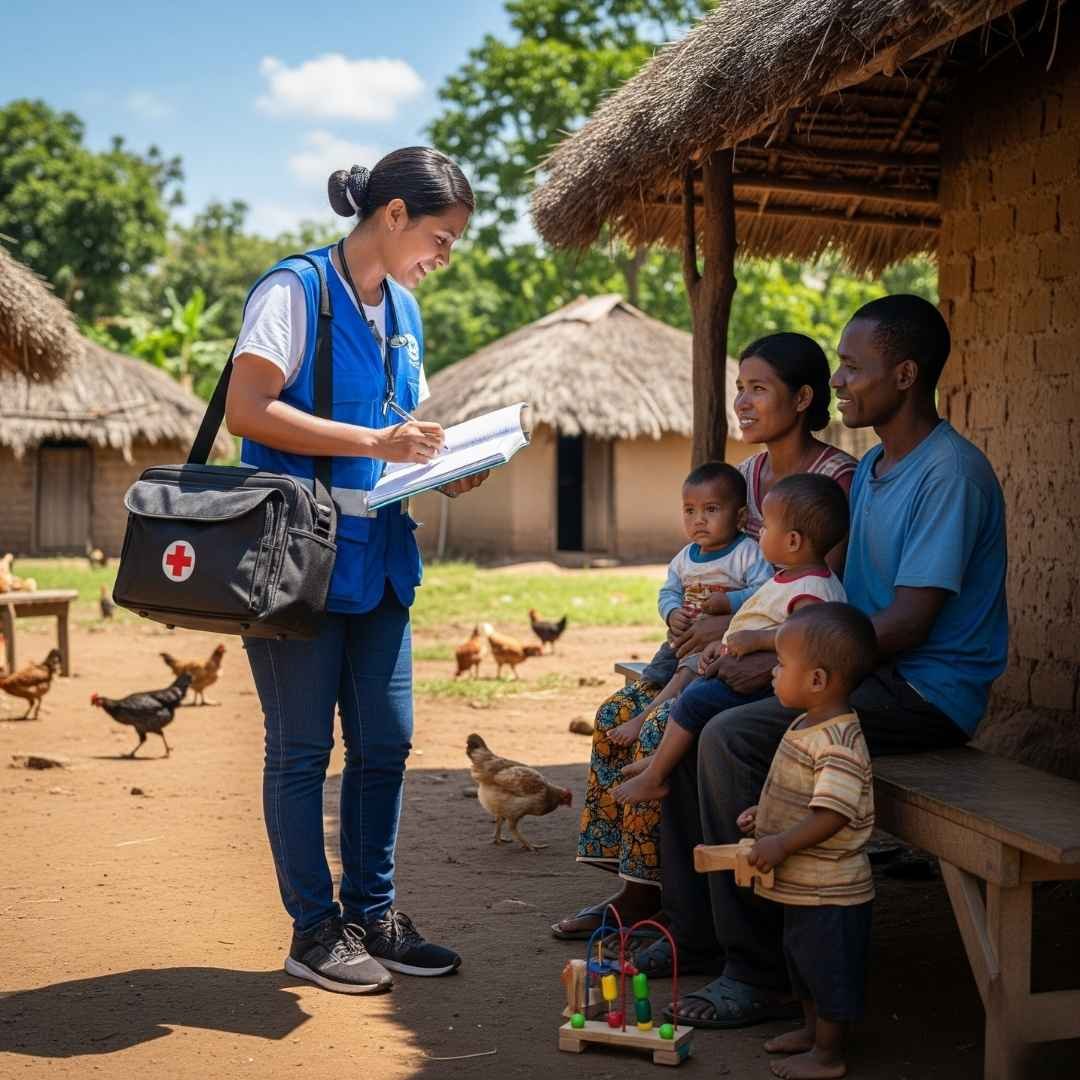
A blood smear is taken or collected by a health worker (e.g., CHW, MPW, ANM, ASHA, etc.) from door-to-door or house-to-house visits.
Blood smears are collected from fever cases of ten days before. The target of blood sample collection in the active survey is ten blood samples for a population of one thousand. but it will be increased in rainy seasons to fifteen blood samples for one thousand people.
Some questions are asked by health workers (MPW, ANM, ASHA, etc.) while conducting household surveys.
Questions
- Is there anyone sick with a fever in your house?
- Did anyone at your home have a fever 10 to 15 days ago?
- Has anyone come to your house? Do they have a fever?
- Have any of your family members gone out of town or out of the house?
Tensciling
Stenciling on the door or house wall plays a key role [i.e., it shows health workers visits either regular or irregular in that village .] in the malaria surveillance in India.
The standard format or image of tensiling is given below.
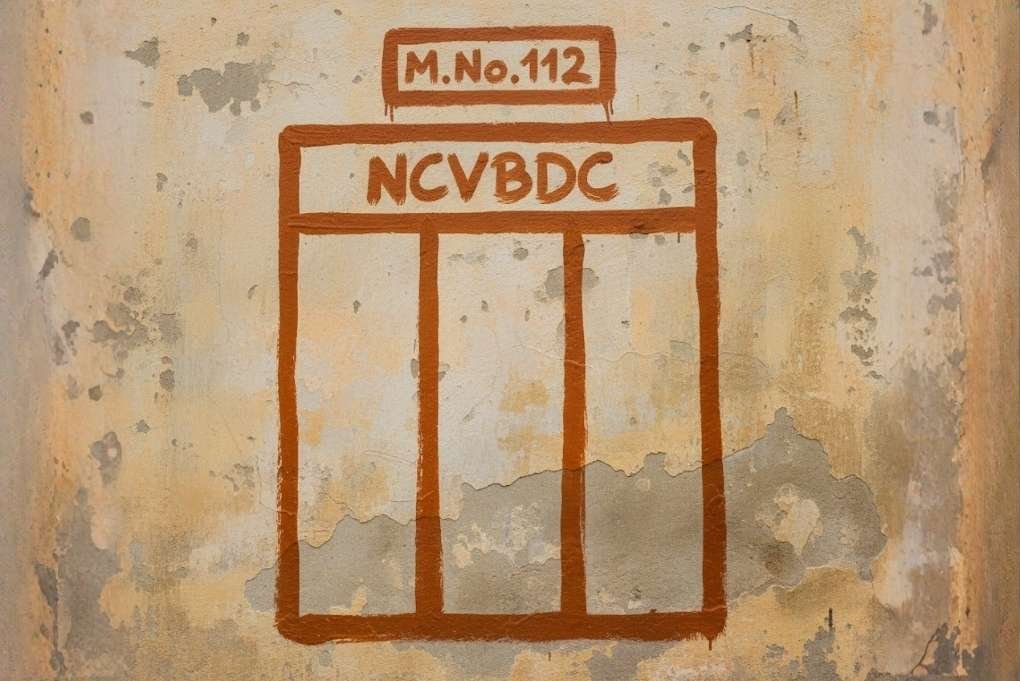
- The health worker should visit each house weekly for malaria surveillance and sign the stencil or report.
- Take blood samples from fever patients and administer radical treatment to positive cases.
- Mosquito larval surveys should be conducted in 25 houses daily
- Active surveillance should be carried out as a priority in slum areas.
- Active surveillance should be prioritized in malaria-affected areas as well as fever outbreak areas.
- Surveillance should be prioritized for workers in brick kilns, coal mines, near ponds, at construction sites (including dam and house construction), and sugarcane harvesting laborers (high-risk groups).
- More time should be given to high-risk villages {need to prioritize and dedicate additional time and resources for surveillance and investigation in villages identified as high-risk}.
- Regular visits to ANC, PNC, and infants to collect their blood samples.
- If there is a sudden fever outbreak or an increase in fever cases, inform the medical officer immediately.
2. Passive Surveillance
Collection of blood smears from hospital OPD, IPD, allopathic dispensaries, subcenter OPD, malaria clinics, etc., is known as passive surveillance. It is useful for monitoring trends in diseases and identifying potential outbreaks. The target of passive blood smear collection is 15% of OPD or IPD or any passive agencies.
3. Contact Surveillance
Collection of blood smears from family members of positive patients and their neighborhood.
4. Mass Surveillance
Conducting surveys of the entire population, where a certain area is declared as epidemic. 100% of blood sample collection should be done to identify infections and outbreaks in a timely manner.
5. Follow-up Surveillance
Follow-up surveillance focuses on monitoring patients after treatment to assess drug efficacy and identify any recurrences or relapses. The goal is to ensure complete parasite clearance, prevent transmission of disease, and know drug resistance. A follow-up blood sample is used to monitor the effectiveness of treatment. After complete radical treatment, a follow-up blood sample should be collected every seven days after.