

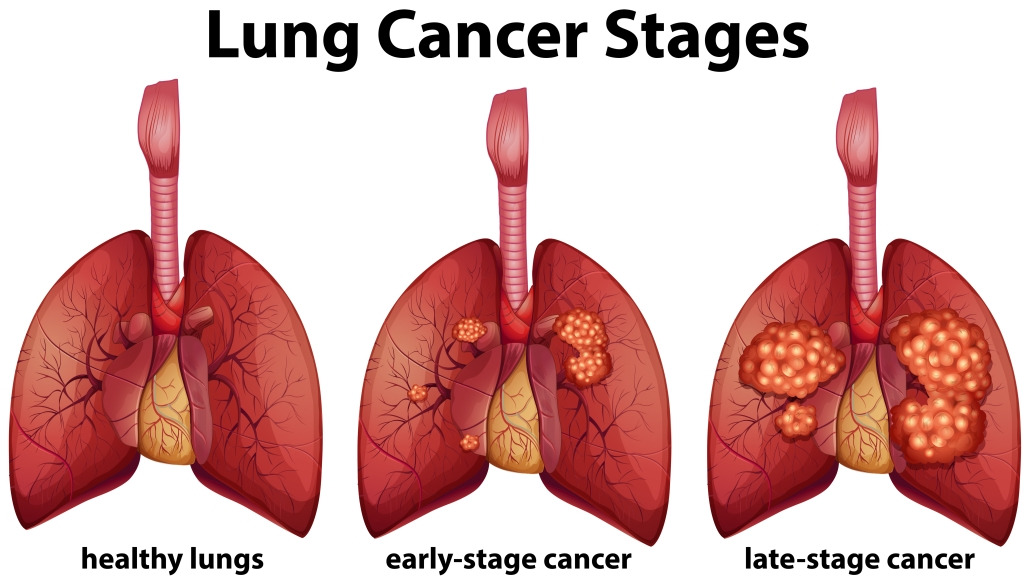
Lung Cancer is a malignant tumor originating in lung tissues, primarily from uncontrolled growth of cells lining in the air passages. It ranks as a leading causes of cancer deaths worldwide, often linked to genetic damage in lung cells.
Definition
Defination :- Lung Cancer is a type of cancer that begins in the tissues of the lungs, typically in the cells lining the air passages. It occurs when lung cells develop genetic mutations, causing uncontrolled growth and tumor formation. Without intervention, these tumors can spread within the lungs and metastasize to other parts of the body.
Causes
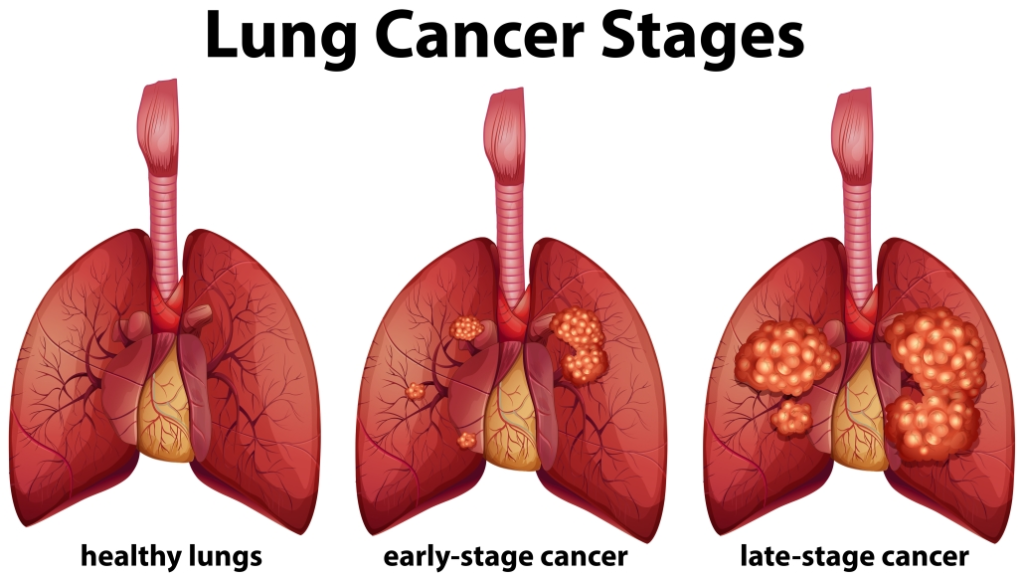
Causes:- The primary cause is cigarette smoking, which damage DNA in airawy cells; others factors include secondhand smoke, air pollution, radon gas, asbestos, and workplace chemicals. Genetic mutations accumulate enabling unchecked cell growth. Factors like urbanization, biomass cooking, and lower ambient temperatures show associations in global studies.
Main Types
Main Types:- Lung cancer primarily divides into two categories:
- non-small cell lung cancer ( NSCLC)
- Small cell lung cancer ( SCLC)
which accounts for about 80% to 85% of cases and includes subtypes like adenocarcinoma and squamous cell carcinoma.
1) non-small cell lung cancer ( NSCLC)
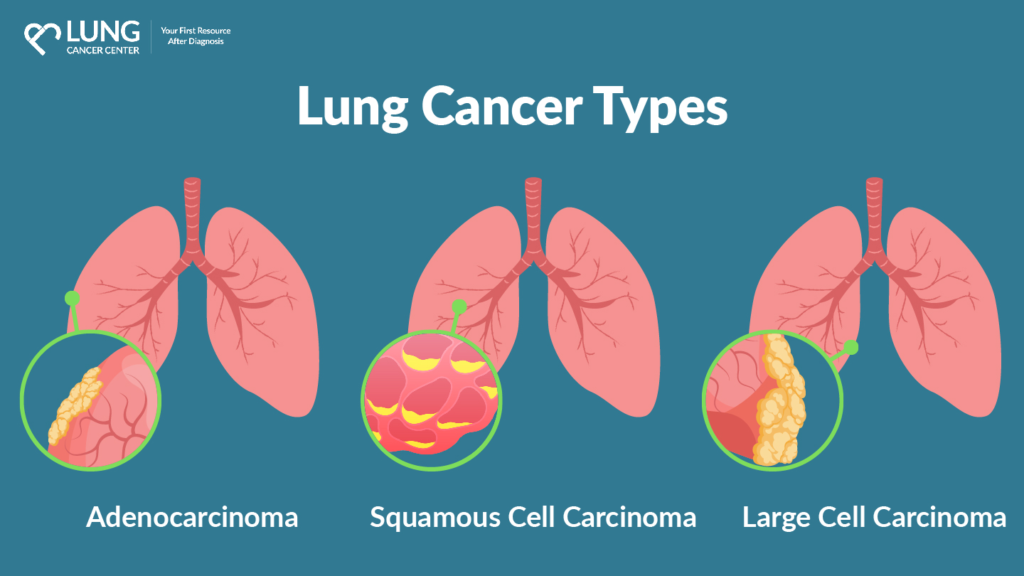
Most common (85%), grows slower. This type includes several subtypes originating from different lung cells. Key subtypes are adenocarcinoma ( most common, often in outer lung areas ), squamous cell carcinoma ( linked to central airways ), and large cell carcinoma ( fast-growing ).
2) Small cell lung cancer ( SCLC)
Rare (15%), aggressive, strongly tied to smoking. SCLC features small, flat cells and subtypes like small cell carcinoma and combined small cell carcinoma. It progresses quickly and often receives diagnosis at advanced stages.
Symptoms
Symptoms:- Common signs include persistent cough, chest pain, shortness of breath, coughing up blood, unexplained weight loss, fatigue, and hoarseness. Early stages may be asymptomatic.
Diagnosis
Diagnosis:- Lung cancer diagnosis begins with imaging tests by tissue confirmation via biopsy. Staging then determines the cancer’s extent using the TNM system to guide treatment.
Diagnostic Methods
Diagnostic Methods:- Initial screening often involves chest X-rays or low-dose CT scans to detect suspicious masses. Confirmatory biopsies include bronchoscopy for central tomors, CT-guided needle biopsy for peripheral lesions, or endobronchial ultrasound (EBUS) to sample lymph nodes and tumors.
Staging Process
Staging Process:- Staging uses CT, PET, MIR scans and sometimes mediastinoscopy to assess tumor size (T), Lymph node involvement (N), and metastasis (M). NSCLC follows stages I to IV, while SCLC uses limited or extensive categories.
Prevention Measures
Prevention Measures:- Avoid tobacco use and second hand smoke; reduce exposure to radon, asbestos, and pollutants. Promote smoke free environments, healthy diets, exercise and low dose CT screening for high-risk groups like heavy smokers. Limit workplace exposures to asbestos, arsenic, diesel exhaust and silica via protective regulations and equipment.
Control Measures
Control Measures:- Public health efforts focus on tobacco control policies, occupational safety, air quality improvement, and early detection via screening. Early surgical intervention for localized tumors enhances outcomes.
Treatment
Treatment:- Lung cancer treatment vary by stage, type and patient health: surgery ( e.g. lobectomy ) for early NSCLC, chemotherapy / radiation for SCLC targeted therapies, immunotherapy or palliative care for advanced cases. Neoadjuvant therapy may precede surgery.
NSCLC Treatments
NSCLC Treatments:- Early-stage NSCLC ( I to II ) favors surgery such as lobectomy or wedge resection, often followed by adjuvant chemotherapy or targeted therapies like EGFR inhibitors. Advanced stages ( III to IV ) use combinations of chemotherapy ( platinum-based like cisplatin with pemetrexed ), radiation, immunotherapy ( e.g. perbrolizumab ), and antiangiogenic drugs like bevacizumab.
SCLC Treatments
SCLC Treatments:- SCLC, usually advanced at diagnosis, relies on chemotherapy combined with radiation for limited-stages cases disease. Extensive-stage cases add immunotherapy.
Public Awareness
Public Awareness:- Awareness campaigns highlight smoking risks, early symptoms and screening; November is Lung cancer Awareness Month globally. WHO advocates for tobacco cessation and pollution reduction.
Community Engagement
Community Engagement:- Healthcare providers, NGOs and events during Lung Cancer Awareness Month such as linkng it solely to smoking through workshops, screening for high risk groups and patient stories to foster support and policy changes for tobacco control and radon testing.
IEC Materials
IEC Materials:- Use posters, brochures, videos on smoking dangers/symptoms ( e.g. “Cough that won’t quit” ), multilingual pamphlets for Indian emphasizing radon/pollution; apps/social media for quit-smoking tips and screening info.
Role of Public Health Department
Public health departments play a pivotol role in lung cancer prevention, surveillance, early detection and control through policy implementation, community programs and infrastructure support. In India, including Maharashtra, they integrate these efforts into national NCD frameworks like the National programme of Prevention and Control of Non-Communicable Diseases ( NP-NCD ).
Departments enforce tobacco control laws e.g. COTPA in INdia, promote smoke-free environments, fund cessation programs, mitigate radon and air pollution exposures, and run awareness campaigns to reduce risk factors. They also establish Health and Wellness Centres for NCD screening and education.
They maintain cancer registries e.g. NCRP-ICMR in India for epidemiological data, support Regional Cancer Centres and diagnostic like biomekar screening, and facilitate early detection via low-dose CT for high-risk groups. Coordination with NGOs and training enhances referral and treatment access.