


Laboratory Diagnosis, Treatment, and Clinical Management of Zika Virus.
Diagnosis
Infection with Zika virus may be suspected based on symptoms of persons living in or visiting areas with higher Zika virus transmission and/or Aedes mosquito vector density.
A diagnosis of Zika virus infection can only be confirmed by laboratory tests of blood or other body fluids to detect viral RNA by RT-PCR testing or through IgM antibody testing.
For IgM antibody testing, positive results must be differentiated from cross-reactive related flaviviruses such as dengue virus, to which the patient may have been exposed or previously vaccinated.
RT-PCR tests detect Zika viral RNA in serum, plasma, urine, or other body fluids, ideally within the first week of symptom onset when viremia peaks.
Serological tests like Zika IgM antibody capture ELISA (MAC-ELISA) identify IgM antibodies starting around day 6–7 post symptoms.
Serum or plasma collected after 7 days post-onset is optimal for nucleic acid amplification tests (NAATs) like RT-PCR, with urine viable up to 15 to 20 days for prolonged detection.
Cerebrospinal fluid (CSF), saliva, and amniotic fluid suit special cases like congenital infection or neurological symptoms.
For neonates or pregnant women, paired acute and convalescent sera enhance accuracy by tracking IgM/IgG seroconversion.
NCDC, Delhi, and NIV, Pune, have the capacity to provide laboratory diagnosis of Zika virus disease in the acute febrile stage. These two institutions would be the apex laboratories to support the outbreak investigation and for confirmation of laboratory diagnosis.
The RT-PCR test would remain the standard test; now there is no commercially available test for the Zika virus anywhere. Serological tests are not recommended for Zika virus disease.
Challenges for Laboratory Testing
Challenges for Lab Test: –
Cross-reactivity in endemic areas complicates serology, necessitating region-specific PRNT panels.
Timing matters; NAAT sensitivity drops after a week, while IgM persists 2 to 12 weeks but may wane.
Advanced methods like RT-LAMP or biosensors offer point-of-care potential but remain nonstandard.
Zika virus RNA is detectable longer in urine than in blood. Urine offers an extended detection window, often several weeks beyond blood samples.
Key Comparisons of Specimen
Key comparisons of specimens: studies confirm urine samples are a superior window for vector-borne virus surveillance, like Zika viral disease.
Specimen—Typical Duration—Maximum Reporting time
| Specimen | Typical Duration | Maximum Reporting time |
| Blood/serum | 3 to 14 days | ~58 days for whole blood |
| Urine | 10 to 26 days | 72 to 92 days |
Treatment
There are no specific treatments available for Zika virus infection or disease.
People with symptoms such as rash, fever, or joint pain should get plenty of rest, drink fluids, and treat symptoms with antipyretics and/or analgesics.
If a specific diagnosis cannot be made and dengue cannot be ruled out, patients should be treated as if they have dengue, according to standardized clinical guidelines.
This includes avoidance of nonsteroidal anti-inflammatory drugs until dengue virus infections are ruled out because of bleeding risk.
If symptoms worsen, patients should seek medical care and advice.
Pregnant women living in areas with Zika transmission or who develop symptoms of Zika virus infection should seek medical attention for laboratory testing, information, counseling, and other clinical care.
Clinical Management and Travel Advisory
There is no specific antiviral treatment or vaccine available for the Zika virus. Treatment is symptomatic.
Aspirin and other non-steroidal anti-inflammatory drugs (NSAIDs) should be avoided until dengue is ruled out due to bleeding risk.
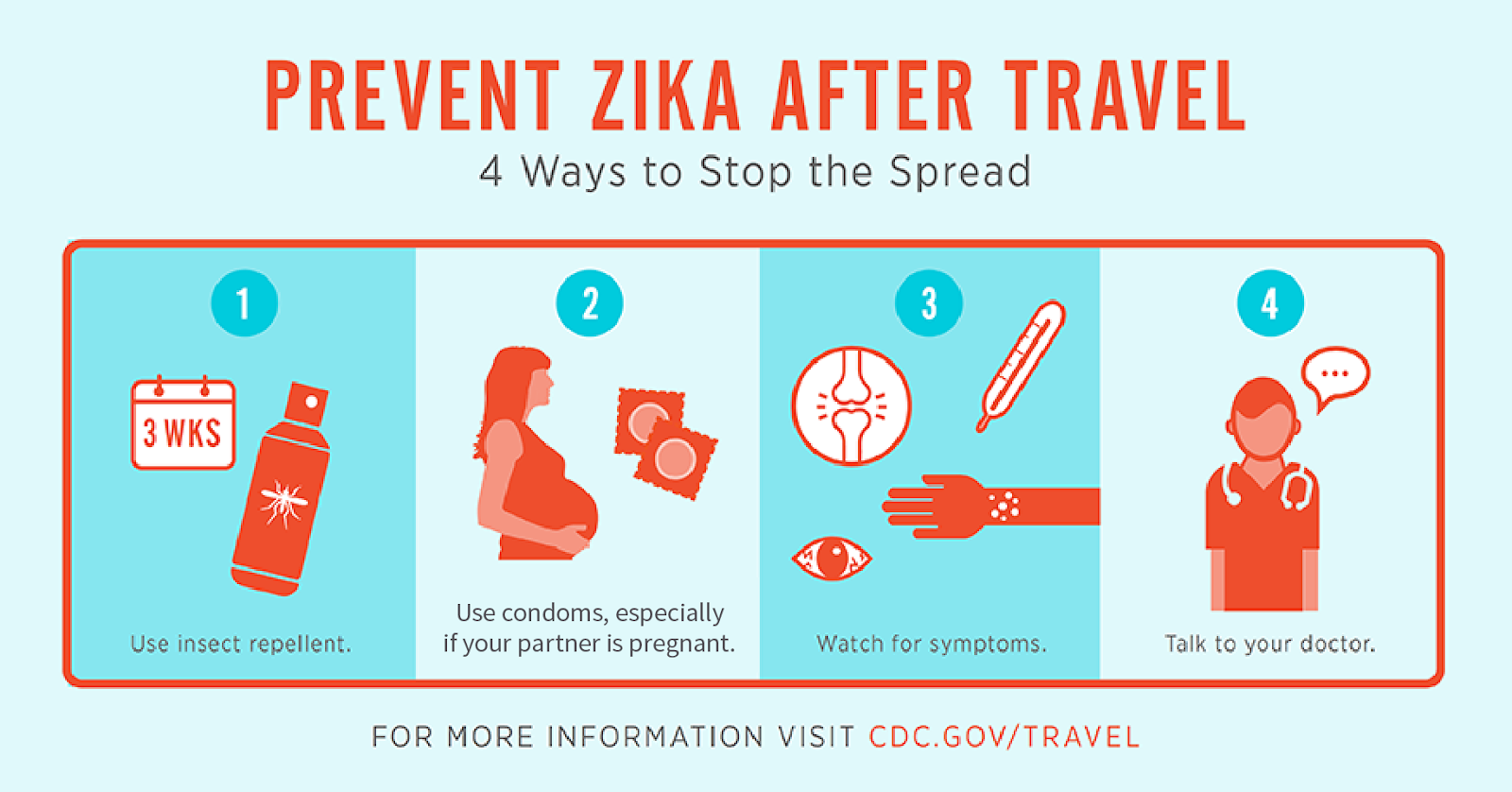
Pregnant women are advised to avoid nonessential travel to affected areas.
Travelers with febrile illness within two weeks of returning from an affected country should report to the nearest health facility.
Sexual partners of pregnant women living in or returning from affected areas should practice safer sex (use condoms) or abstain from sexual activity throughout the pregnancy to prevent sexual transmission.
Zika virus infection is associated with Guillain-Barre syndrome, neuropathy, and myelitis in adults and children.
WHO declared a public health emergency of international concern regarding microcephaly, neurological disorders, and myelitis.
Infections were also detected in travelers from active transmission areas, and sexual transmission was confirmed as an alternate route of Zika virus infection.
Monitoring of Pregnant Women
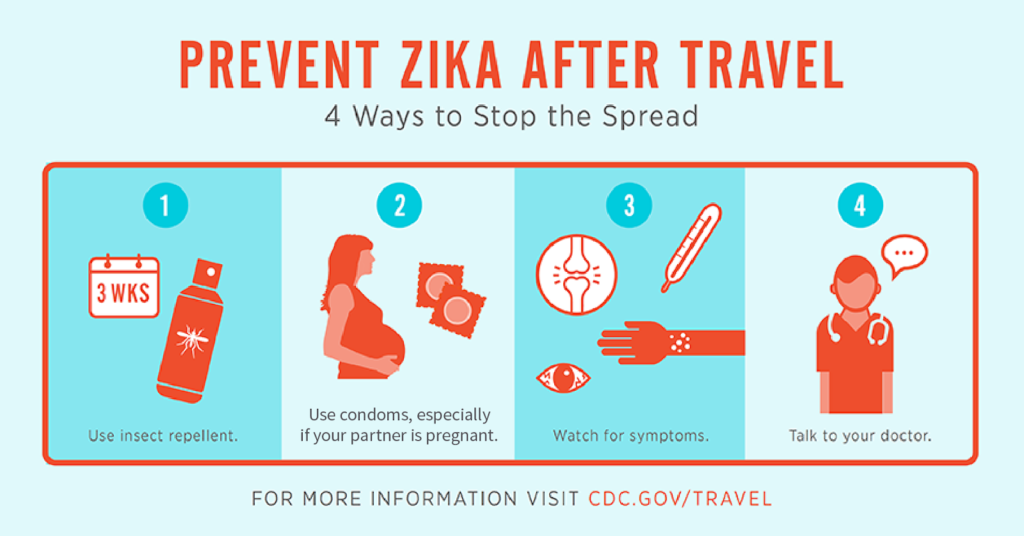
Monitor Pregnant Women closely with serial ultrasounds for fetal brain abnormalities; advice contraception for at risk travelers.
Hospitalize if neurological symptoms, e.g., Guillain-Barre, or severe dehydration occur.