

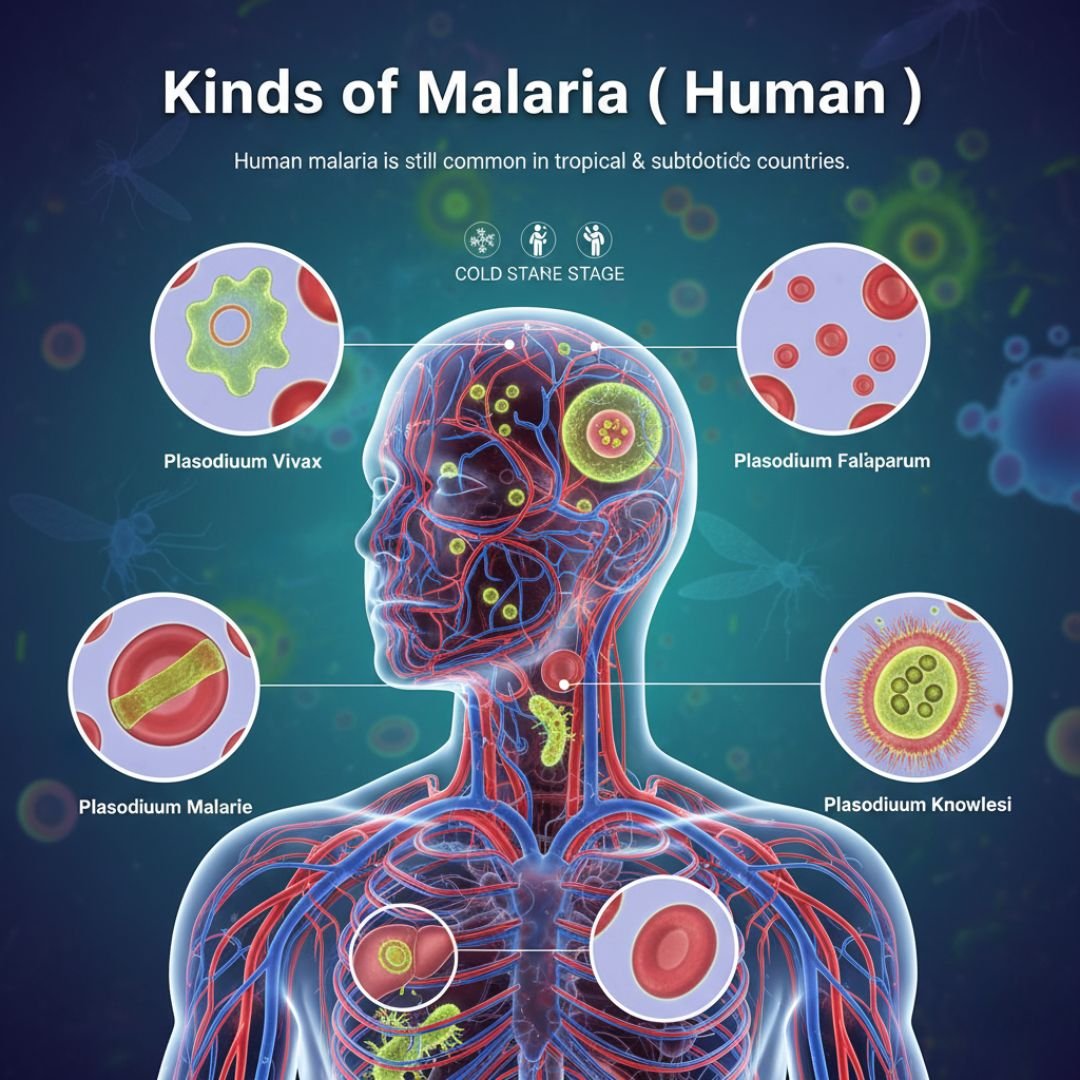
Kinds of Malaria (Human)
Human malaria is still common in tropical & subtropical countries. Human malaria species remain common in chimpanzees in the world; five types of human malaria parasites (species) occur nowadays. e.g.,
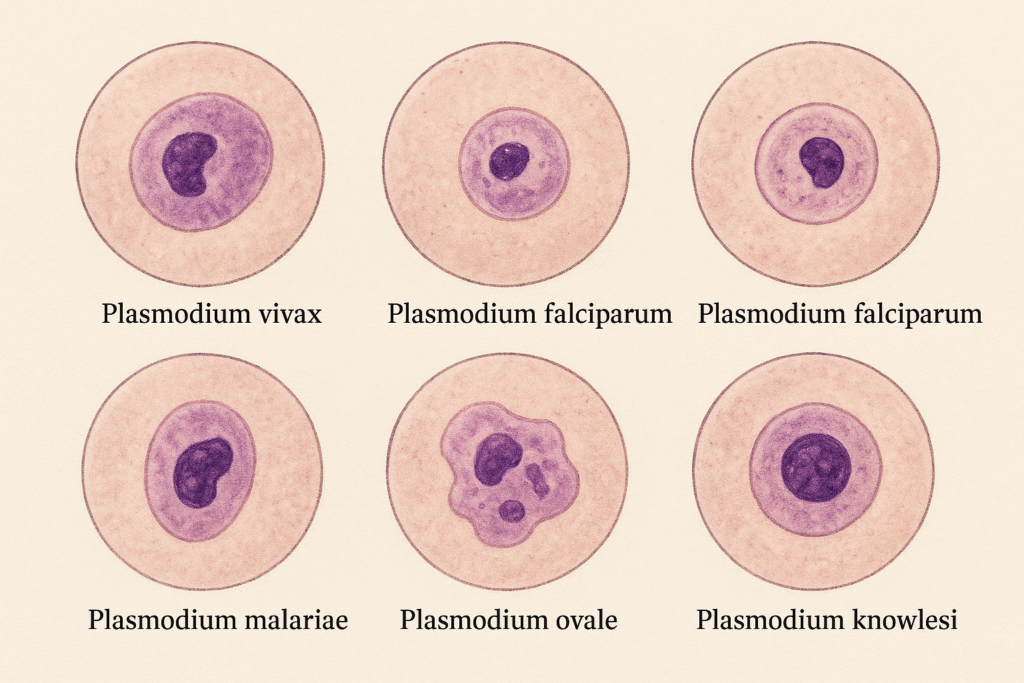
- Plasmodium Vivax
- Plasmodium Falciparum
- Plasmodium Malariae
- Plasmodium Ovale
- Plasmodium Knowlesi
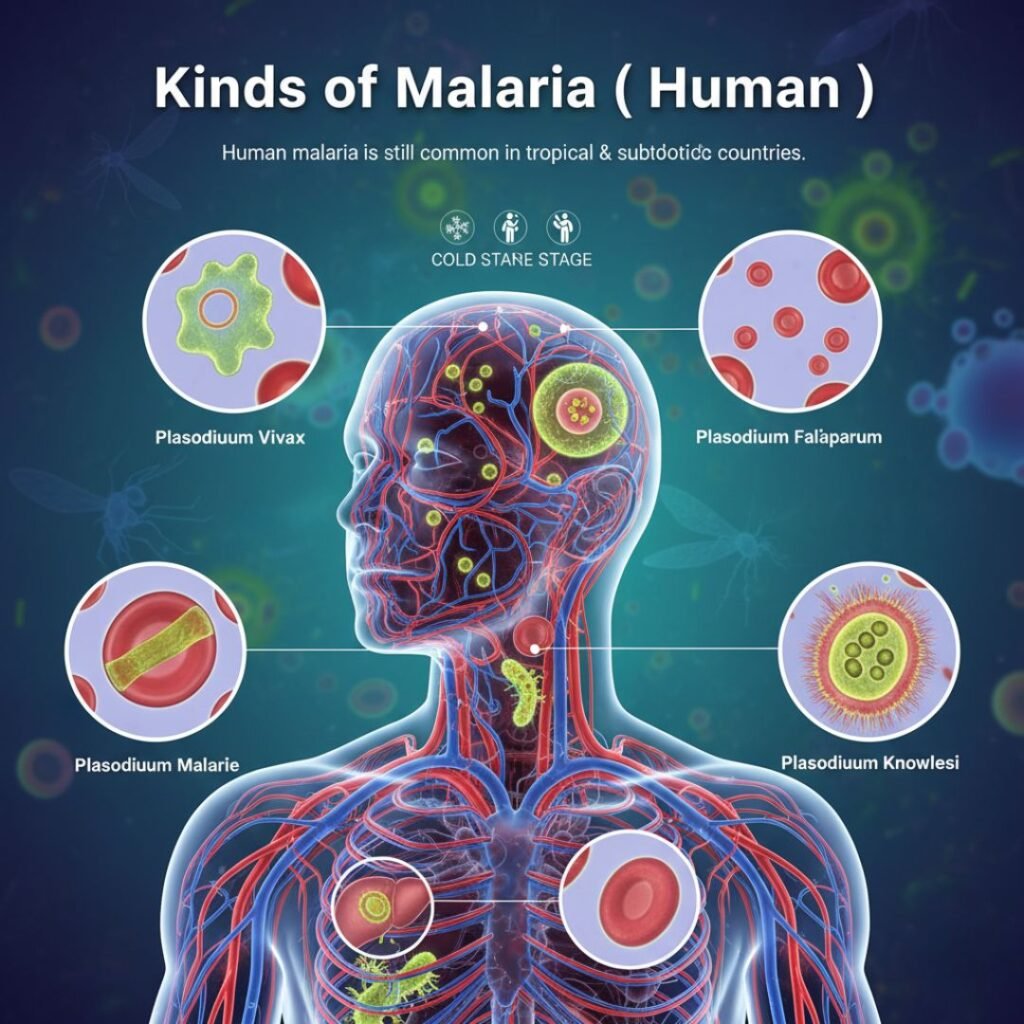
Plasmodium Vivax
P. The vivax species is most prevalent in the world. It causes relapses & other complications. Relapses can occur in months or years due to dormant liver stages known as “hypnozoites.” Primaquine is the only drug used to clear hypnozoites and relapse parasites. The Duffy antigen receptor for chemokines (DARC) on red blood cells is used for invasion in P. vivax, and Duffy-negative individuals are resistant to P. vivax.
Plasmodium falciparum
P. falciparum is the most malignant, often causing severe illness and infection affecting the brain, potentially leading to coma or death. It is most prevalent in Africa.
Plasmodium Malariae
It is a less severe form of malaria and is found in a milder form. It is found in parts of Africa. It can persist in the blood for years without symptoms.
Plasmodium ovale
Generally found in West Africa. very rarely found species. It is similar to P. vivax. It is also occur relapses ,but it is less common . It has two genetically distinct subspecies. 1) P. ovale curtisi, 2) P. ovale wallikeri
Plasmodium knowlesi
Primarily found in macaque monkeys. Nowadays emerging species cause human malaria, found in Southeast Asia.
Clinical features
Typical malarial clinical symptoms comprise three successive stages. eg
1)HOT STAGE
With a high-grade fever, the temperature may rise to 39 degrees centigrade, the patient feels thirsty, and the pulse rate increases. This condition/state lasts for two hours to six hours
2)COLD STAGE
Rigor with chills. The patient feels like being covered with a blanket, and the hair on the skin stands up. this stage lasts from 15 minutes to one hour
3)SWEATING STAGE
The patient’s fever subsides. The patient sweats profusely. He falls into deep sleep. The patient feels weak after waking up. This stage lasts from 2 hours to 4 hours.
4)OTHER SYMPTOMS
Myalgia, nausea & vomiting, headache, diarrhea, abdominal pain, muscle or joint pain, anemia, enlargement of the spleen (palpable spleen), hepatomegaly, pallor, dry cough, jaundice, and tachycardia. But nowadays symptoms of malaria are mostly nonspecific, making viral illnesses, typhoid, paratyphoid, and encephalitis especially common in falciparum infections. Slight enlargement of the liver is also common, especially in the young ones.