



Repeated infections with malaria parasites lead to the acquisition of antibodies directed against various antigens of different stages of malaria parasites, as well as cell-mediated immunity. The immunity is, to a large extent but not completely, specific to the species of malaria parasite.
People in India will have a higher degree of immunity to local malaria parasites than to those from a distant location.
There is no perfect immunity to malaria. Nobody acquires such a high level of protective antibodies that he or she can be certain not to contract malaria.
- Typically, in areas with very intense transmission, persons who are heavily exposed acquire some immunity in childhood.
- Then, as adults, they get ill relatively rarely, and when they do, the disease is mild and of short duration.
- It seems that in old age, immunity is lost again, but it is not clear whether this is a result of aging processes or of old people being less exposed to malaria, or both.
Typically, people with a certain degree of immunity still harbor parasites. They are asymptomatic carriers. It can be difficult to detect such cases, and this can have implications for malaria control. If a certain population is heavily exposed to malaria so that some people have some immunity to the disease, and exposure is reduced for some years as a result of control measures, the immunity will largely be lost. If control is then relaxed, malaria may return with occurrences of a large number of cases. For this reason, sustainability is important in malaria control.
Why Do Malaria Parasites Become Resistant to Antimalarial Drugs?
Drug resistance is a complex phenomenon whereby, through genetic mutation, a parasite acquires the ability to partially or fully resist the effect of one or more antimalarial drugs.
One of the commonest reasons for the development of drug resistance is that the parasites are exposed to an insufficient amount of the drug due to:
- Low prescription dosage
- Lesser amount of drug dispensed
- Incomplete treatment taken by the patient
- Drug vomited out
- Low absorption due to any reason, for example, diarrhea
- Poor drug quality or if the drug is poorly stored
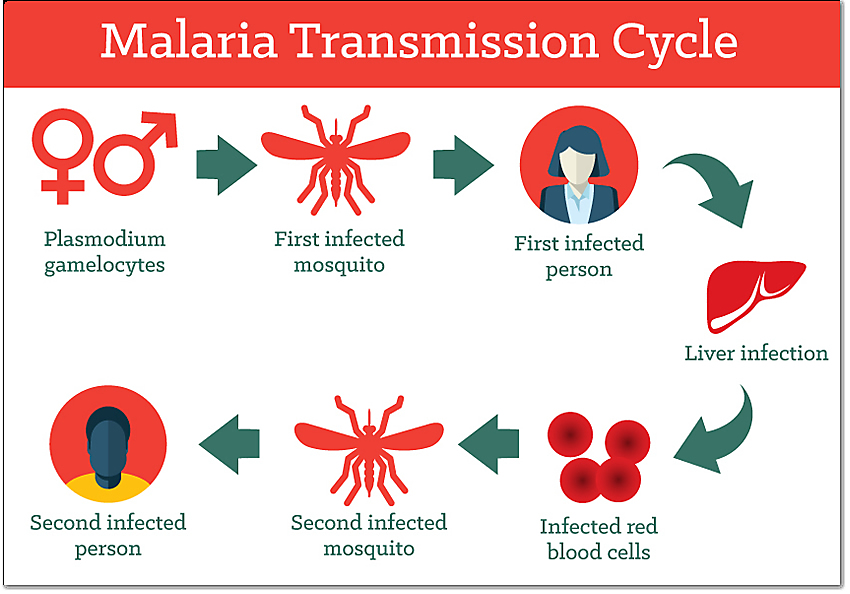
In such cases, most of the sensitive parasites are killed even by these small doses, but resistant parasites survive, multiply, and spread to other people by mosquitoes. That is why the new patient then gets an infection from the resistant malaria parasites and does not respond to the drug at all or responds only partially.
Why Is It Difficult for Parasites to Develop Resistance to ACT?
ACT contains three drugs: artesunate, sulfadoxine, and pyrimethamine. Each drug acts on a different part of the parasite in a different manner. It is very rare for three simultaneous genetic mutations to occur by chance to produce resistance to such diverse drugs.
Resistance can be produced in multiple steps since they have been used for a longer time. This happens with some other drugs also. A single drug should never be used alone as a companion drug. If it is used as a single agent, resistance will definitely develop.