


Zika virus has no truly ancient history, as it was first identified in the mid-20th century during research on yellow fever in Africa. Scientists from the yellow fever research institute funded by the Rockefeller Foundation first isolated the Zika virus in 1947.
Discovery of Zika Virus
Discovery:-
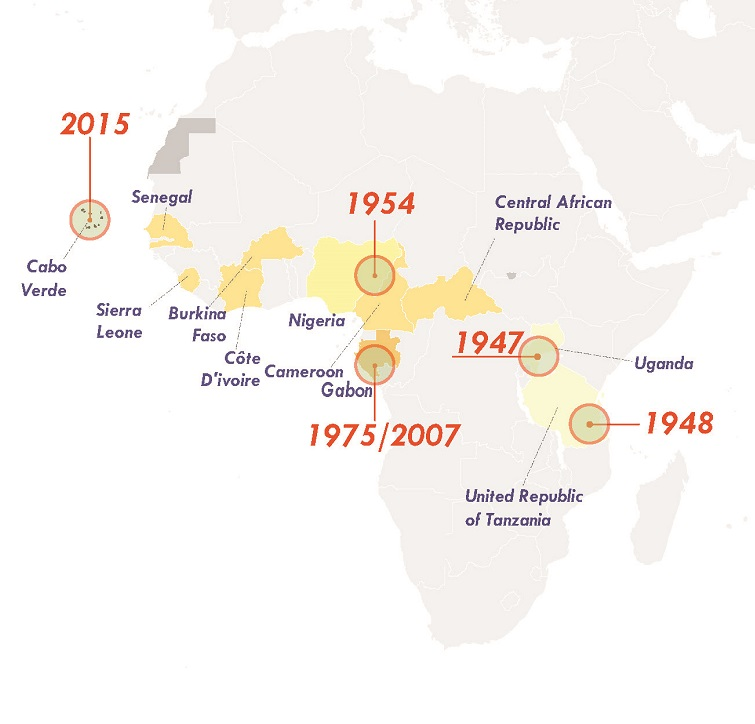
Scientists isolated the Zika virus in April 1947 from a febrile rhesus macaque monkey in the “Ziika forest” near Entebbe, Uganda, close to Lake Victoria, as part of Yellow Fever Research Institute studies.
In 1948 the virus was recovered from Aedes africanus mosquitoes at the same site.
Early Human Evidence
Early Human Evidence:
Neutralizing antibodies indicating human infection appeared in a 1952 serological survey in Uganda, with cases also detected in Tanzania. From 1960 to 1980 sporadic infections occurred across Africa and Asia, but only about 14 natural human cases were documented before 2007.
Pre-Outbreak Spread
Pre-outbreak spread:
Serological evidence showed Zika presence in Africa and Asia by the mid-20th century, circulating silently in monkey-mosquito cycles with rare human spillover. The Asian strain likely evolved around 1928, though epidemics did not emerge until later Pacific outbreaks.
Initial Animal Host
Initial Animal Host:
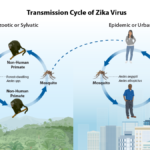
Scientists from the Yellow Fever Research Institute detected it in a febrile rhesus monkey (Macaca mulatta) used as a sentinel during yellow fever surveillance. The virus was named after the forest where the monkey was caged. This monkey, held in a cage in the forest canopy, developed a fever, leading to virus detection in its serum.
Early Mosquito Vector
Early Mosquito Vector:
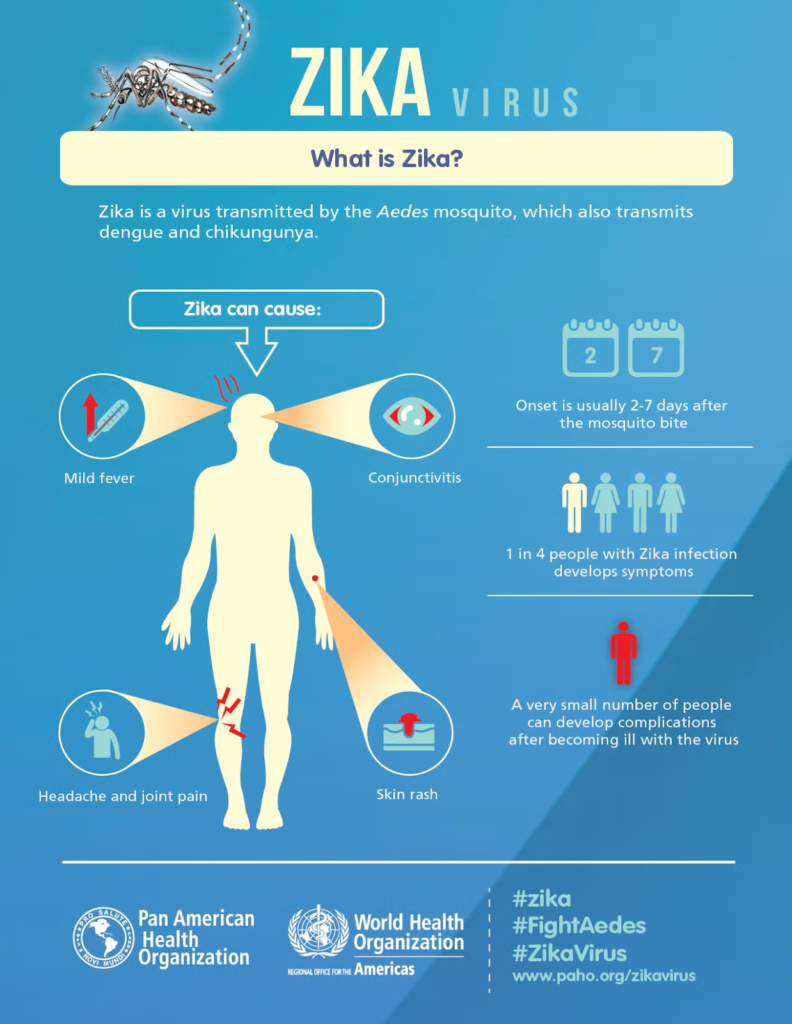
In January 1948, scientists recovered Zika virus from Aedes africanus mosquitoes captured at a tree platform in the same Zika forest site. This sylvatic mosquito species served as the initial confirmed vector in the monkey-mosquito cycle. Aedes aegypti transmits the Zika virus to humans most often.
Primary Vector
Primary Vector:-
Aedes aegypti serve as the main urban vector due to their highly anthropophilic feeding behavior, daytime biting habits, repeated biting habits, and breeding in domestic water containers near human dwellings. This species drives most epidemics, particularly in tropical regions.
Secondary Vector
Secondary Vector:-
Aedes albopictus acts as a competent secondary vector, capable of transmission where Ae. aegypti is absent, though with lower efficiency in many strains. Both species also carry the dengue and chikungunya viruses.
Outbreaks of Zika Before 2007 and Their Location
Outbreaks of Zika Before 2007 and Their Location: –
From 1947 to 2007, only about 14 documented human cases occurred, primarily isolated detections rather than outbreaks. Examples include virus isolation from a girl in Nigeria (1954) during a jaundice outbreak and experimental human infection in 1956, both in Africa.
Aedes aegypti Behavior in Zika Virus Transmission
Aedes aegypti behavior in Zika virus Transmission:
Aedes aegypti behavior significantly heightens Zika transmission risk through its presence for human hosts and proximity to populated areas.
Feeding Habits
Feeding habits:
This mosquito species preferentially bites humans during daytime hours, often multiple times per feeding cycle, increasing bite frequency and opportunities for virus transfer from infected to uninfected individuals. It rarely feeds on other animals, concentrating transmission in urban human settings. Females acquire ZIKV by biting infected hosts, with the virus replicating in the midgut before disseminating to salivary glands over 7 to 14 days, enabling efficient transmission during subsequent feeds.
Breeding Habits
Breeding Habits:
Aedes aegypti thrives in small artificial water containers like tires, flower pots, and buckets near homes, enabling rapid population growth in dense communities. Females lay eggs that survive dry periods, ready to hatch when water returns, sustaining year-round presence in tropical climates.
Flying Habits
Flying Habits:
Adult Aedes aegypti mosquitoes fly only short distances, about 100 to 300 meters from their breeding sites, but this keeps them in high human contact zones, amplifying local outbreaks through repeated indoor and peridomestic biting.