


Period of Communicability
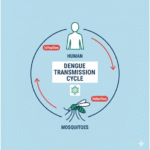
The period of communicability in dengue fever refers to the time during which an infected person can transmit the virus to mosquitoes, which then can spread it to other humans.
- Humans become infectious to mosquitoes approximately 2 days before the onset of symptoms (during the viremic phase) and remain infectious for about 5 days after fever onset.
- The most infectious period for mosquitoes is generally during the febrile phase, when the virus is circulating in the bloodstream (viremia).
- Asymptomatic and pre-symptomatic individuals can also be infectious to mosquitoes.
- The intrinsic incubation period in humans ranges from 3 to 14 days, typically 4 to 7 days, after which symptoms develop.
- Mosquitoes become infected by feeding on viremic individuals, and after an extrinsic incubation period of about 8 to 12 days, they can transmit the dengue virus to others.
Laboratory Diagnosis of Dengue Fever
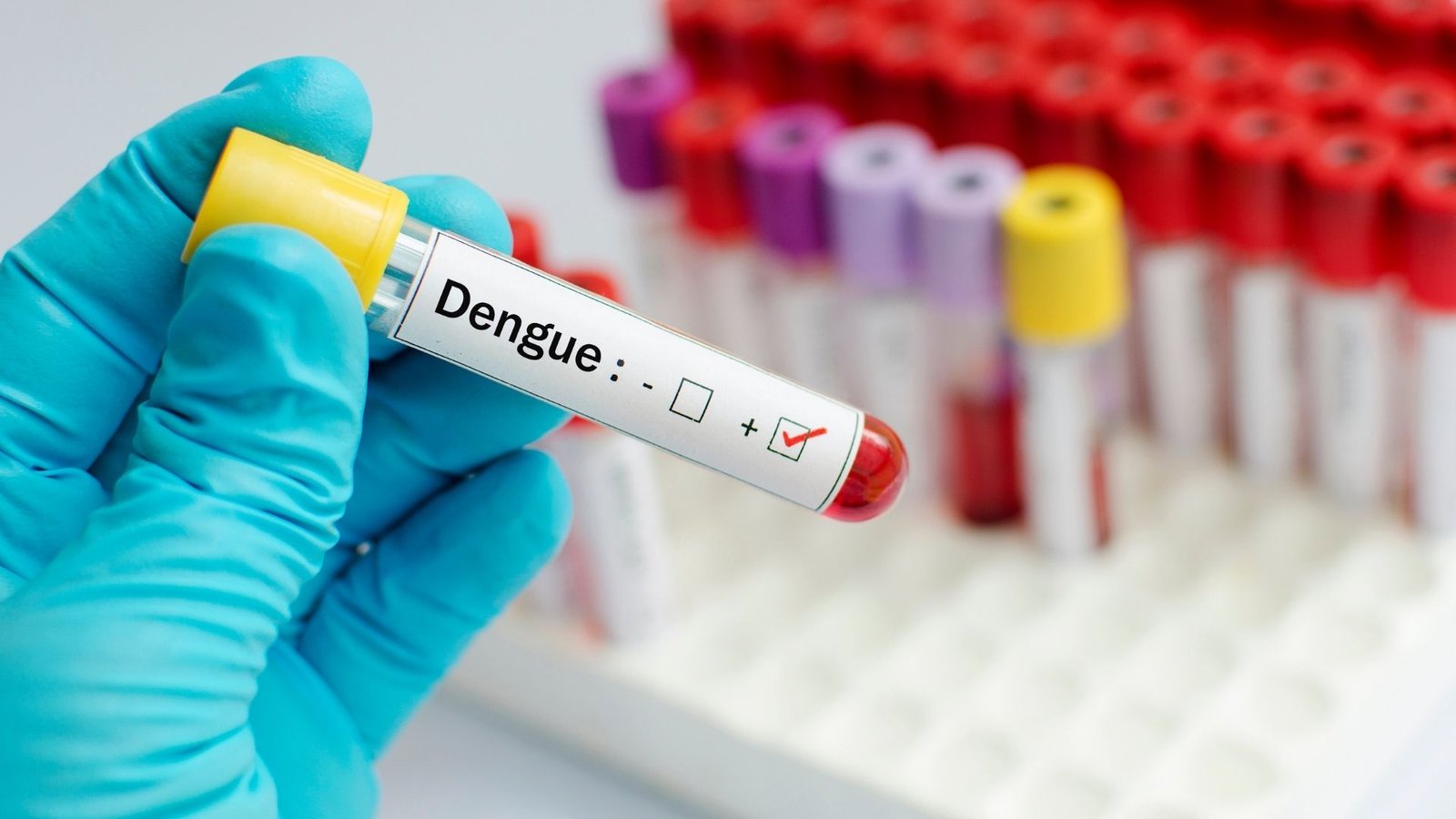
The laboratory diagnosis of dengue fever relies on detecting the virus, its components, or the immune response in blood samples. The key laboratory methods include molecular, antigen, and antibody detection.
Key Laboratory Diagnostic Methods
| Sr. No. | Test Type | Target Detected | Optimal Timing (Days after fever onset) | Utility |
| 1 | RT-PCR/NAAT | Viral RNA | 0-7 days | Highly sensitive |
| 2 | NS1 Antigen | Viral NS1 protein | 0-7 days (best ≤ 5 days) | Rapid positive in early infection |
| 3 | IgM ELISA | IgM antibody | 4-14 days | Indicates recent infection; peaks 5-7 days |
| 4 | IgG ELISA | IgG antibody | ≥ 7 days | Indicates past or secondary infection |
| 5 | Virus Isolation | Live virus | 0-5 days | Gold standard but rarely used: slow & requires specialized lab |
Detailed Test Information
- NS1 antigen and RT-PCR are most useful within the first 5–7 days of illness, before antibody responses appear.
- Serological tests (IgM, IgG ELISA) become useful after day 4 of fever.
A) NS1 ELISA:
- Detects the Non-Structural Protein 1 (NS1) antigen, a viral protein secreted during early dengue infection.
- It is best for early diagnosis, detectable from Day 1 up to around Day 7–9 after fever onset.
- It helps confirm acute dengue infection before antibodies develop.
- It has high specificity and sensitivity in the early phase.
- It is useful for early patient management to prevent complications.
B) IgM ELISA:
- Detects IgM antibodies produced by the immune system in response to dengue infection.
- IgM becomes detectable around Day 4–5 after fever onset, peaks after a week, and can remain for weeks to months.
- It is an indicator of recent or current dengue infection, often used in the later acute and early convalescent phases.
C) IgG ELISA:
- Detects IgG antibodies that indicate a past dengue infection or a secondary infection.
- IgG appears later than IgM but persists for years.
- IgM suggests a recent infection, while IgG paired testing detects secondary infection or seroconversion.