

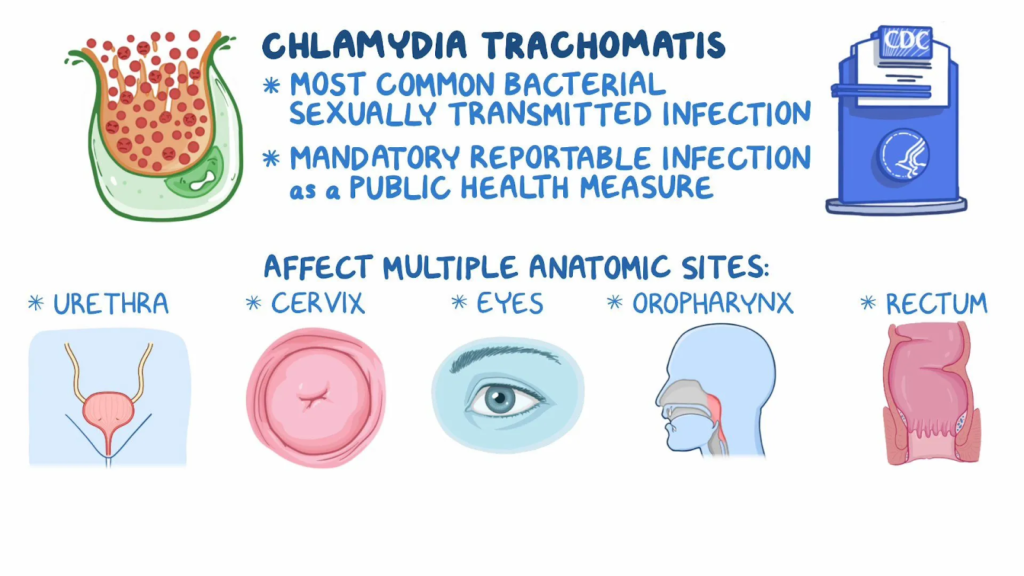
Chlamydia refers to a common bacterial infection, primarily a sexually transmitted infection (STI) caused by Chlamydia trachomatis. It often goes unnoticed due to lack of symptoms but can lead to serious complications if untreated.
Definition
Definition :- Chlamydia is an infection caused by the bacteria of the genus Chlamydia, especially C. trachomatis, a gram-negative intracellular bacterium affecting the eyes, genitals, and urogenital tract. It manifests as diseases like trachoma, cervicitis, urethritis and lymphogranuloma venereum.
Causes
Causes :- The infection spreads through oral, vaginal or anal sexual contact with an infected person, or from mother to baby during childbirth. It thrives intracellularly, with an incubation period of 2-to 6 weeks.
Main Types
Main Types :-
Genital chlamydia (serovars D-K): Causes urethritis, cervicitis and pelvic inflammatory disease.
Ocular chlamydia: Leads to trachoma (serovars A-C) or neonatal conjunctivitis.
Lymphogranuloma venereum (LGV, serovars L1-L3): More invasive, causing genital ulcers and swollen lymph nodes.
Symptoms
Symptoms :- Many cases 70% in women, 50% in men are asymptomatic. When present symptoms include abnormal discharge, painful urination, abdominal pain, bleeding between periods, testicular pain, or rectal issues. In newborns, it causes eye infections or pneumonia.
Diagnosis
Diagnosis :- Diagnosis relies on detecting bacterial DNA or antigens in clinical samples. It’s confirmed via lab tests due to frequent lack of symptoms.
Diagnostic Methods
Diagnostic Methods :-
Nucleic acid amplification tests (NAATs): gold standard, using urine, swabs from genital, rectal or throat sites.
Other methods:- Direct fluorescence antibody (DFA) tests or culture (less common due to complexity). Retesting is advised 3 months post-treatment.
Structure of Chlamydia
Structure of Chlamydia :- Chlamydia, specially bacterial like Chlamydia trachomatis, features a unique biphasic structure adapted for its obligate intracellular lifestyle.
Cell wall
Cell wall :- It has a gram-negative envelope with an outer membrane containing lipopolysaccharide (LPS) and a major outer membrane protein called MOMP (OmpA), plus cysteine-rich proteins OmcA and OmcB that form disulfide bonds for rigidity.
Developmental Forms
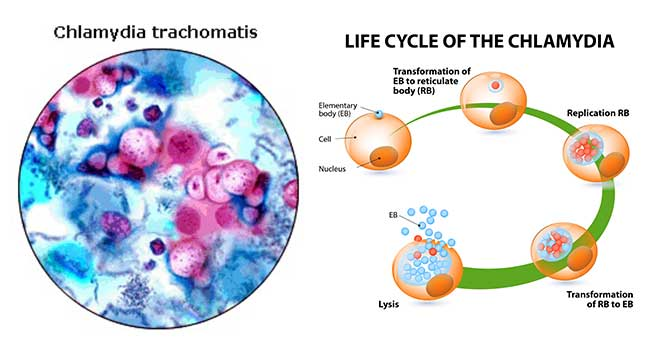
Developmental Forms :- Chlamydia alternates between two forms; elementary bodies (EBs), which are small, infectious and metabolically inactive with a rigid cell wall for extracellular survival and reticulate bodies (RBs), larger, non-infectious and replicative inside host cell vacuoles called inclusions.
Intracellular Features
Intracellular Features :- EBs enter host cell, convert to RBs within 8 to 10 hours for binary fission, then some RBs revert to EBs, which exit via cell lysis or inclusion extrusion after 24 to 72 hours. A type III secretion system aids host interaction.
Prevention Measures
Prevention Measures :- Abstain from sex, use condoms consistently, limit partners to uninfected individuals or maintain monogamy. Routine screening for at-risk groups e.g. sexually active under 25, prevents spread.
Control Measures
Control Measures :- Partner notification and treatment, avoid sex for seven days post-treatment or until symptom-free and screen contacts. Public health targets 25% annual testing in young adults.
Treatment
Treatment :- Antibiotics like azithromycin (single dose) or doxycycline (7 days) cure it effectively. Pregnant women or infants use azithromycin / erythromycin. Test for coinfections like gonorrhea or HIV.
Public Awareness
Public Awareness :- Campaigns highlight “silent epidemic” risks, promoting testing and condom use via media, schools, colleges, and clinics to reduce stigma and encourage early detection.
Community Engagement
Community Engagement :- Involves peer education, free screening events, and partnerships with youth groups or NGOs to normalize STI discussions and boost testing uptake.
IEC Materials
IEC Materials :- Information, Education and Communication tools include posters, brochures, videos and apps explaining symptoms, testing and prevention in simple languages.
Role of Public Health Department
Role of Public Health Department :- Conducts surveillance, funds screening programs, ensures partner tracing, distributes antibiotics, and integrates chlamydia control into national STI strategies like annual screening for high-risk groups.
Magnitude of Chlamydia
Magnitude of Chlamydia :- It’s the most reported bacterial STI globally, with millions of cases yearly; in the US, it’s the top notifiable infection.
Global Burden
Global Burden :- WHO estimates 129 million new cases annually as per 2020 data, leading to infertility, ectopic pregnancies, and blindness from trachoma (leading infectious cause). Rates are rising, especially among youth.
Burden in India
Burden In India :- Limited national data exists due to underreporting, but high-risk groups show 5% to 20% prevalence; urban youth and sex workers are affected, contributing to infertility and neonatal issues amid low screening. Prevalence ranges from 0.1% to 32% via PCR in general populations to 10% to 50% in symptomatic women at clinics, often higher up to 75% with ELISA serology indicating past exposure. Among infertile women, rates reach 9% to 68% serologically, linking the infection to tubal infertility. Data remains limited and heterogeneous, with most studies from urban areas like New Delhi and Mumbai, and no recent national totals available from NACO.
Maharashtra Data
Maharashtra Data :- In Maharashtra, female sex workers showed chlamydia prevalence up to 15% in Thane and 8.5% in Mumbai around 2009 to 2010, with declining trends noted later. Symptomatic women in Mumbai had 12% PCR prevalence. No statewise or Nagpur-specific population level data exists in recent searches; high-risk groups drive most reports.
Complications of Untreated Chlamydia
Complications Of Untreated Chlamydia :- Untreated chlamydia can be lead to serious health issues in both men and women due to its often asymptomatic nature, allowing silent progression. Early treatment prevents these risks effectively.
In Women
- Pelvic inflammatory disease (PID) damages reproductive organs, causing chronic pelvic pain, scar tissue, and abscesses.
- Infertility from blocked fallopian tubes; increased risk of ectopic pregnancy.
During pregnancy, transmission to baby risks conjunctivitis, pneumonia or preterm birth.
In Men
- Epididymitis inflames the epididymis, leading to testicular pain, swelling and potential infertility.
- Rarely progresses to abscesses or sepsis.
In Both Sexes
- Reactive arthritis affecting joints, eyes, and urinary tract.
- Higher HIV transmission risk due to inflammation.
- Spread to rectum, throat, or eyes.
Life Cycle of Chlamydia
Life cycle of Chlamydia :- Chlamydia trachomatis follows a unique biphase developmental cycle as an obligate intracellular bacterium, alternating between infectious, elementary bodies and replicative reticulate bodies.